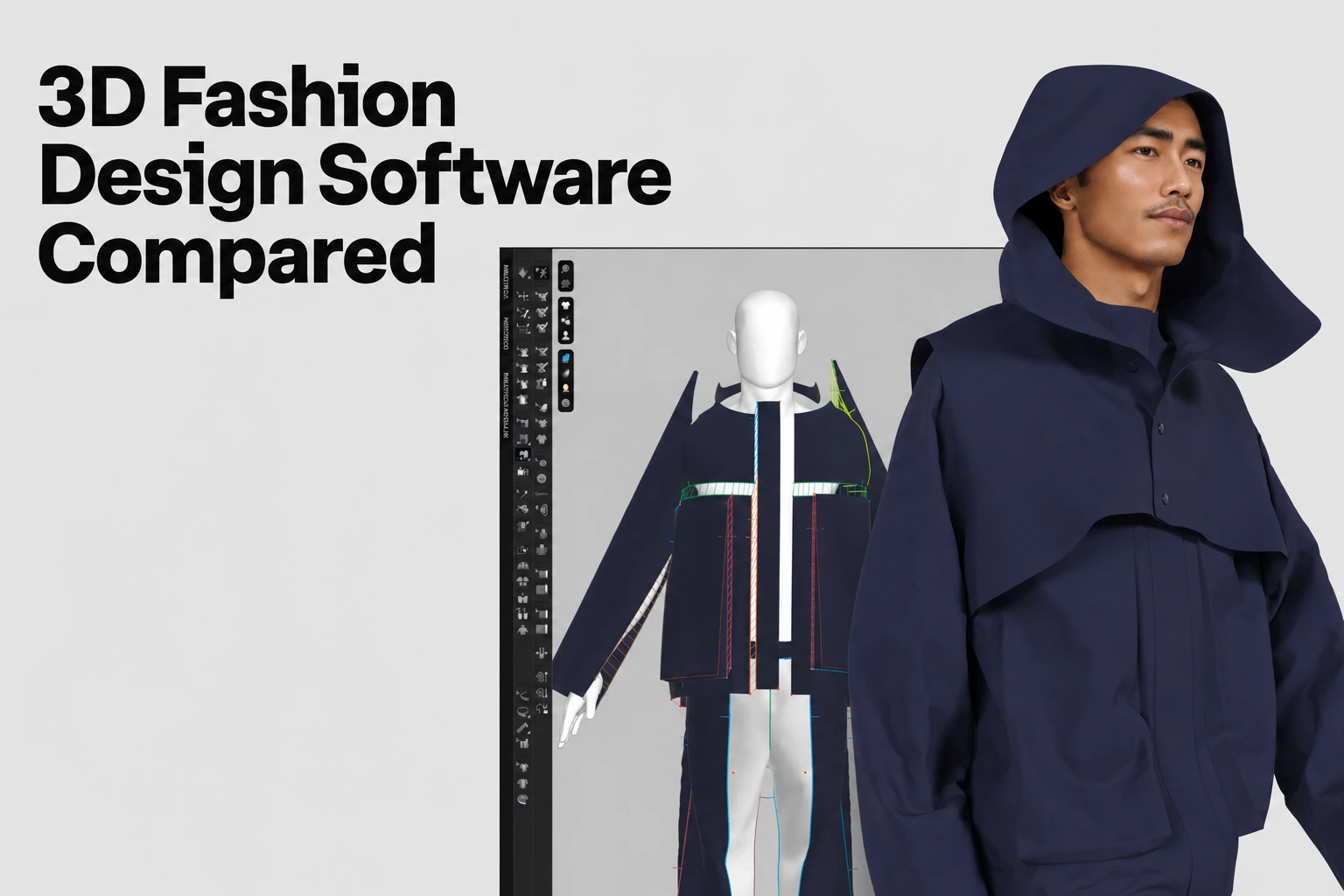
How to Turn Fit Measurements Into Pattern Edits in CLO
A walkthrough of using CLO fit maps, garment measurements, Pattern Drafter, and POM tools to review and revise a supported parametric pattern.
The short version
From flagged fit issue to edited pattern
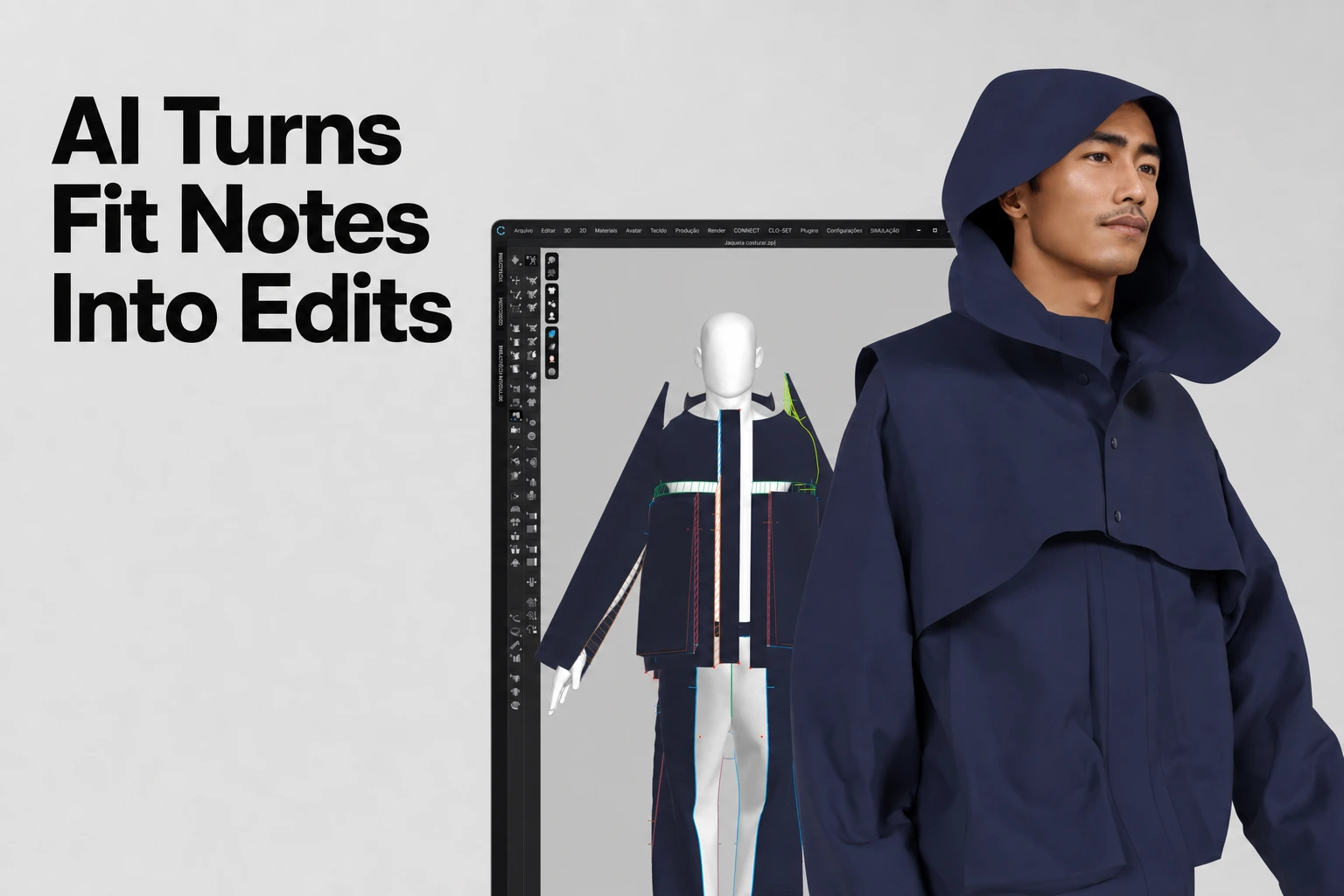
Use CLO’s fit maps and garment measurements to inspect a simulated garment, then decide which pattern measurements need changing. For a supported parametric pattern, update those values through Pattern Drafter or its Edit POM workflow. The Calculator derives measurement values; it does not automatically resolve a fit issue. AI Pattern Drafter can generate a starting pattern from an image or prompt. Validate the result and fit before production.
Where the fit note comes from
CLO’s garment fit maps visualize different simulated quantities. Stress Map shows force per area on an eight-color scale up to 100 kPa; Strain Map shows stretch percentage; Fit Map shows wearable/tightness bands; Pressure Map shows simulated pressure against the avatar. Use the documented definitions and material inputs. These views do not directly measure pressure on a person.
In Strain Map Fabric Mode, the wearable stretch limit is calculated from fabric properties and can also be adjusted manually. A selected point reports its stretch direction and percentage relative to the defined limit. Review the input properties and limit before deciding how to revise the garment.
Linear Measure and Circumference Measure measure the garment in the 3D window; Edit Measure selects and changes those measurements. Compare the relevant readings with the specification, keeping 3D garment measurements distinct from the pattern’s POM definitions.
Turning the reading into a pattern edit
For a supported parametric pattern, Pattern Drafter can regenerate geometry from edited measurement values. Check that the pattern retains its parametric relationship.
- Enter your pattern measurement values in Pattern Drafter and click Create. CLO builds a parametric pattern from those values and generates its points of measure (POMs) at the same time, added to the POM Object Browser.
- When a fit reading tells you a measurement needs to change, open that pattern's parametric values again, update the number, and click Update. The parametric pattern regenerates from the new value on its own, keeping its other parametric relationships in place.
- For a single POM without reopening Pattern Drafter, use the Edit POM tool: click the point of measure on the parametric pattern and enter a new length directly. The pattern updates the same way. Editing a parametric pattern by hand instead breaks its connection back to Pattern Drafter, so the Update or Edit POM path is what keeps later changes automatic. (CLO Pattern Drafter).
Carrying the edit across sizes and derived measurements
Create and inspect the required size table rather than assuming a fit issue or correction applies identically to every size.
In Pattern Drafter, add grading, define the size table and measurement values or increments, and create the graded pattern. Check the generated measurements and simulated fit in each required size.
The POM Calculator, new in CLO 2026.0, handles the case where the number you need isn't one you measured directly but one you derive from other measurements. Pull an existing POM's value into the Calculator Notepad, run whatever math the derived measurement needs, and apply the result back to the POM list in the Object Browser. If you later edit the original measurement, the calculated one doesn't update on its own: you reopen the notepad and click Update to propagate the change. (CLO Calculator Notepad).
Where AI actually enters this loop
AI Pattern Drafter generates a starting pattern from an image or text prompt, with avatar sizing options. For the measurement-led revision described here, a designer interprets the fit result and updates a supported parametric pattern through Pattern Drafter or Edit POM. Inspect the new pattern and repeat the fit check.
FAQS
Fit notes and pattern edits in CLO
Can CLO flag measurement issues on a 3D clothing sample automatically?
The fit maps visualize simulated stress, strain, tightness and pressure. Review those results with the measurements and material inputs; a colored overlay is not an automatic comparison with every specification value.
Does CLO compare the simulated garment against your measurement specs?
Use the 3D garment measurement tools and compare the relevant lengths/circumferences with the specification. Pattern Drafter POMs describe the supported pattern parameters; they are not interchangeable with every 3D measurement.
Which CLO tool cuts down repetitive measurement edits?
Pattern Drafter supports a grading table for supported parametric patterns. The Calculator Notepad calculates values from POMs and can add the result to the POM list. After a source POM changes, use Update in the Notepad to refresh the calculated value.
Is AI Pattern Drafter the tool that applies a fit-review flag to the pattern?
In this workflow, the designer interprets the fit result and chooses a measurement change. Pattern Drafter or Edit POM then updates a compatible parametric pattern. AI Pattern Drafter supplies generated starting patterns; review its output and repeat the fit check.
Is there an AI tool in CLO for reviewing fit changes on a 3D garment?
This workflow uses fit maps and measurements to inform a designer’s decision. AI Pattern Drafter supplies a generated starting pattern; Pattern Drafter and Edit POM support measurement changes on compatible parametric patterns. Check the current documentation for the specific tool and version you use.
Does this workflow change for a specific garment type, like outerwear or a dress?
The pattern must use a supported Pattern Drafter type and retain its parametric relationship. Do not assume every imported or manually edited jacket, dress, or knit pattern can be regenerated by changing a POM. Check the pattern’s available parameters before using this workflow.
Try the workflow in CLO
Explore CLO to see Pattern Drafter, Auto POM & Grading, and the fit maps on your own patterns.