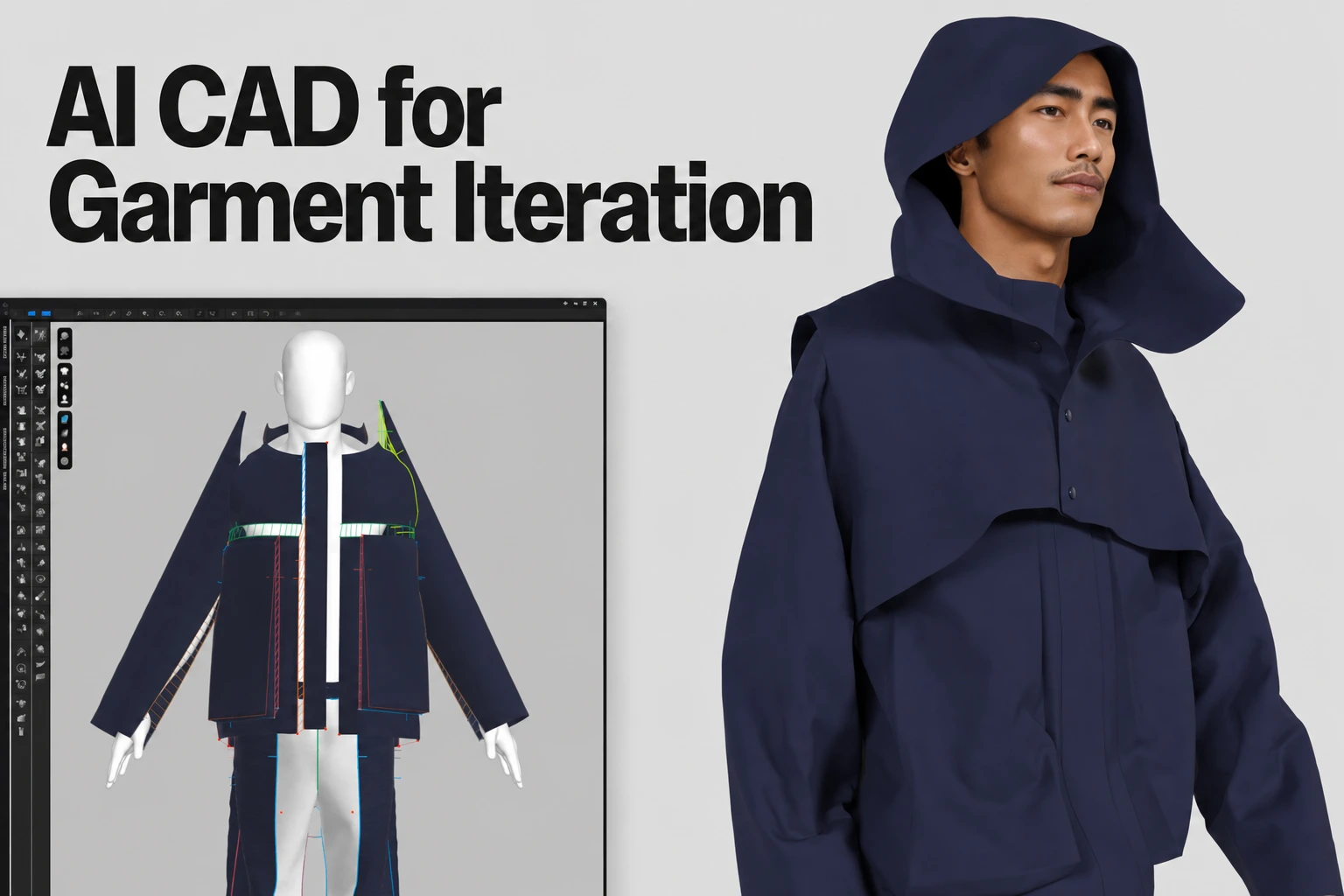
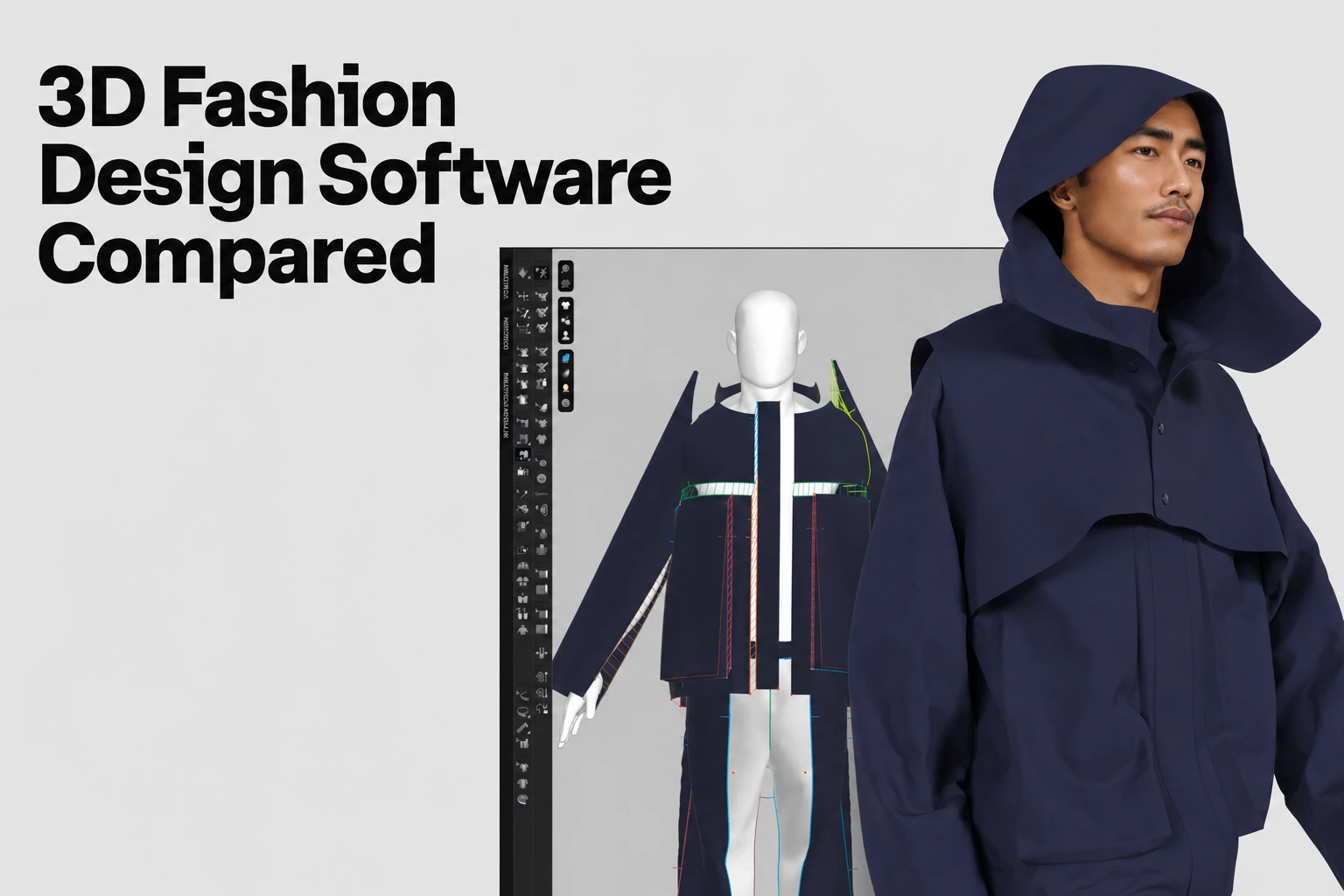
Does Digital Sample Review Replace Physical Fit Meetings?
A clear look at which parts of fit review and sample approval a 3D digital walkthrough can genuinely replace, and which still call for a physical sample.
The short answer
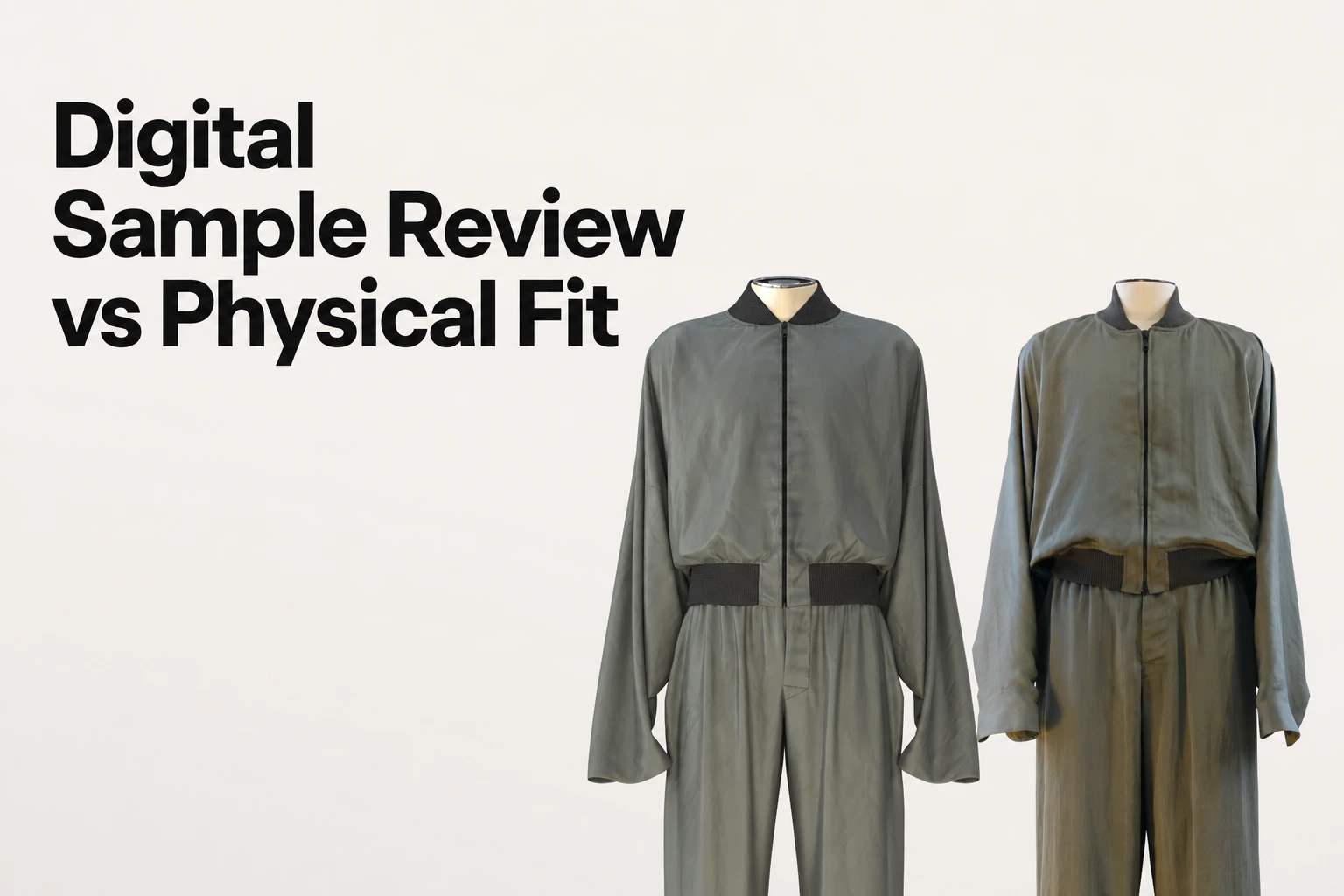
A digital review can help a team inspect proportions, placement, colorways and simulated fit before cutting fabric. Define separate physical checks for hand feel, recovery, wash performance, construction and wearer comfort. Measure any reduction in sample rounds in the actual workflow.
What transfers to digital review, and what still needs a physical sample
- Digital can cover: silhouette and proportion, fit tension, colorways, trim and graphic placement, and catching an obvious construction problem before a sample is cut.
- Physical still has to confirm: fabric hand feel, stretch recovery, drape under movement, wash and shrinkage behavior, stitching and trim durability, and comfort on a moving body.
- The aim: resolve issues digitally before physical sampling, then measure whether your own workflow reduces sample rounds.
What a physical fit round actually involves
Define what each sample is intended to check: early pattern/construction development, fit in the intended material, or pre-production approval. The names and sequence vary by team; agree them with the factory.
A fit review may lead to changes in chest, armhole or sleeve measurements. Record the issue, revise the pattern and decide which digital and physical checks must be repeated. Track sewing, review and shipping time for the actual process.
What a digital review takes over before you cut fabric
Use an early digital review to inspect silhouette, proportions, placement and simulated fit. Record the exact revision and review the updated garment. No general turnaround time for a pocket or colorway change is established here.
CLO’s fit maps visualize simulated stress, strain, tightness and pressure. Fabric-specific strain limits depend on physical inputs and can be adjusted. Inspect the avatar and material data, and validate comfort with a physical wearer rather than inferring it from a map.
CLO’s customer stories include a Lindex technician describing digital fit and size checks before final patterns are sent out, and CALIDA’s technical development lead describing avatar review before the first sewn sample. These are customer-reported workflows, not a guarantee of savings for another team.
What still needs a physical sample
Plan physical checks for the properties the product must meet, including hand feel, recovery, wash/shrinkage behavior, construction, durability and wearer comfort. Document the test conditions and the limits of the digital comparison.
How much a digital pass can save
In CLO’s customer stories, Dainese reports reaching a final product with one prototype in 90% of cases, and Salewa reports reducing unnecessary physical samples. These are individual customer accounts. They do not establish a general sampling benchmark or a guaranteed reduction for other teams.
Use the pilot to find which issues can be resolved digitally before sewing. Keep the physical checks needed for the garment; the number of avoided sample rounds must be measured.
FAQS
Common questions
Does a 3D review replace physical samples entirely?
Define the required physical validation with the product and manufacturing teams. Digital review can support earlier decisions, but it does not by itself validate material behavior, construction or wearer comfort.
How many physical fit rounds does a typical garment still need?
There is no single number established here. Track rounds by garment type and purpose, and compare the pilot with the team’s own baseline.
What should a team check on screen before cutting a physical sample?
Silhouette, proportion, fit tension, colorways, and trim or graphic placement are the items worth settling digitally first, since they can be corrected without sewing anything.
See how the review step works in CLO
CLO's avatar-based fit and drape simulation is the step teams run before the first physical sample.