


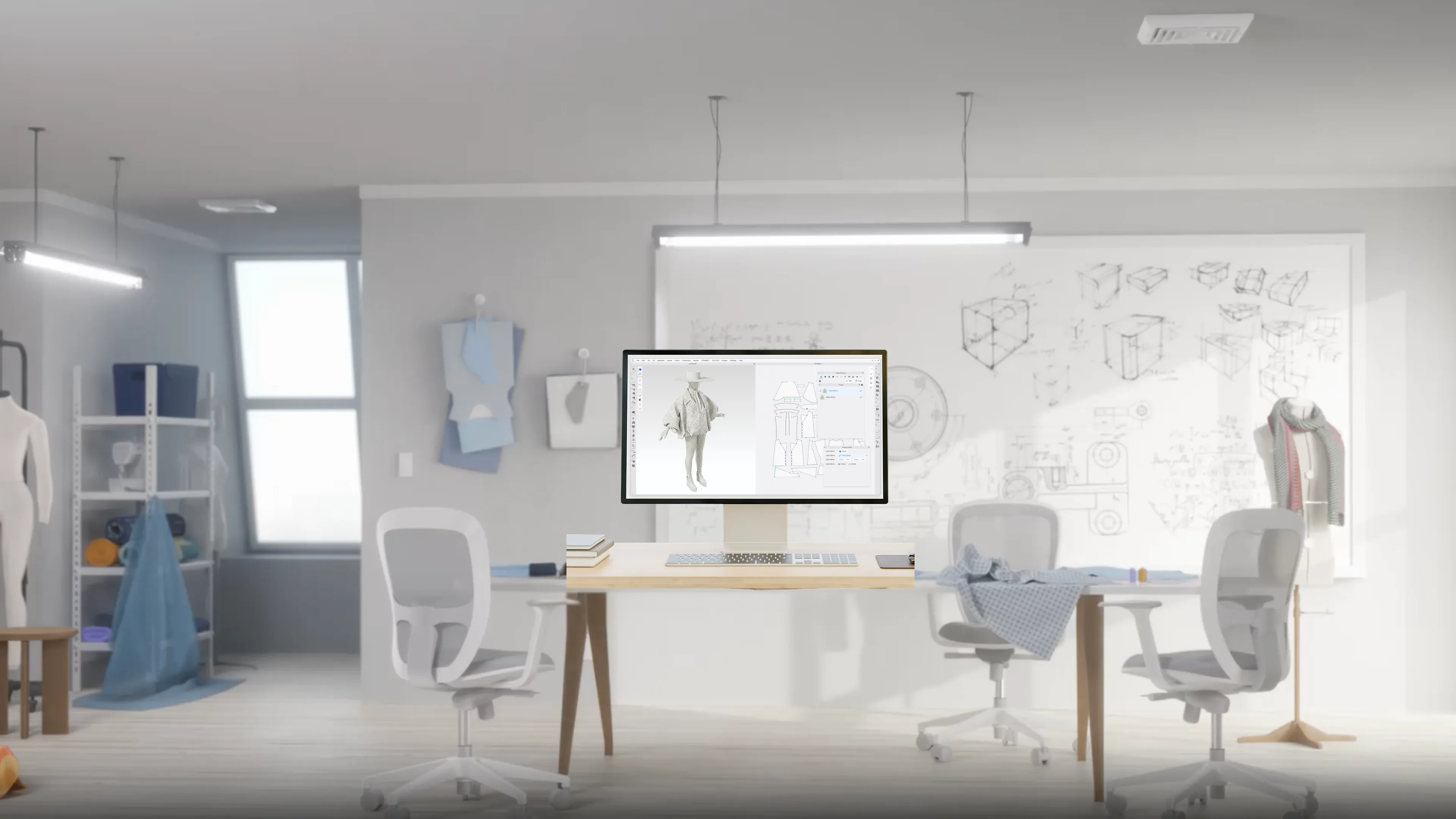
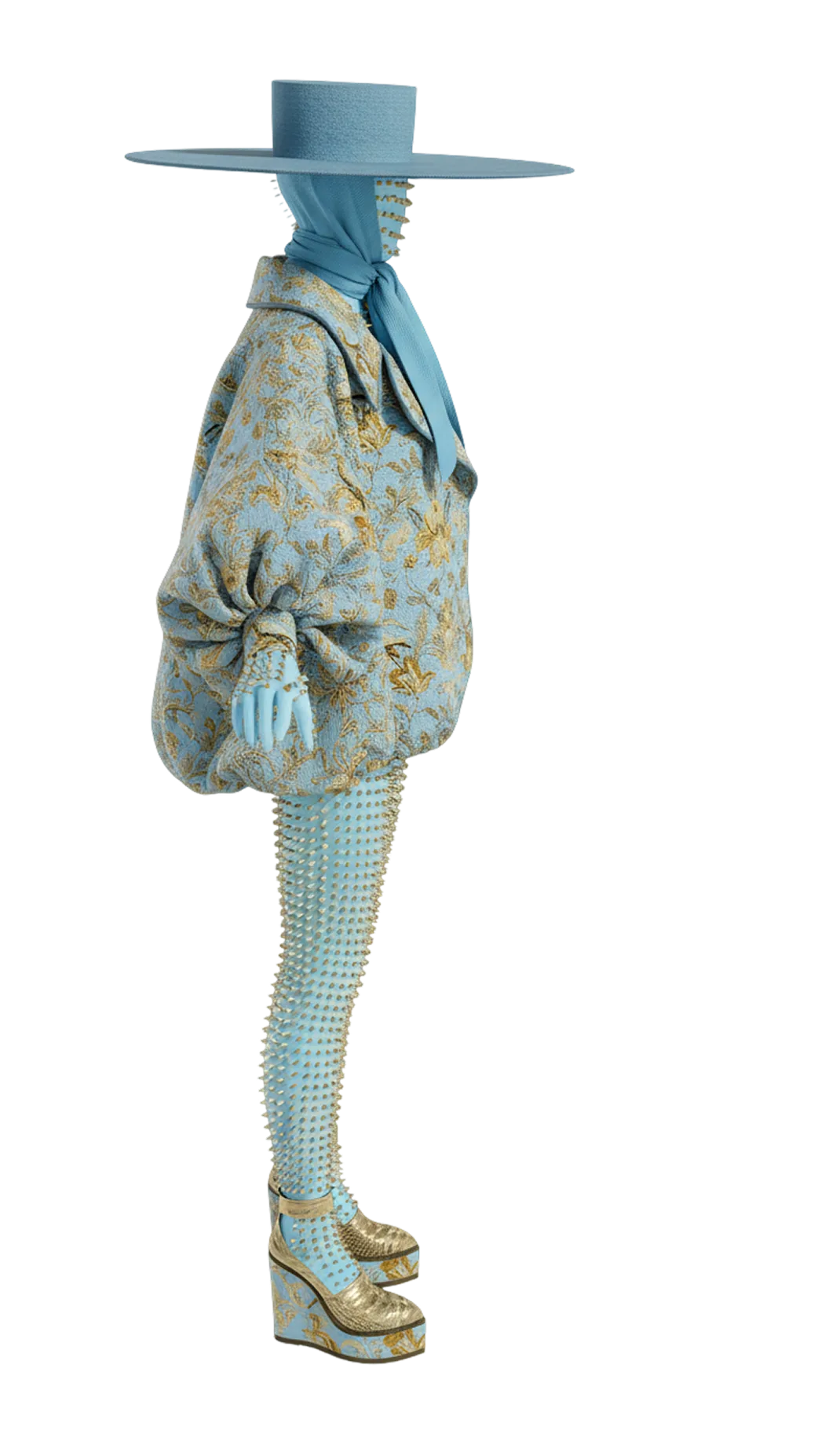
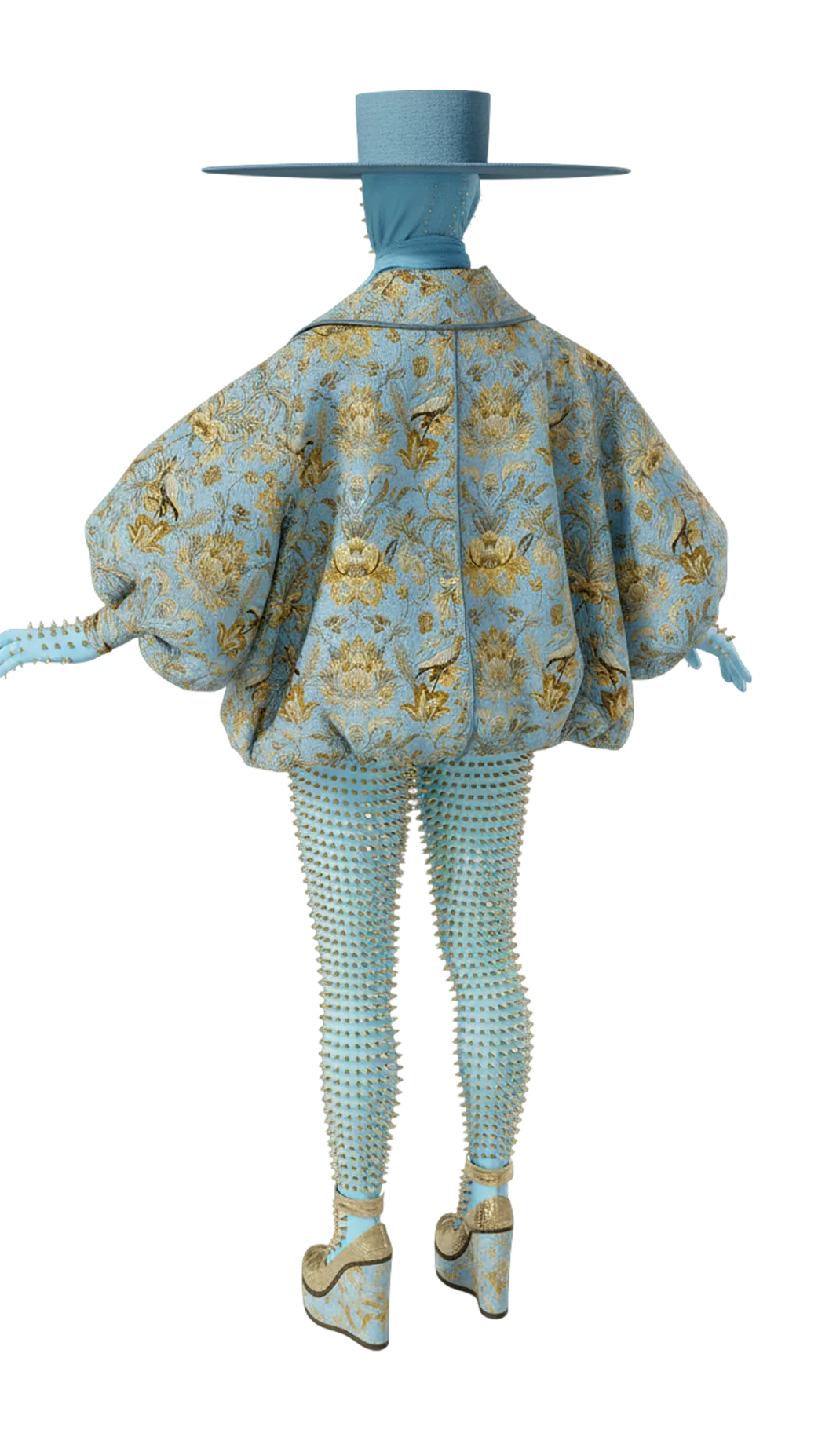
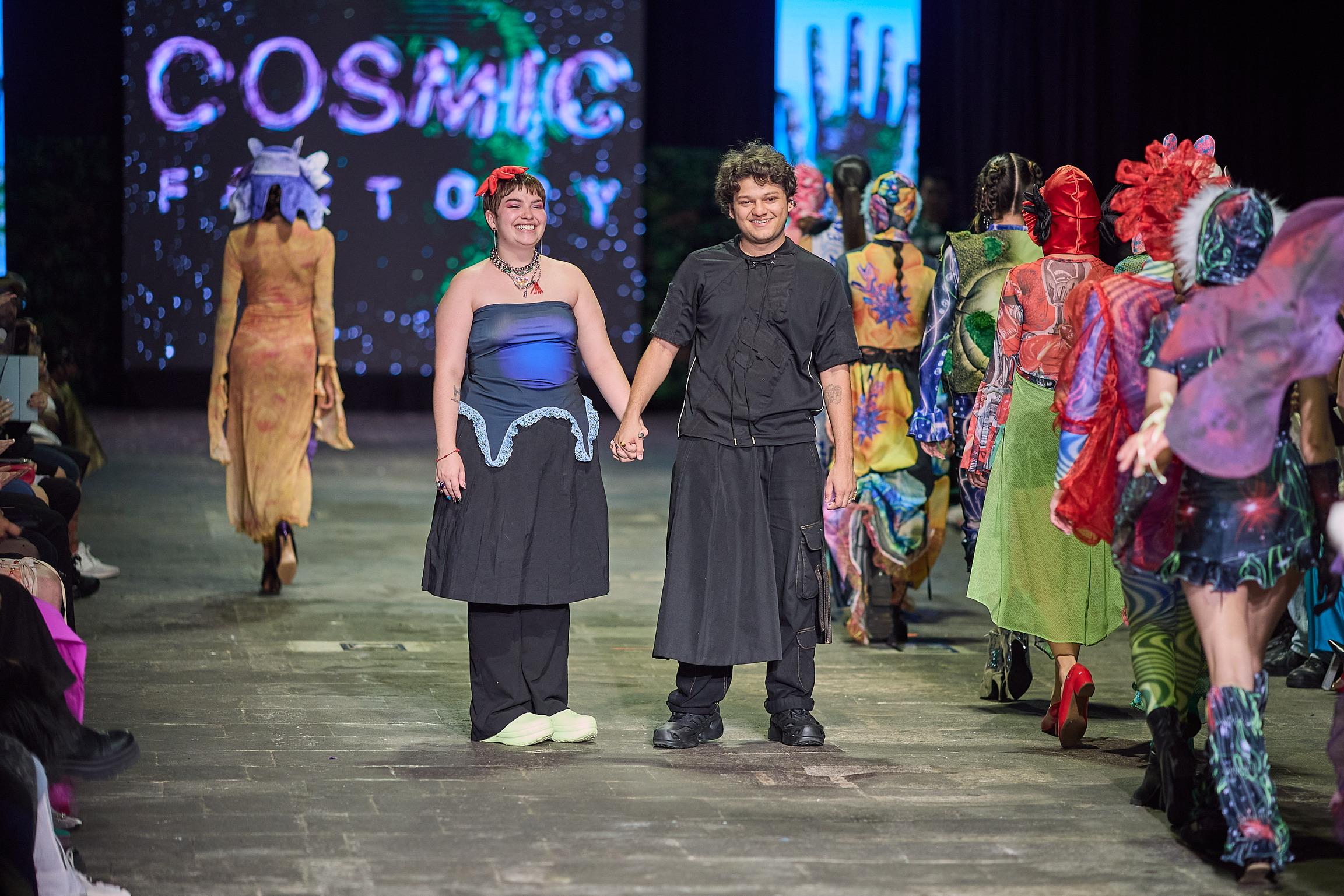
Six years ago, Dana started making face masks on an old iPhone 5. Today, she and her partner Elías run Cosmic Factory, a Costa Rican 🇨🇷 brand that designs and launches entire collections in 3D before making a single physical garment.
They do not use 3D just to create digital art. They use it to run a real, sustainable clothing business from home.
Here is how a pandemic side project became a production-ready brand, and how they are changing the rules of independent fashion.
Part 1: The Duo
Q1. Let’s start with the origin story. We’d love to know how your individual backgrounds in design converged. What was the moment you decided, "Let's build a brand together," and how did 3D become a part of that foundation?
Dana:
I grew up surrounded by art — both my parents are graphic designers, so visual language was always part of my life. Cosmic Factory started during the pandemic in a very raw, intuitive way. I was making face masks and bucket hats, designing everything on an iPhone 5, mixing my own ideas with references from iconic artworks. From there, I started dyeing, painting, and intervening on existing garments, slowly building the confidence to eventually design from scratch. When I reached my first full collection, I was developing patterns by hand, learning through constant trial and error.
Elías:
I wasn't involved at the beginning. I had a background in graphic design, photography, and digital media, but Cosmic Factory was Dana's project. I stepped in when her dad suggested I help translate her ideas into digital pattern layouts using Illustrator. That's the moment it became a real collaboration. Then one day I came across a video of someone using Marvelous Designer, and everything shifted. When we later discovered CLO and realized it was connected to actual garment production — not just digital visuals — it immediately clicked. That's when 3D stopped being an experiment and became a foundation.
Q2. We are curious about your start with CLO. How did you first discover the software, and was there a specific "aha!" moment where you realized 3D would change your design process forever?
We discovered CLO at a really pivotal moment for us as a brand. At the time, we were working on one of our best-selling pieces, “La Cuerpa,” a dress featuring a very distinctive print inspired by the female body, something that really represents our visual identity.
Around that same period, we came across a video on Instagram of someone using a 3D software to create garments. We had never seen anything like it before. We immediately thought, “Imagine if we could do that.” That was the spark.
At first, we found Marvelous Designer, which became our entry point into 3D fashion. We started experimenting in a very basic way, creating garments on a static avatar and rendering simple 360° turnarounds. It was still quite rudimentary, but it opened a completely new way of thinking about design.
Then we came across content from Stephy Fung, a British-Chinese 3D fashion designer, where she explained the difference between Marvelous Designer and CLO. What really caught our attention was how CLO was positioned not just as a visual tool, but as something connected to real garment production.
That insight completely shifted our perspective. We realized this wasn’t just about creating digital content, it could actually transform how we design physically.
We decided to fully commit to learning CLO. Having access to a student license made a huge difference, allowing us to explore the software without a heavy financial barrier.
Over time, what impressed us most was the level of precision. We reached a point where what we designed in CLO could be taken almost directly into production, especially for sublimation, without extensive physical prototyping.
Today, our workflow has completely evolved. Every project begins with the conceptualization of the collection and the creation of sketches and visual ideas. From there, we move into CLO to develop and refine the garments in 3D before taking them into production. This has allowed us to reduce material waste, speed up our process, and design with a much higher level of confidence.
That was the real “aha” moment, realizing that 3D wasn’t just a visual tool, but a bridge between imagination and reality.
Q3. Every great duo has complementary strengths. How would you describe the dynamic between you two? Who brings the "wild ideas" and who brings the "structure", or is it a mix of both?
Dana:
I lead the creative direction. Each collection starts with a concept — a story rooted in fantasy, space, mythology, or nature. I develop the sketches, the prints, the visual universe. But I'm never just handing things off. Even when Elías is deep in CLO, I'm right there making aesthetic calls and making sure the original vision stays intact.
Elías:
My role is to take what Dana imagines and make it real — technically and digitally. I take her Procreate sketches, adapt or build patterns from scratch, and develop them in CLO into production-ready garments. But I'd say the line between "creative" and "technical" is blurrier than it sounds. I'm constantly giving feedback on structure and feasibility, and Dana is constantly shaping how digital work evolves. It's less a division of roles and more a continuous exchange.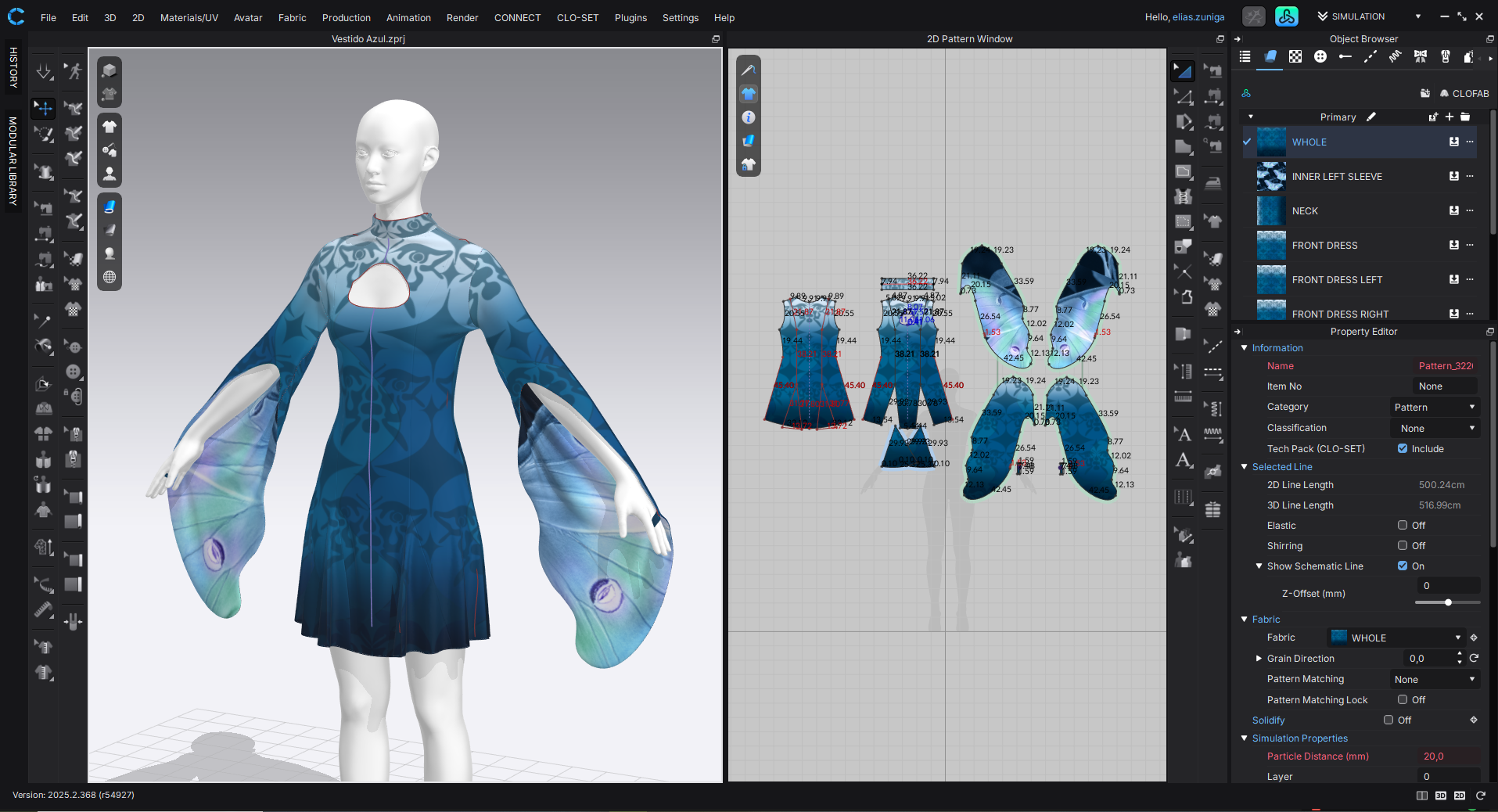
Part 2: Collaborative Workflow in CLO
Q4. Collaboration in 3D is unique. Walk us through a typical workflow. Is it a relay race where you pass the project file back and forth, or do you tackle specific roles (e.g., Pattern vs. Concept) together?
The workflow at Cosmic Factory is structured, but always collaborative from start to finish.
It begins with Dana, who leads the initial stage through sketching and concept development. She creates the fashion illustrations that define each piece, while also shaping the narrative behind the collection. At this stage, the focus is not only on individual garments, but on the story and visual universe we want to build.
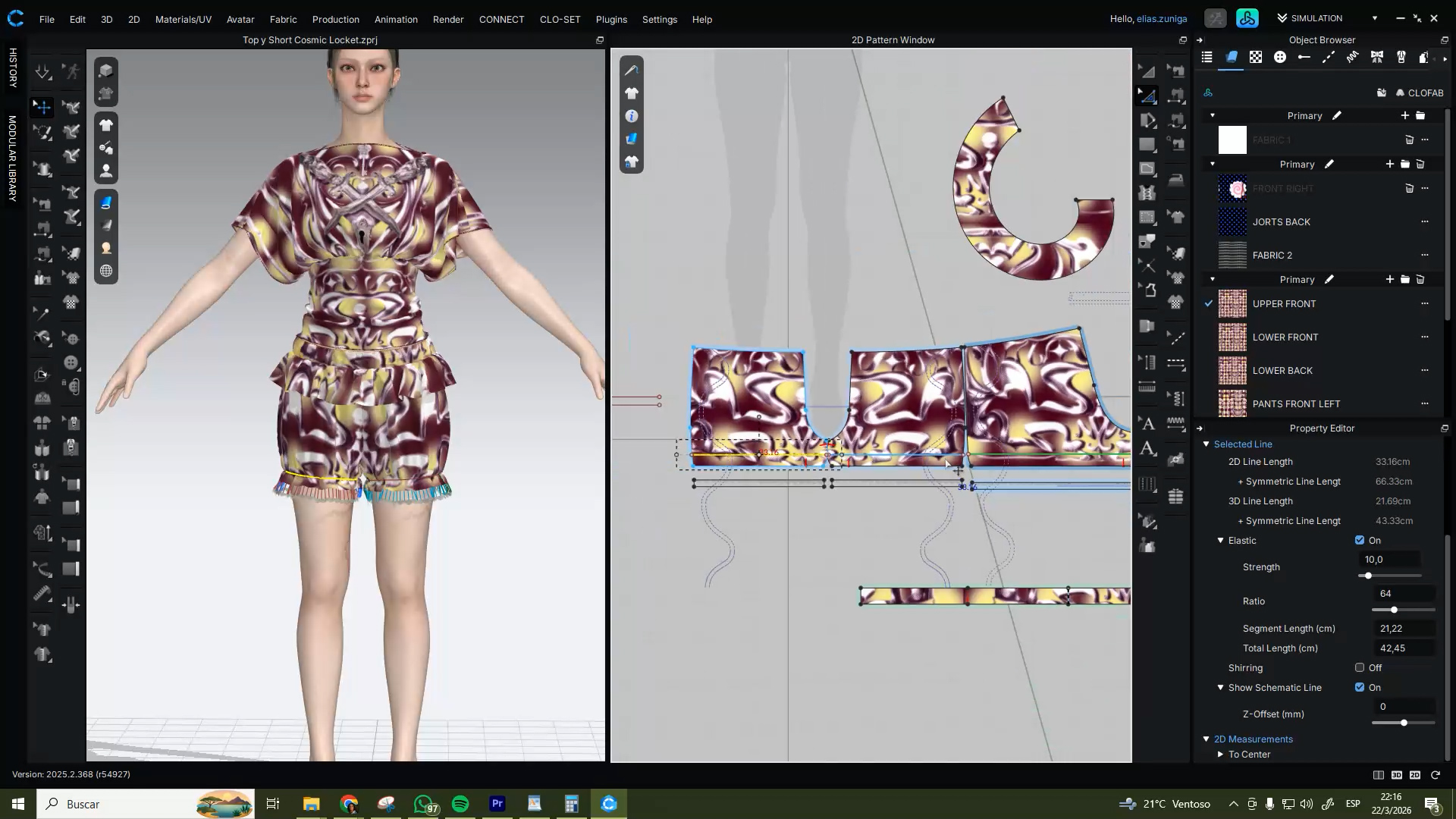
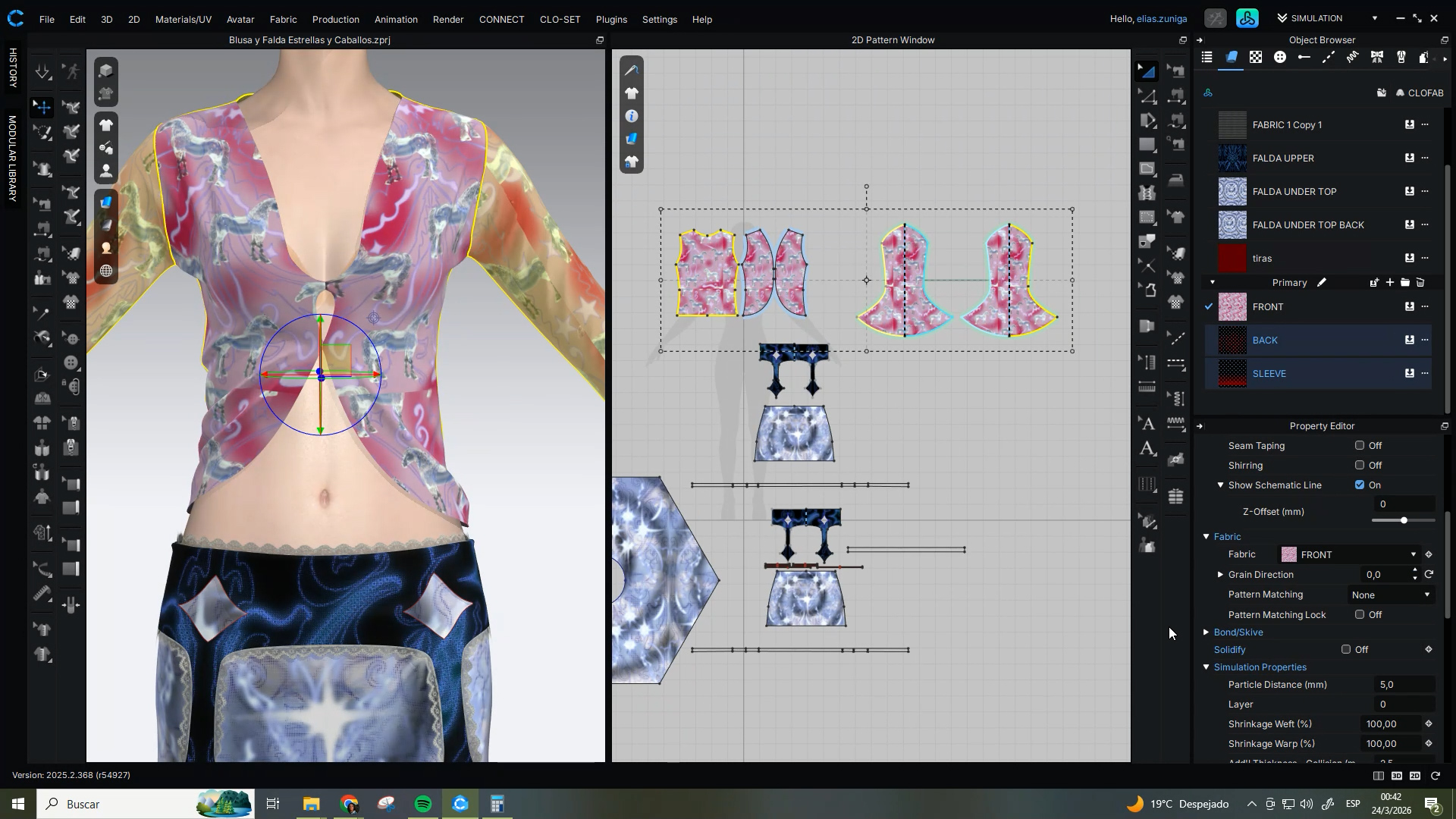
From there, the process moves into CLO, where those sketches are transformed into digital garments by Elías. This is where the project becomes highly iterative. Using 3D simulation, we can explore fabric behavior, test different materials, refine silhouettes, and evaluate how each piece moves and fits in a much more realistic way than in 2D.
CLO also allows us to work with precise measurements. Through tools like the Avatar Editor, we can adapt garments directly to specific body types, something that would be much more complex to resolve purely in 2D. This makes the design process not only more flexible, but also more accurate from the beginning.
Once a design is ready for physical production, the workflow transitions into Illustrator. There, we finalize technical details such as print placement, minor adjustments, and what we call “metros”, the print-ready files prepared for sublimation. Since all our garments are produced through this technique, this step is essential for ensuring everything translates correctly into fabric.
After that, the process moves into garment construction, led by Dana, where the physical piece is brought to life.
For visual content and animations, the workflow expands further. CLO is used to prepare textures, maps, and garment simulations, which are then exported into Blender. In Blender, Elías builds full scenes and develops final animations, bringing our collections into a more immersive visual context.
Throughout this entire process, the workflow is not linear or divided like a relay. Instead, it is continuous and shared. While each of us has our area of focus, Dana leading physical creation and Elías handling digital patterning and technical setup, we are always working side by side, reviewing decisions, and refining together.
That constant overlap is what allows our digital and physical worlds to stay perfectly aligned.
Q5. One of the best things about 3D is "visual communication." Have there been moments where you disagreed on a design detail, but simulating it in CLO helped you reach a solution instantly?
Dana:
There are definitely moments where what I sketch doesn't behave the way I imagined once it's simulated. Proportions shift, fabric moves differently, construction logic changes things. But I don't see that as a disagreement — I see it as the design evolving. CLO gives us a shared visual space to figure it out together instead of arguing over something abstract.
Elías:
From my side, simulation often opens up possibilities that weren't in the original sketch. When something doesn't work as drawn, we don't just fix it — we explore it. Sometimes those moments lead to the most interesting designs. We also use it to make a conscious decision: is this piece going in a more wearable, commercial direction, or something more experimental? Seeing it in motion makes that conversation much faster and clearer.
Q6. Compared to working alone, what do you feel is the biggest "superpower" you gain by working as a duo in a digital environment?
One of the biggest superpowers we have developed by working together in a digital environment is efficiency, both in time and resources, but also in how we think and understand design as a whole.
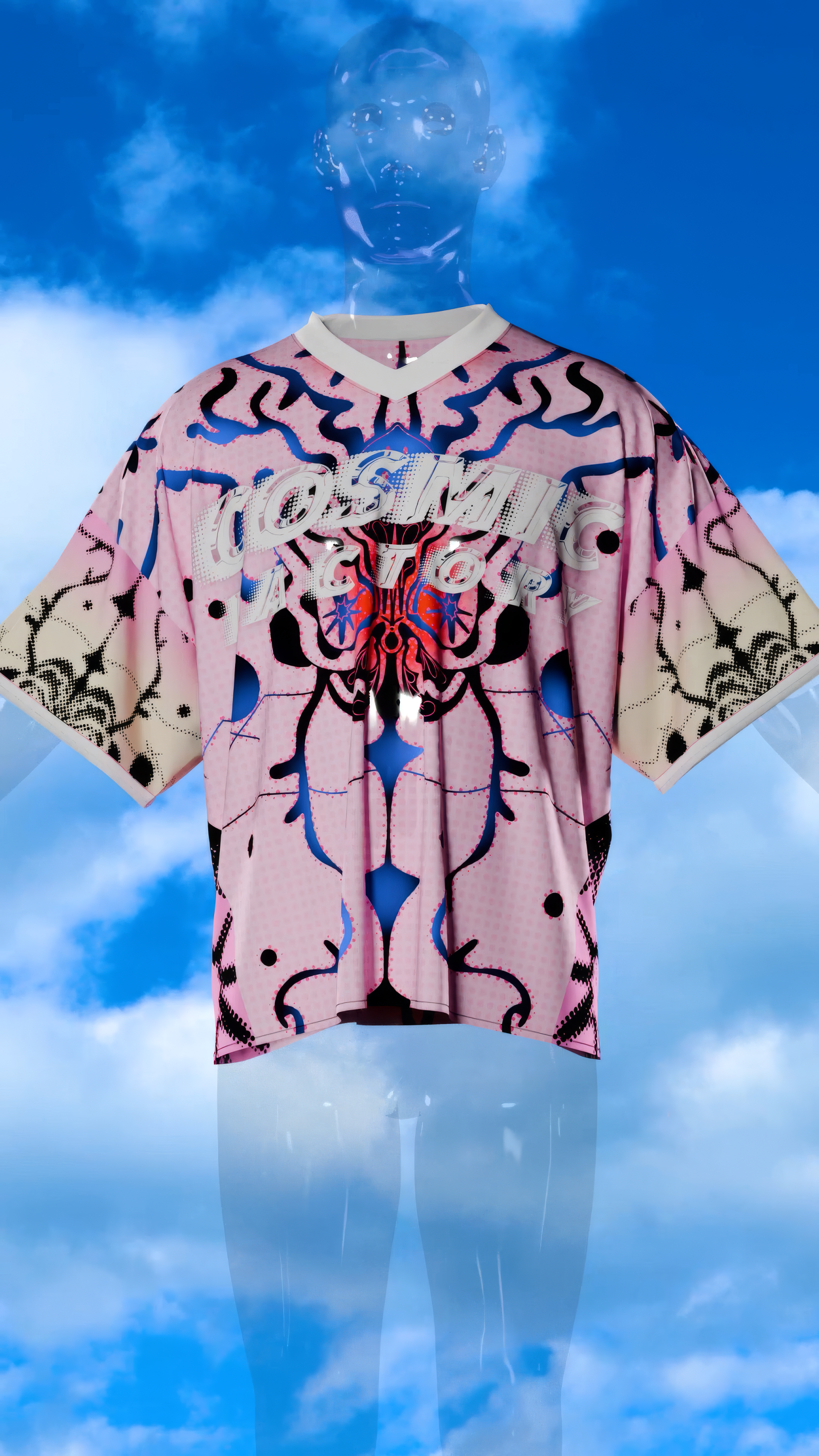
By integrating tools like CLO into our workflow, we’ve been able to completely transform our production model. Instead of investing upfront in physical samples, we design, develop, and even promote entire collections in 3D, creating renders, animations, and campaigns without producing a single physical garment. Since Cosmic Factory operates on a made-to-order basis, this allows us to only bring pieces into the physical world once a client actually requests, significantly reducing waste, cost, and risk.
At the same time, we are very aware that 3D is a tool, not a replacement for craftsmanship. While it gives us a high level of confidence before production, we still approach each piece with the understanding that physical construction can bring its own challenges. That balance between digital precision and real-world awareness is key to our process.
Beyond efficiency, another major advantage of working as a duo is the exchange of knowledge. Coming from different backgrounds, our collaboration has allowed both of us to expand our understanding of the entire design pipeline. Dana has developed a deeper connection with the digital side, learning how 3D tools and workflows operate, while Elías has gained a stronger understanding of garment construction, materials, and how pieces come together physically.
What started as two very different skill sets has evolved into a shared language, where both the digital and physical worlds are constantly informing each other.
In many ways, this combination has positioned us at the forefront of 3D fashion within our local context. As early adopters of this technology in Costa Rica, we’ve not only built our own workflow, but have also sparked curiosity in other designers and brands. Looking forward, we see this not just as a competitive advantage, but as something we would eventually like to share, whether through teaching, collaboration, or opening up new conversations around digital fashion.
Ultimately, our “superpower” is not just working faster or more efficiently, it’s the ability to merge vision, technique, and continuous learning into a single, evolving process.
Part 3: Building a Brand with 3D
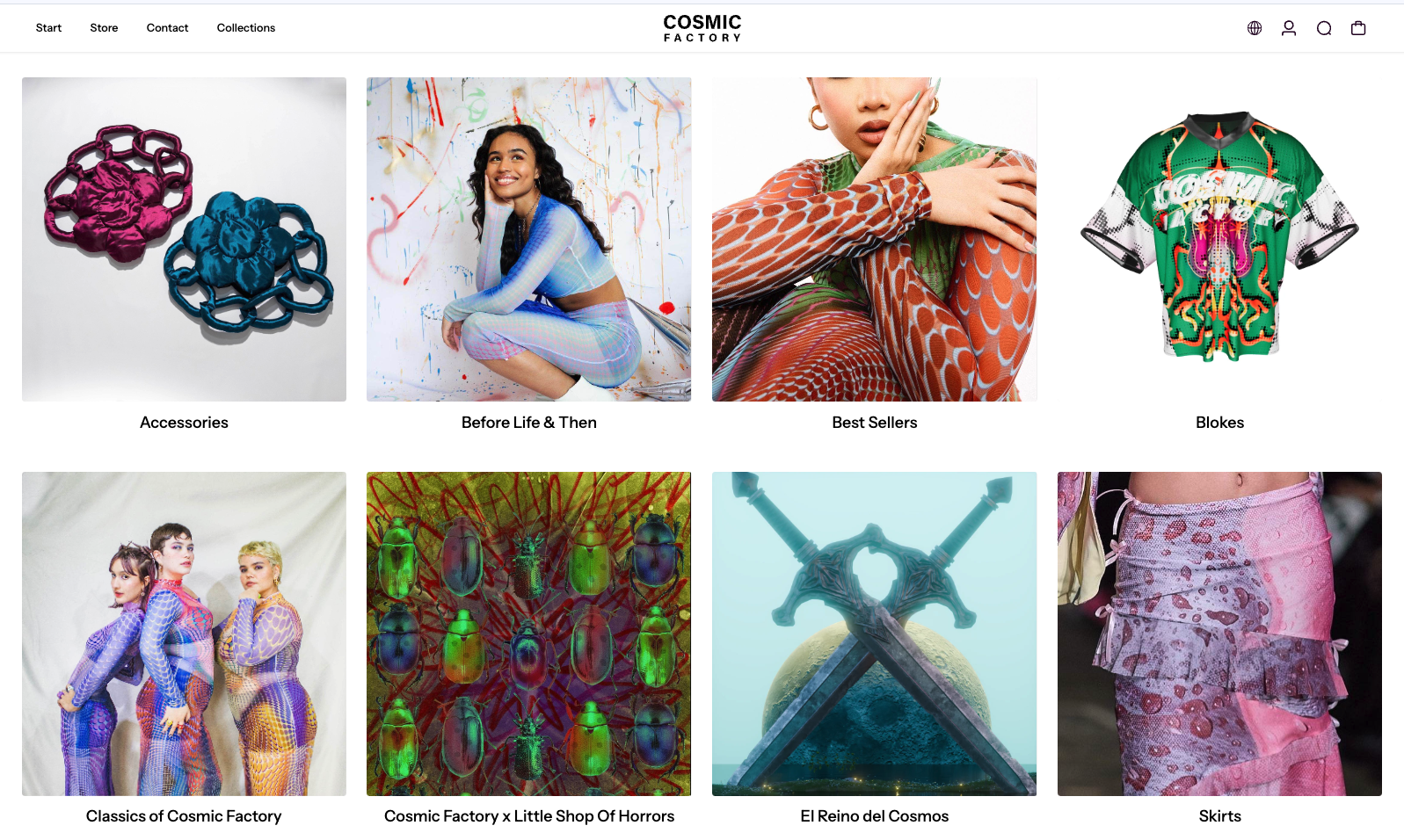
Q7. For independent designers or students, budget is often a constraint. Your brand visuals look incredible, how does CLO help you achieve that high-end "campaign look" without needing expensive physical photoshoots or sets?
For us, CLO has been a key tool in making high-end visual production accessible without requiring large budgets.
Even though CLO is a paid software, its different plans, especially those accessible to students, make it a realistic entry point for emerging designers. In our case, the investment in the software has allowed us to replace many of the traditional costs associated with fashion campaigns, such as physical samples, photoshoots, locations, and production teams.
By working in 3D, we are able to create entire collections visually before producing anything physically. From renders to full animations and digital campaigns, everything can be developed within a controlled environment. This allows us to maintain a strong visual identity while keeping costs low and creative possibilities almost unlimited.
Because we don’t have to invest as much time or resources into traditional production and campaign logistics, we’re able to place a much stronger focus on the visual storytelling of each collection. This gives us the freedom to deeply explore the concepts behind every drop and refine the final result to a much higher level, something that becomes a core part of our identity.
Our workflow doesn’t stop inside CLO. The garments created there become the foundation for more complex visual outputs. By combining CLO with tools like Blender, we build scenes, work on lighting and composition, and create immersive campaign visuals that would otherwise require a full production setup.
We’ve also extended this into interactive experiences, including augmented reality, where clients can visualize garments in a more dynamic and engaging way, even directly from our own platforms.
What makes CLO especially powerful for us is how intuitive it is for garment creation compared to traditional 3D software. Before incorporating it into our workflow, Elías experimented with building garments in general 3D tools, and the process was significantly more complex and inefficient. CLO, on the other hand, is built specifically for fashion design, allowing pattern-based creation, real-time simulation, and accurate visualization without needing to force fabric behavior.
For us, CLO is not just a design tool, it’s the bridge that connects fashion, technology, and visual storytelling, making it possible to achieve a high-end campaign look without the traditional limitations of budget or production.
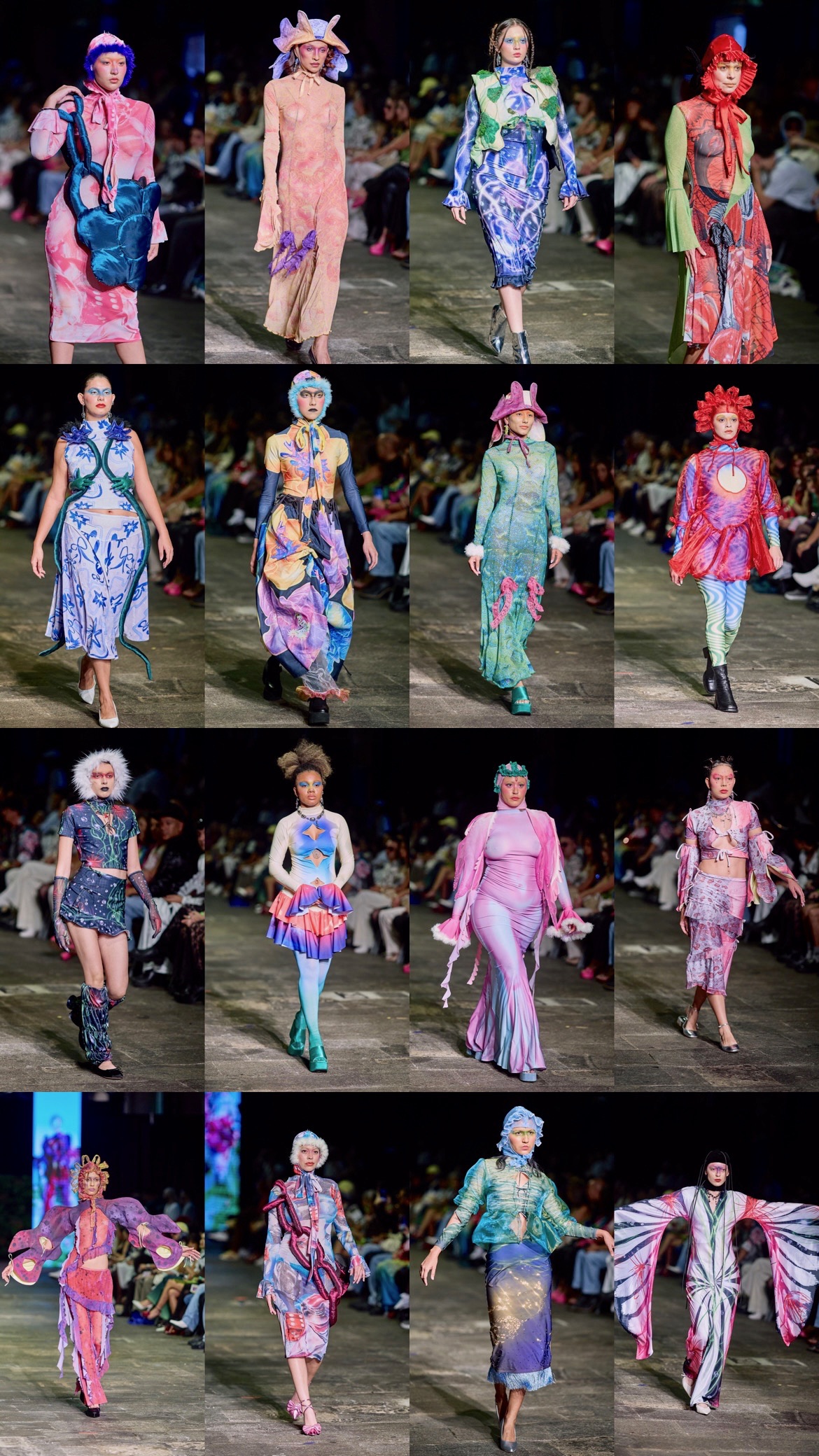
Q8. Creating physical garments can be risky (and costly) if the design doesn't work. How does CLO give you the confidence to move forward with a design? Do you feel like you "know" the garment before you even cut the fabric?
For us, CLO has become a tool that gives a very high level of confidence before moving into physical production.
At the beginning, that trust wasn’t immediate. When we first started exploring 3D, especially while using Marvelous Designer, we still relied heavily on physical prototyping to validate our designs. But once we transitioned into CLO, we began to understand the level of precision it offers, and that completely shifted our process.
One of the key elements has been the ability to work with accurate measurements. Tools like the Avatar Editor allow us to adapt garments to very specific body types, which is especially important when working with custom sizing. Not all bodies follow standard proportions, and CLO allows us to realistically simulate how a garment will fit on each individual client. This gives us a much clearer understanding of the final result before anything is produced.
From Dana’s perspective as a designer, CLO becomes more than just a technical tool, it’s a space to visualize and design garments before bringing them into reality. It allows us to explore ideas, refine proportions, and truly understand how a piece will look and behave, even before touching fabric or investing time and money in materials.
Over time, this has built a strong level of trust in the process. Today, we can say that we rely on CLO with a very high degree of confidence. While we still apply small practical considerations, like adding seam allowances, the accuracy of the simulation allows us to move forward without needing constant physical sampling.
Because of this, we often feel like we already “know” the garment before it exists physically. We understand how it fits, how it moves, and how it will be constructed.
This is especially important in our workflow, since we work with sublimation and made-to-order production. We generate precise pattern layouts directly from CLO, and then refine them in Illustrator to optimize fabric usage and minimize waste. Instead of printing large areas of fabric, we prepare exact pattern shapes tailored to each client.
As a result, not only do we reduce risk in production, but we also significantly minimize textile waste and avoid the use of toxic dyeing processes. CLO doesn’t just give us confidence, it allows us to design more consciously and efficiently.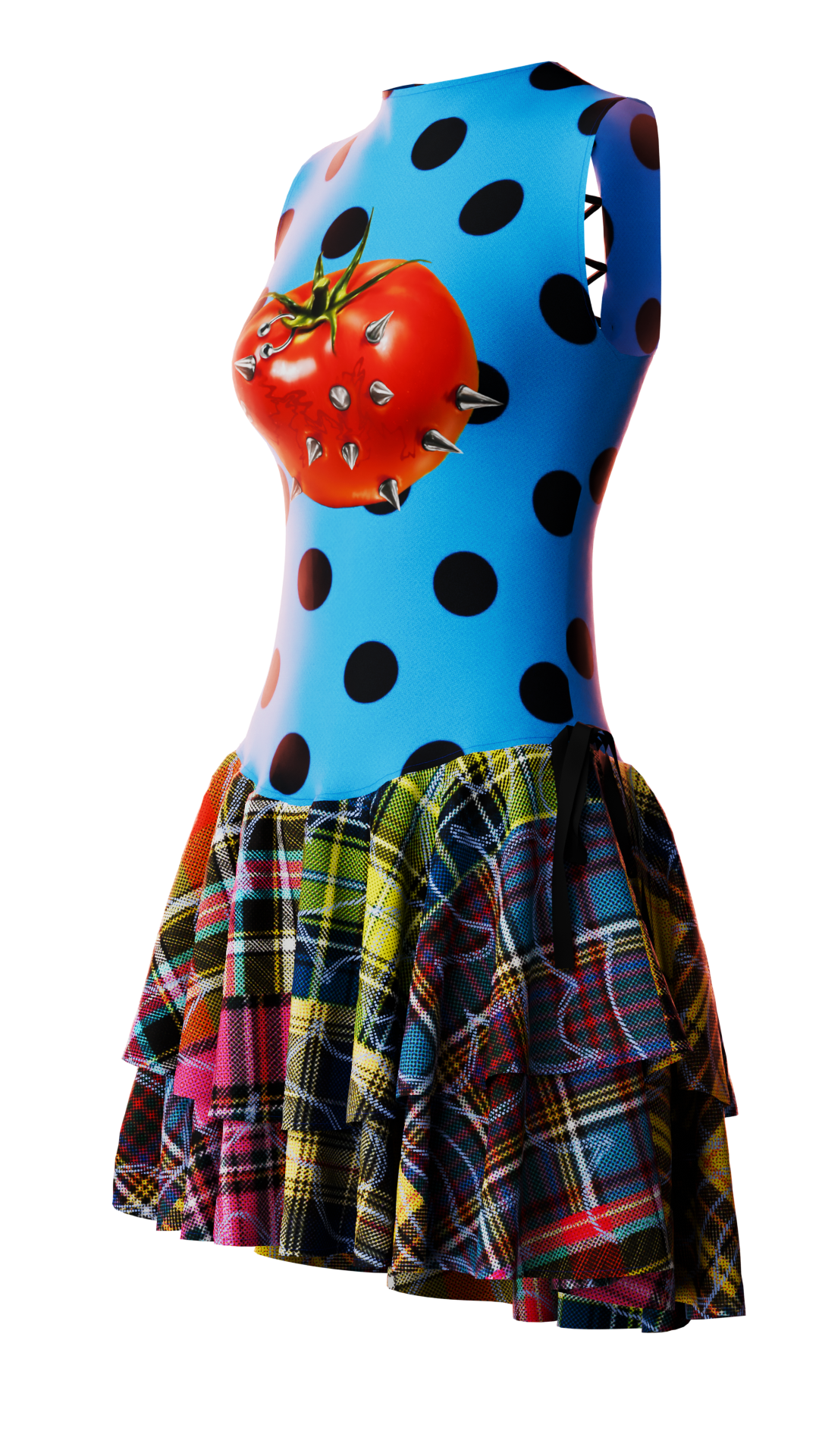
Part 4: Vision
Q9. Since you have two different perspectives, we’d love to hear from both of you: What is the one CLO feature that saves your life (or sanity) the most during crunch time?
Dana:
For me, it's the overall confidence CLO gives me before we touch any fabric. I can visualize the garment, understand how it fits and moves, and feel certain about the design before any physical investment is made. That peace of mind during crunch time is huge.
Elías:
The Avatar Editor, without a doubt. When we're working with custom sizing — and not all bodies follow standard proportions — being able to simulate a garment on a customized avatar that closely represents a specific client saves us from so many production surprises. Under a tight deadline, that accuracy is everything.