Technical Fashion Design Software: Comparing AI Apparel CAD, Pattern Accuracy, and 3D Fit Review Tools (2026)
Compare leading fashion CAD and 3D apparel design software for technical design teams in 2026 across 2D pattern precision, AI drafting, fit simulation, and grading.
Key takeaways
- Check the production pattern, not just the render. Review geometry, grainlines, seams, notches, grading and material assumptions against the actual factory requirements. Parametric drafting is one workflow, not a prerequisite for every valid pattern.
- CLO connects pattern editing with 3D review. Use Pattern Drafter or Edit POM to retain parametric relationships; direct pattern edits break the Pattern Drafter connection. Re-simulate after editing as needed.
- Compare named products: VStitcher offers garment simulation and fit tools; Studio provides apparel authoring and separate Style3D Cloud provides asset collaboration. Check plan permissions.
- Optitex and Gerber AccuMark 3D connect patterns and 3D review. Optitex documents 3D changes affecting 2D patterns and grading tools; Gerber AccuMark documents automated pattern creation, grading, and industrialization.
- Compare eligible plans: CLO and Browzwear have different individual/company limits. Request a product-specific quote and module list for Optitex and AccuMark.
The difference between decorative 3D and production fashion CAD
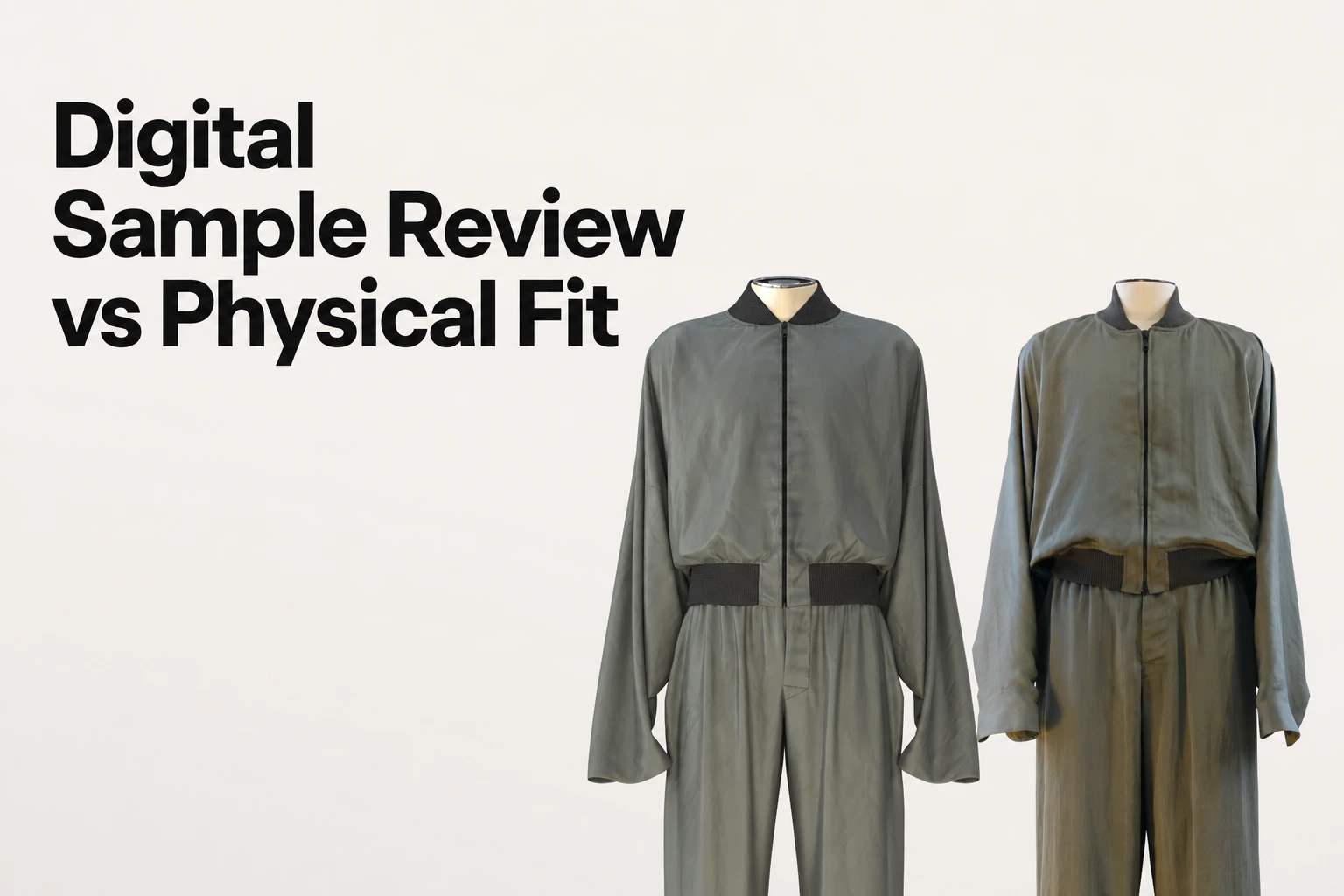
A garment render is not a complete manufacturing pattern. Check whether the selected workflow retains the panels, seams, grainlines, grading and material data required by the factory; do not infer those properties from the visual result or software category.
Research in Computer-Aided Design identifies pattern design, assembly, and fabric mechanical properties as influences on 3D garment shape. Validate those inputs when evaluating virtual fit.
Evaluate how the selected editing operations connect the 2D pattern and 3D garment:
- CLO’s synchronization guide says 2D edits are reflected in 3D and end an active simulation. Pattern Drafter/Edit POM preserve parametric relationships; direct pattern edits break them. StyleLine tools edit garment outlines, while Auto Fitting has its own avatar prerequisites. Test the operation you need.
- Browzwear’s documented workflow shows 2D pattern adjustments updating the 3D garment in real time.
- Optitex documents 3D-sample changes affecting the 2D pattern and grading tools for virtual samples in multiple sizes.
- Gerber AccuMark 3D connects 2D patterns and 3D simulations; the suite supports automated pattern creation, grading, and industrialization.
- Style3D Studio connects pattern editing, sewing and garment simulation. V10.0 documents specific pattern/export updates; validate the receiving factory workflow.
While these platforms establish pattern-to-simulation connections, the available research does not establish absolute millimeter-level production tolerances for any software platform. Technical design teams must validate digital patterns against physical factory cutting specifications and brand tolerance rules.
AI-assisted pattern drafting and technical design automation
Artificial intelligence in fashion CAD has moved beyond generic text-to-image concepts into targeted patternmaking tools that assist technical designers with initial pattern generation, point-of-measure (POM) tracking, and repetitive geometry adjustments.
The depth and implementation of AI technical design features vary across major platforms:
- CLO: The Pattern Drafter manual documents measurement-driven drafting, grading, and AI Pattern Drafter (Beta) generation for t-shirt, trouser, and skirt patterns from sketch input. CLO 2026.0 also introduces Sketch on Avatar. These outputs require technical review before production.
- Style3D Studio: V10.0 documents garment arrangement/sewing assistance and BOM costing. Current AI features require Enterprise; separate Cloud functions do not establish Studio plan access.
- Browzwear VStitcher: The product page describes fabric simulation, tension and pressure mapping, and customizable tech packs. Confirm the exact automation tools required for your pattern-assembly process.
- Optitex & Gerber AccuMark 3D: Optitex documents patternmaking and nesting tools, while Gerber AccuMark documents automated pattern creation and grading. These features should not be treated as proof of sketch-to-pattern AI generation.
Fabric physics simulation and virtual fit validation
Virtual fit validation requires software to model the mechanical behavior of textiles under tension, compression, shear, and gravity. Evaluating digital samples without physical prototypes requires accurate physical fabric measurements combined with numerical simulation engines.
Each platform approaches fabric mechanics and fit diagnostics through specialized toolsets:
- Browzwear VStitcher: The Fabric Analyzer guide lists mass, thickness, bend, stretch, linearity, and shear among captured parameters. VStitcher documents tension and pressure mapping. Its 2026.1.2 release notes describe sequential multi-size simulation with consistent pose and preparation state.
- CLO: The Strain Map manual describes stretch percentages and Fabric Mode based on each fabric’s stretch limit. The wearable limit uses physical fabric properties and can be manually adjusted. This source does not establish pressure diagnostics or hardware-kit eligibility.
- Style3D Studio: Its product page documents garment simulation. Inspect the actual material inputs, avatar and fit-review tools on the intended garment.
- Optitex and AccuMark: Optitex documents a virtual tension map reporting tension, avatar distance and stretch. AccuMark’s guide explains its pattern, avatar and fabric inputs for simulation. These descriptions are not comparative accuracy measurements.
Multi-size grading, BOM calculation, and production handoff
A 3D design workflow is only as effective as its handoff to production. Technical design teams must verify how CAD software manages multi-size grading rules, generates structured bills of materials (BOM), and exchanges standard data files with factory plotters, automated cutters, and Product Lifecycle Management (PLM) systems.
The platforms support production handoff across several technical dimensions:
Grading and measurement tables
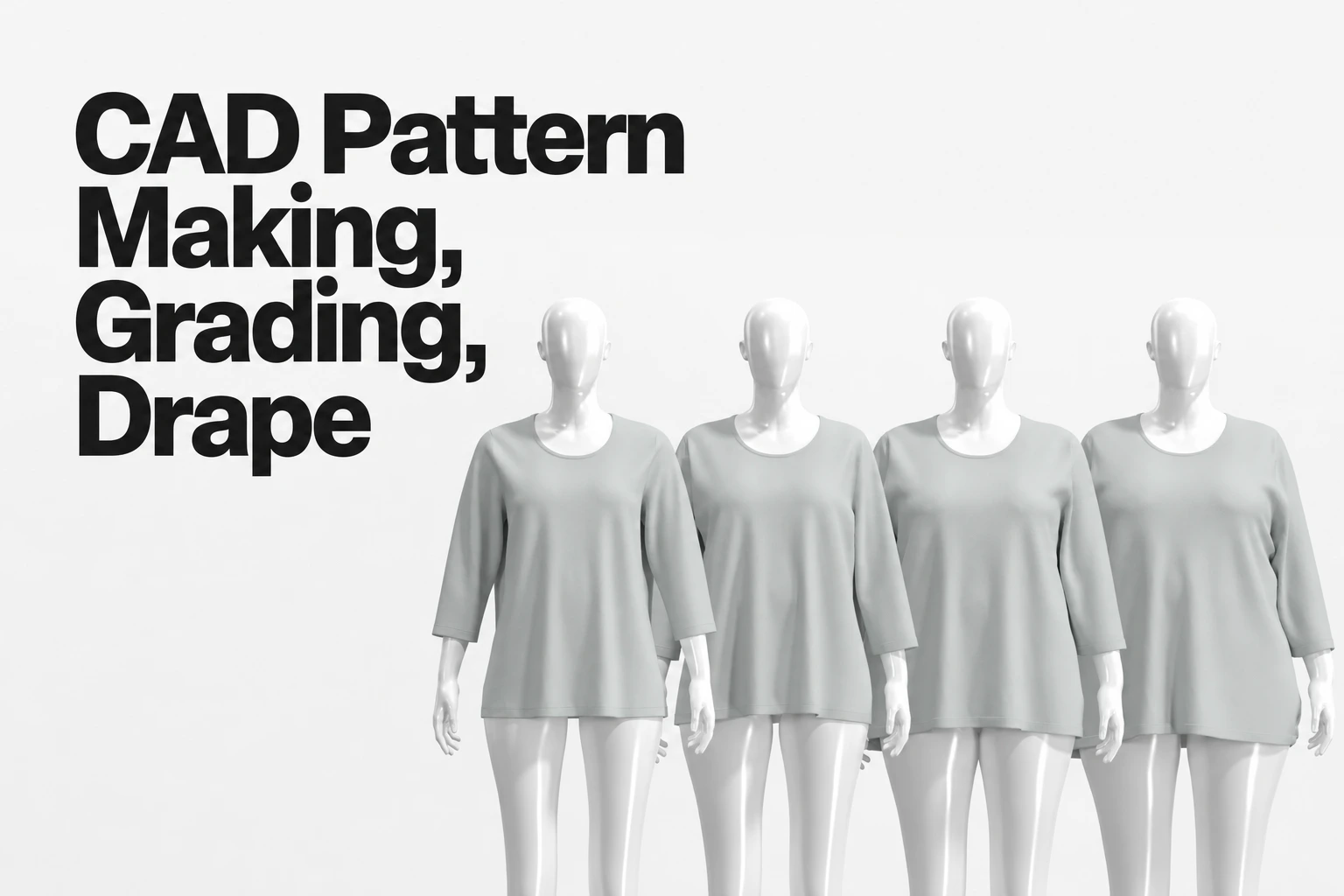
CLO’s Pattern Drafter grades from entered measurements or increments. Optitex supports multi-size virtual sampling with grading tools, while Gerber AccuMark supports automated pattern grading and industrialization. Validate graded patterns before manufacturing.
Bill of materials (BOM) and consumption costing
CLO’s BOM Editor manual details cost estimation for fabrics, buttons, buttonholes, topstitches, and zippers across colorways, calculating fabric cost per garment from Print Layout Mode consumption data. Browzwear’s BOM documentation lists fabrics, seams, artworks, and trims. Confirm the required export fields and PLM/ERP integration with your implementation team; a general integration article does not establish each CAD product’s export behavior.
Standard CAD exchange (DXF, PDF, AI)
CLO nesting arranges patterns for fabric layout; DXF export is a separate exchange step. Select the required format and settings with the receiving factory. Do not assume every listed platform includes the same marker module or that external exchange is only for legacy systems.
PLM and ERP connectivity
CLO-SET provides 3D content collaboration and a separate tech-pack workflow. Style3D Cloud provides asset storage and collaboration. Confirm each specific PLM/ERP connector, direction and fields; a collaboration product does not establish automatic synchronization.
Comprehensive comparison: Capabilities, ecosystems, and pricing
The following table compares the five platforms across their documented technical capabilities, grading workflows, production handoffs, and pricing structures.
| Evaluation Criterion | CLO | Browzwear VStitcher | Style3D | Optitex Pattern Design Software | Gerber AccuMark 3D |
|---|---|---|---|---|---|
| 2D Pattern Drafting & Precision | Pattern Drafter/Edit POM retains parameters; direct edits break connection | 2D edits update 3D garment | Connected 2D pattern data and 3D modeling; verify exchange | 3D sample edits affect 2D patterns; multi-size grading | Connected 2D patterns and 3D simulation; automated grading |
| Virtual Fit & Fabric Simulation | Fit Maps with adjustable stretch limits | Fabric Analyzer parameters; tension/pressure mapping; sequential size simulation | Physics-based gravity, motion, stretching, and collision simulation | Fabric simulation and multi-size virtual samples | Connected 2D patterns and 3D simulation |
| Production Handoff & CAD Exchange | DXF-AAMA, DXF-ASTM, Standard DXF; validate receiving system | BOM includes fabrics, seams, artworks, trims | Confirm required exchange formats and integration | Confirm target CAD exchange and production setup | Confirm target CAD exchange and production setup |
| Ecosystem and integration | CLO-SET collaboration; verify the configured connector | Verify selected Stylezone and integration functions | Separate Style3D Cloud; verify product/plan | Verify modules and receiving systems | Verify modules and receiving systems |
| Pricing & Licensing Model | $50/month or $450/year displayed; enterprise quote | Freelancer $750/year displayed; Teams $3,950/year for up to 3 named users | Confirm licensing, trial, and pricing with vendor | Contact vendor for pricing | Contact vendor for pricing |
Pricing and deployment breakdown
- CLO: The subscription page displays $50/month or $450/year after a 14-day trial, excluding tax and VAT. Confirm current checkout terms and contact the vendor for enterprise pricing.
- Browzwear VStitcher: The pricing page displayed Freelancer at $750/year and Teams at $3,950/year when checked. Teams supports up to three named users. Contact the vendor for enterprise pricing and confirm current terms before purchase.
- Style3D: Confirm current commercial-use permissions, AI eligibility, trial duration, and pricing with the vendor before selecting a plan.
- Optitex Pattern Design Software: Optitex operates under a customized enterprise model. Contact vendor for enterprise tier pricing.
- Gerber AccuMark 3D: Contact the vendor for commercial licensing, pricing, and contract duration.
Selection guide: Choosing by apparel category and team structure
Selecting technical design software requires aligning platform capabilities with garment categories and operational scales.
Selection by apparel category
- Tailoring and Structured Outerwear: Evaluate ease, interlinings, grainline, and multi-piece construction with representative garments. Confirm the required grading, simulation, and cutting-room exchange behavior instead of assuming that every platform handles these details identically.
- Activewear and Performance Apparel: Compare the documented diagnostic views using representative materials and garments. CLO’s Strain Map reports stretch percentages and fabric-specific limits. Do not treat this as a measured comparison of seated compression or absolute garment pressure.
- Knitwear: Knit Swatch Editor controls wales, courses, yarn thickness, gauge and stitch layout. The APEXFiz plug-in maps materials/PBR textures to exactly matched part/pattern names, with re-export/re-import for updates. This is not evidence of automatic knitting-machine programming or validated garment-level knit mechanics.
- Denim: CLO’s Wet Wash manual applies wash effects to the fabric’s base-color map. Use that for visual review; it does not validate a physical wash process.
Selection by team operational structure
- Independent Designers and Emerging Studios: Evaluate documented individual plans and the software used by your collaborators. CLO displayed $50/month or $450/year, and Browzwear Freelancer displayed $750/year when checked. Confirm current terms before purchase.
- Enterprise brands: Compare CLO-SET, Stylezone and Style3D Cloud for the required review/version workflow. Test actual integrations and permissions.
- Manufacturers: Optitex and AccuMark provide pattern and production-tool options. Confirm the exact marker, cutter and ERP interfaces, rather than assuming every machine or module is included.
FAQS
Frequently asked questions
How do measurement-driven pattern adjustments work in 3D CAD?
In CLO’s Pattern Drafter, edit measurements through Pattern Drafter or Edit POM to retain the parametric relationship. Direct pattern edits break the connection. Use the synchronization and simulation workflow to review the resulting garment after changes.
Can 3D strain and pressure maps replace physical fit prototypes?
CLO’s Strain Map shows stretch percentages using global or fabric-specific limits. Use these views alongside measured material inputs and physical fit checks appropriate to the garment; they do not establish that physical sampling can generally be reduced to one final check.
How does CAD data handoff work between 3D design software and factory cutting rooms?
CLO Nest Patterns supports layout work, and DXF export has format, scale, grade and line settings. Agree the required handoff with the factory and inspect the imported result. Native layout tools do not remove the need for that check.
What computer hardware is required to run 3D fashion simulation and AI drafting?
Check the installed product and release. CLO 2026.1 adds native GPU simulation on Apple Silicon Macs with trim and soft-body support. Read the relevant hardware guide and test representative garments; an older rendering-only limitation is not current simulation guidance.
Which software handles automated size grading across a full garment collection?
Grading workflows vary. CLO’s Pattern Drafter uses entered size measurements or increments. Optitex and Gerber AccuMark document grading tools; Browzwear documents sequential multi-size simulation. Test representative sizes and confirm the exact grading workflow before adopting a platform.
Disclaimer: This comparison is based on official vendor documentation and published software specifications. Product features, capabilities, and licensing terms change over time. Readers should verify current details, hardware requirements, and pricing directly on official vendor websites.
Transform Your Apparel Design Workflow with 3D CAD
Experience real-time 2D-to-3D pattern synchronization, fabric simulation, and parametric grading in a unified workspace.
Related reading