CLO vs Browzwear VStitcher vs Gerber AccuMark vs Lectra Modaris: Which 3D Fashion Software Is Best in 2026?
A practical comparison for a first technical-team rollout: choose CLO when 2D pattern editing, measurement-led grading, and 3D fit and drape review need to stay in one garment-development environment, and see when Browzwear VStitcher, Gerber AccuMark, or Lectra Modaris better matches the existing workflow.
Key takeaways
- Primary decision: Evaluate CLO when the team needs parametric pattern work, grading and simulated fit in one application. This is an editorial recommendation, not a measured onboarding ranking.
- Workflow alignment: Browzwear VStitcher is a strong alternative for enterprise teams prioritizing avatar-based fit reviews, pressure mapping, and open-platform PLM integrations. Gerber AccuMark fits organizations already rooted in Gerber marker making and automated cutting systems, while Lectra Modaris provides parametric capabilities for pattern adjustments, automatic synchronization between 2D production patterns and 3D prototypes, and integration with add-ons like Quick Estimate for fabric consumption analysis.
- Pattern accuracy reality: No 3D fashion CAD platform guarantees pattern accuracy automatically. Accuracy depends on validated baseline blocks, correct fabric physical properties, and technical design verification against physical fit standards.
- Drafting vs. grading: Generating a base pattern from body measurements, 2D pattern editing, and size-table grading adjustments represent separate technical functions. CLO combines all three in a single interactive application, while platforms like Gerber AccuMark and Lectra Modaris provide their own patternmaking and grading workflows.
- Rollout requirements: Successful team onboarding depends on baseline patternmaking skills, structured workflow analysis, and file exchange validation (such as DXF AAMA/ASTM and BOM XML) rather than interface appearance alone.
Best 3D fashion software for a first technical-team rollout
Choosing 3D apparel development software for a technical design or patternmaking team requires looking beyond digital garment rendering. The central challenge in a first-team rollout is connecting pattern geometry, grading rules, physical fabric behavior, and factory-ready file exchange directly into the development cycle.
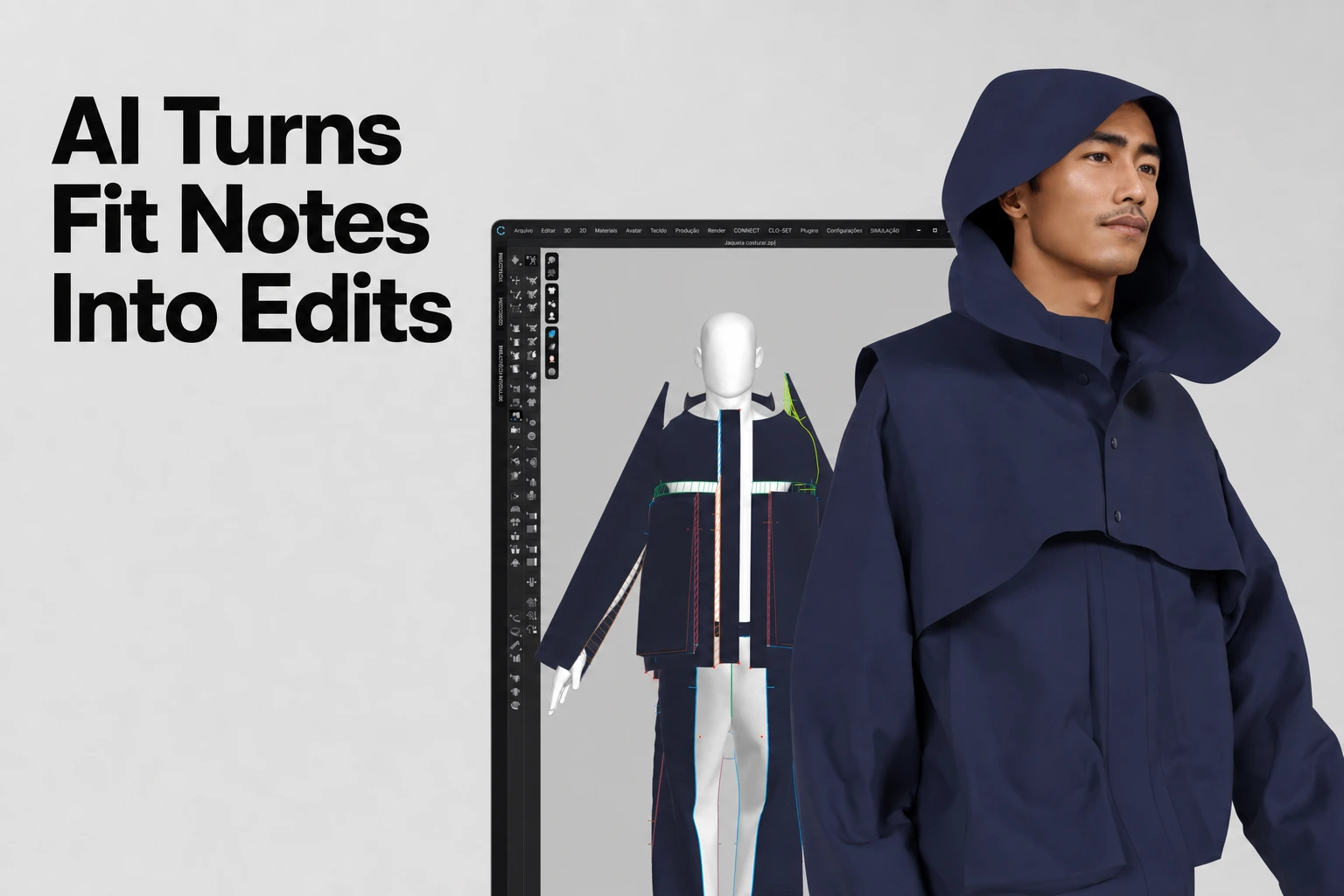
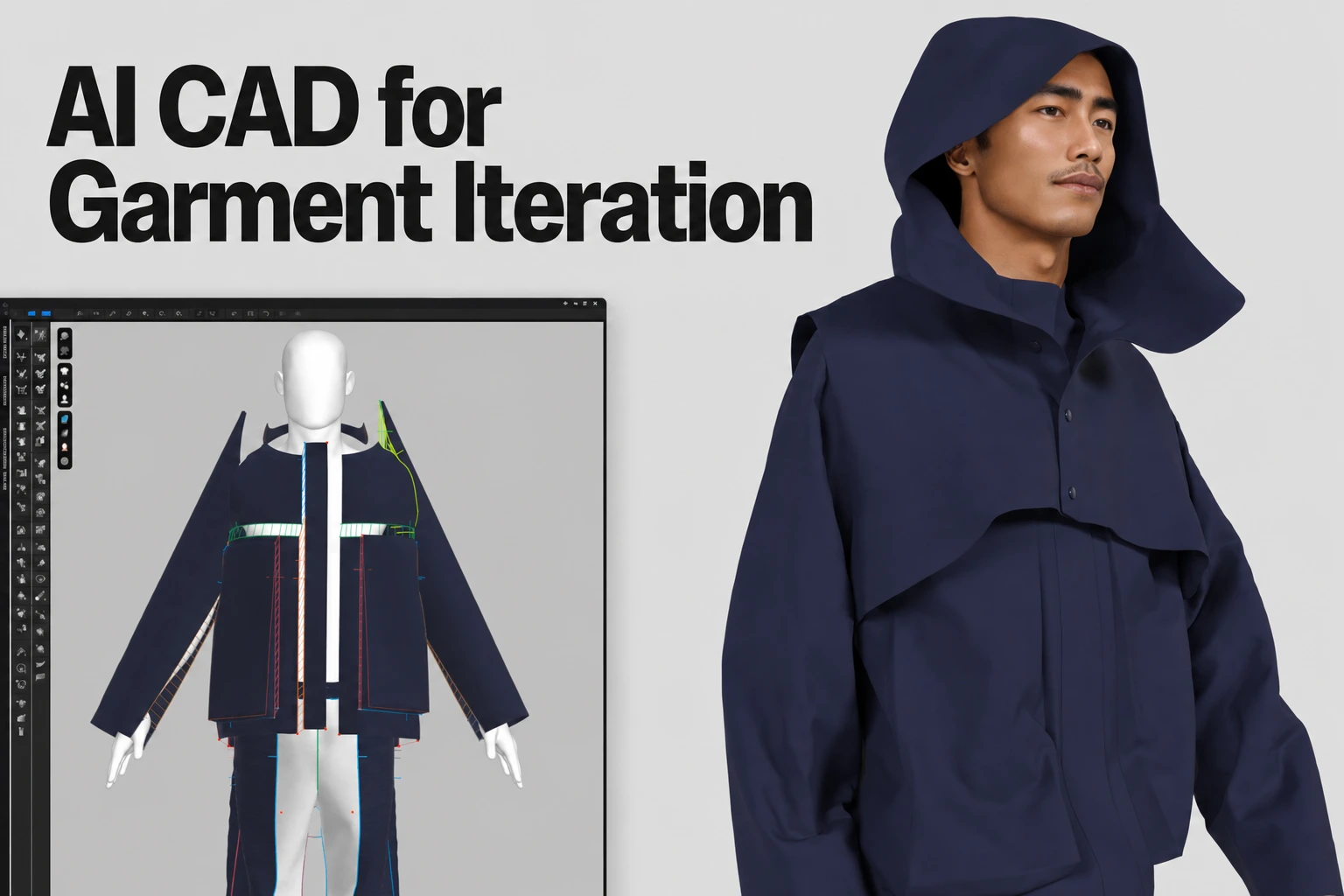
CLO Pattern Drafter connects measurement-led drafting and grading with garment work. Synchronization reflects 2D edits in 3D and ends an active simulation. Review the updated garment and strain inputs; test onboarding with the actual team.
However, existing infrastructure often shifts the optimal choice:
- Choose CLO: When your priority is a unified workspace where measurement-based pattern drafting, fabric-specific strain analysis, and iterative fit evaluation happen together (CLO Strain Map).
- Evaluate Browzwear VStitcher: Pattern and simulation tools plus documented animation workflows. Confirm the specific connector, fields, direction and enterprise permissions.
- Evaluate Gerber AccuMark: Pattern, grading and production options may fit an existing pattern-room workflow; verify the chosen marker/cutter interfaces.
- Choose Lectra Modaris: When your pattern room relies on parametric pattern adjustments, style-line modification, grading, and industrialization.
CLO, VStitcher, AccuMark, and Modaris at a glance
The table below outlines the documented capabilities of each platform across core apparel development criteria based on the cited vendor documentation and third-party sources as of the review date.
Pattern accuracy and edits after a fit review
A common misconception among teams evaluating 3D apparel software is that digital simulation inherently produces "accurate" patterns. In apparel engineering, pattern accuracy is not an automated feature of software; it is the result of precise seam line geometry, correct grainline orientation, proper ease allowances, and rigorous physical validation.
Each platform approaches pattern modifications after a fit session through a distinct technical mechanism:
- CLO: Focuses on measurement-based pattern adjustments and 2D/3D interaction. Patterns created with Pattern Drafter retain their parameters when edited through Pattern Drafter or Edit POM; editing a pattern directly breaks its connection with Pattern Drafter (Pattern Drafter).
- Browzwear VStitcher: Emphasizes precision curve manipulation in its 2D workspace. Its slide-editing function allows pattern makers to adjust internal points or lines while preserving the curvature of adjacent edges (Browzwear Tutorials). It includes dedicated pen tools, line smoothing, and handle cleanup functions (Browzwear Tutorials).
- Lectra Modaris: Modaris Expert provides parametric capabilities for pattern adjustments. Modaris also supports modifying style lines and points to create new patterns (Lectra Modaris).
- Gerber AccuMark: PDS supports pattern development and grading. The 3D introduction assumes basic PDS/Explorer skills; test the actual fit-note revision task.
Patterns from body measurements versus automatic size grading
Garment software discussions often blend three distinct operations: drafting a master sloper from raw body measurements, applying grade rules across a size chart, and altering pattern dimensions based on fit comments. Technical teams must separate these workflows during software evaluation.
1. Drafting base patterns from body measurements
Creating a production-viable base pattern directly from body dimensions requires software to translate linear and circumferential measurements into balanced curves, darts, and ease allowances.
- In CLO, the Pattern Drafter tool provides General, Simple, and Custom measurement entry options to construct and edit basic blocks as parametric patterns from entered measurements (Pattern Drafter).
- Browzwear VStitcher supports customizable avatars matched to the brand size chart for fit review (Browzwear).
- Gerber AccuMark and Lectra Modaris offer different pattern-adjustment workflows: AccuMark includes a Made-to-Measure module, while Modaris Expert provides parametric patternmaking capabilities.
2. Sizing and grading across ranges
Once a base size (e.g., Sample Size M or 38) is balanced, it must be graded across the size spectrum.
- CLO organizes grading through Size Groups in its Object Browser. It supports grading by entering total finished garment dimensions per size or by defining specific delta increments between sizes (CLO Grading, Pattern Drafter). While multiple grading values across multiple points cannot be pasted simultaneously, a single copied grading value can be pasted across multiple points (CLO Grading).
- VStitcher supports both manual grade-point definition and visual grading, allowing technical designers to display the graded nest draped across different avatar sizes in 3D (Browzwear Help Center, Browzwear University).
- AccuMark and Modaris: AccuMark and Modaris document pattern grading. Confirm the selected module and verify the resulting sizes.
From flat pattern or sketch to a 3D garment
The transition from a two-dimensional design concept to an assembled 3D digital prototype reveals key differences in how these systems handle daily patternmaking operations.
In a synchronized workflow, modifications made to seam lines or darts in the 2D window update the 3D drape on the avatar (either automatically or triggered via simulation/sync controls, depending on the software). Conversely, 3D-to-2D modifications often have specific constraints or separate dedicated tools depending on the software vendor:
- CLO: Synchronizes adjustments in the 2D window with the 3D window (Synchronize Pattern). Pattern Drafter supports measurement-based pattern changes, and Strain Map supports reviewing fabric stretch in the simulated garment (Pattern Drafter, CLO Strain Map).
- Browzwear VStitcher: Uses a connected 2D/3D workspace where imported or drafted 2D patterns are stitched around customizable avatars. The simulation engine reflects fabric drape and tension in real time, allowing pattern makers to refine styling details and verify assembly before generating tech packs (Browzwear).
- Gerber AccuMark 3D: Connects 2D patterns with 3D simulations so teams can visualize designs and review fit using virtual samples (Gerber AccuMark).
- Lectra Modaris 3D: Applies 2D flat-pattern modifications to the 3D prototype simultaneously. It allows pattern makers to check balance, proportions, and ease across size ranges in 3D while maintaining flat pattern relationships (Lectra Modaris).
What virtual review can reveal before sample making
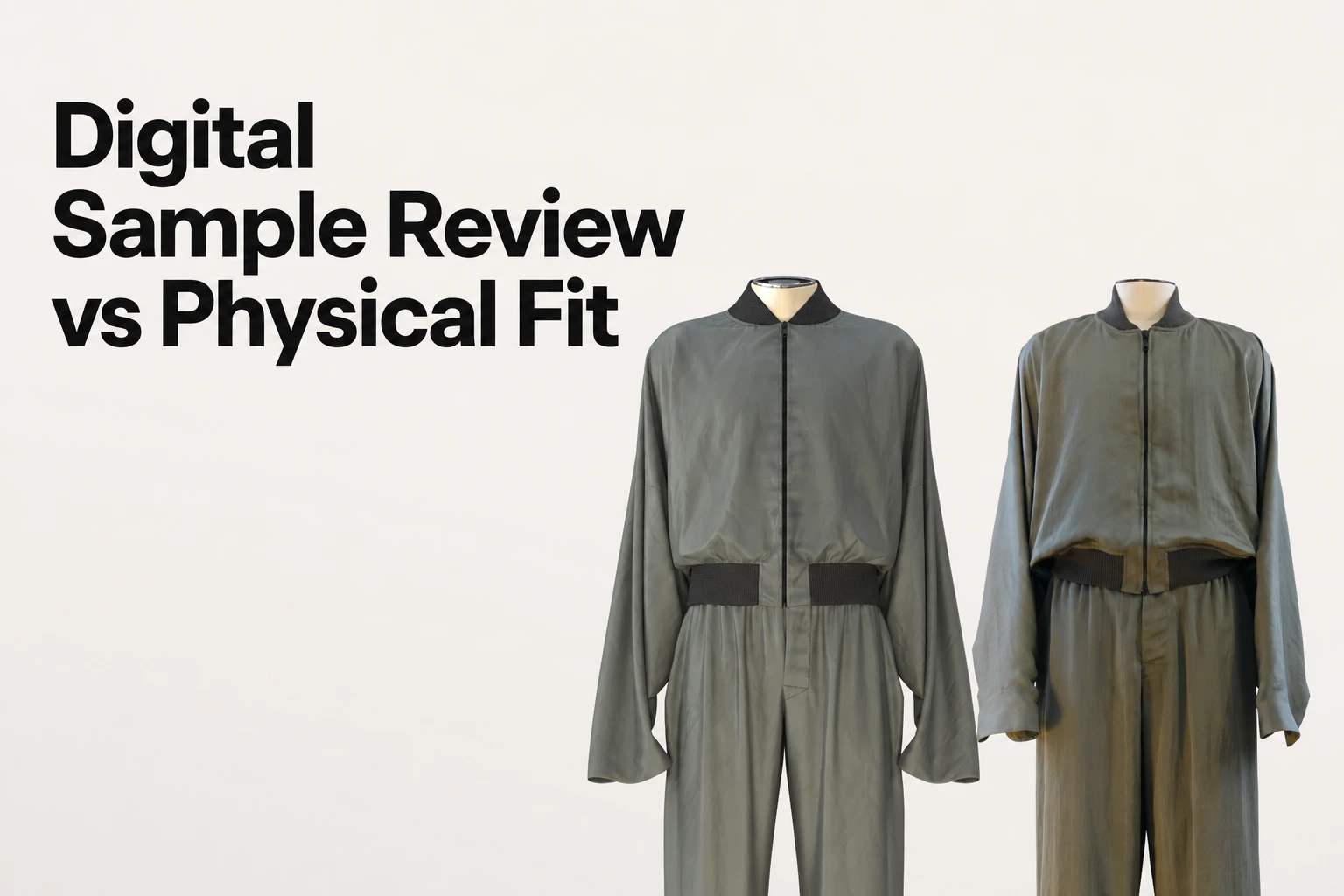
Virtual sampling can expose construction and fit issues before physical sampling. Test which checks work for your garments and whether they reduce later sample revisions; the outcome depends on the input data and review process.
- Seam length mismatches
- Walking seam balance
- Fabric strain & over-tight ease
- Silhouette proportion errors
- Interlining & fusible stiffness
- Needle penetration & thread puckering
- Tactile handfeel & skin comfort
- Dynamic wearer sensory feedback
Construction and balance checks
Include the following construction checks in a digital pilot:
- Seam length discrepancies: Compare the paired seam lengths, intended ease, and assembled result; investigate puckering or alignment differences.
- Grainline and balance: Check grainline directions, asymmetry, pull, and hem balance using the intended fabric and pose.
- Proportion and style line placement: Style lines, pocket placements, and collar angles can be validated across varying body sizes before fabric is cut.
Fabric strain versus pressure analysis
Evaluating fit tightness requires distinct diagnostic maps:
- CLO Fit Maps: CLO’s Strain Map measures fabric deformation as an exact percentage of stretch, and in Fabric Mode automatically applies the material's physical stretch limit to evaluate wearable strain thresholds (CLO Strain Map). Technical designers can click any point on the 3D garment to inspect localized values (CLO Strain Map).
- VStitcher: Fit tools and animation training support garment review. Check the map’s meaning and the intended motion; simulated pressure does not certify a wearer’s comfort.
Full apparel CAD versus made-to-measure pattern generators
During discovery, apparel teams frequently encounter automated made-to-measure (MTM) services and custom pattern generators alongside enterprise 3D CAD platforms. Understanding the technical divide between these tool categories is essential for choosing software that supports an industrial apparel workflow.
| Feature / Workflow | Professional 3D Apparel CAD | Custom MTM Generators |
|---|---|---|
| 2D Geometry Modification | Full point/line/curve control | Verify editing options |
| Grade Table Engineering | Custom delta/rule definition | Verify grading support |
| Fabric Physics Simulation | Verify physical fabric parameters and solver behavior | Verify simulation support |
| Production Interoperability | Verify the exact pattern and production-data formats by product/module | Verify export formats |
| Primary Intended User | Pattern makers & Tech Design | Varies by service |
- Made-to-measure pattern generators: Web-based pattern engines can produce patterns from body measurements. Before choosing one for production, verify its geometry editing, grading, industrialization tools, and export formats against your factory’s requirements.
- Professional apparel CAD systems (CLO, VStitcher, AccuMark, Modaris): These platforms support pattern development and grading for apparel workflows. Verify which modules provide the seam, notch, marker-making, and file-exchange capabilities your manufacturing partners require.
A practical pilot plan for a technical design team
Rolling out 3D apparel software across a technical design department should follow a phased, measurable pilot program to ensure software capabilities align with real factory outputs.
Stage 1: Style selection
Select two distinct garment styles from your existing product line:
- One core knit/jersey style (e.g., a crewneck t-shirt or hoodie) to evaluate stretch dynamics and ease.
- One structured woven style (e.g., a tailored trouser or button-up shirt) to evaluate dart manipulation, collar construction, and grading accuracy.
Stage 2: Fabric property calibration
Do not rely on generic visual presets. Test or acquire accurate physical parameters for your pilot fabrics, including fabric weight (g/m²), thickness, warp/weft bending stiffness, and tensile stretch/recovery percentages.
Stage 3: Virtual fitting and grading
Drape the base sample size on a standardized digital avatar matched to your brand’s fit model specifications. Evaluate the silhouette, seam alignment, and strain distribution. Apply grade rules across the size chart and inspect the graded 3D nest for proportion consistency.
Stage 4: Interoperability and tech pack handoff
Test digital data exchange with your production vendors:
- Export patterns via DXF AAMA or ASTM format (CLO DXF Export).
- Export bill of materials (BOM) data as XML or structured sheets (CLO BOM Export, Browzwear).
- Import the exported files into your incumbent grading, marker-making, or cutting system to verify that seam allowances, grainlines, notches, and internal lines transfer without data loss.
Stage 5: Physical sample correlation
Cut and sew a physical garment directly from the DXF pattern exported from the 3D software. Conduct a side-by-side fit session comparing the physical sample on your fit model against the virtual sample on the 3D avatar, documenting any dimensional or tension discrepancies to calibrate your digital settings.
FAQS
Frequently asked questions
What avatar measurements are required before starting a 3D fit pilot?
A technical pilot should record key circumferential and linear body measurements corresponding to your brand’s primary fit model, such as bust/chest, waist, hip, shoulder, and inseam. In CLO and Browzwear VStitcher, adjust available avatar measurements to your fit model’s size chart and verify the resulting dimensions before fit testing (Browzwear).
Should our team start a 3D pilot with an existing block or a new style?
A useful pilot starts with a known pattern and physical reference so the team can compare inputs and results. Record remaining differences before expanding to new styles.
Which export formats must be validated with factory partners before procurement?
Apparel manufacturers rely on specific pattern exchange standards. Ensure your pilot tests DXF export in standard AAMA or ASTM formats (CLO DXF Export). If your team shares assembly specifications and bill of materials digitally, verify whether your factory’s PLM or ERP systems require BOM XML export or Excel/HTML tech packs (CLO BOM Export, Browzwear).
How should a team document physical versus virtual fit discrepancies?
Establish a standardized fit log that records key points of measure (POM) across three states: target specification sheet, draped 3D virtual measurement, and sewn physical garment measurement. Capture high-resolution front, side, and back views of both the 3D simulation (with Strain Maps active) and the physical fit model to identify systematic deviations in fabric tension or ease allowances.
Note: This comparison is based on the cited vendor documentation and third-party sources as of the review date. Software features, module capabilities, and specifications change over time; readers should confirm current details directly on the official websites of CLO Enterprise, Browzwear, and Lectra.
Unify Your Pattern Drafting and 3D Fit Workflow
Explore how CLO connects 2D pattern editing with real-time 3D simulation and production grading in a single platform.