


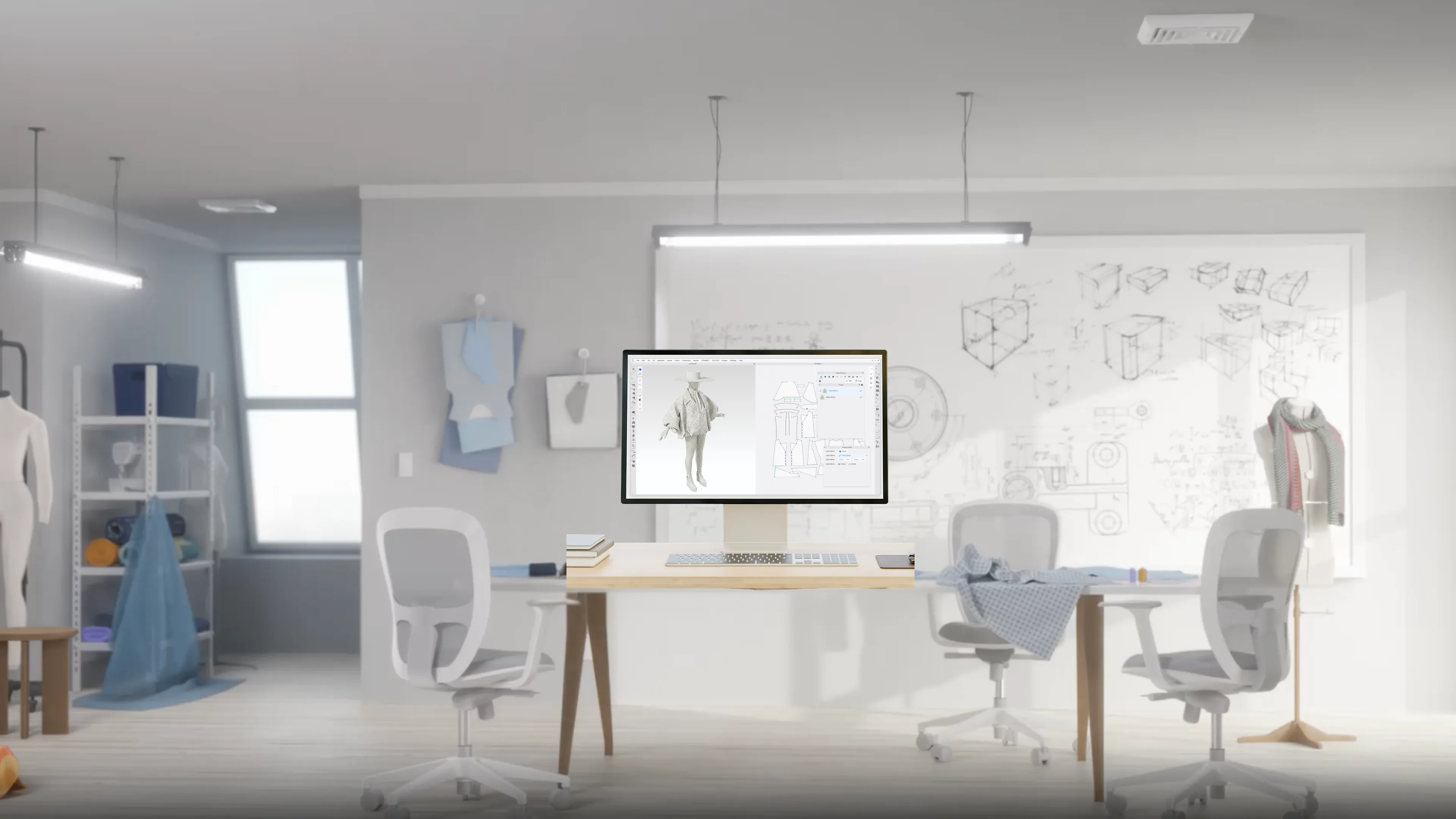
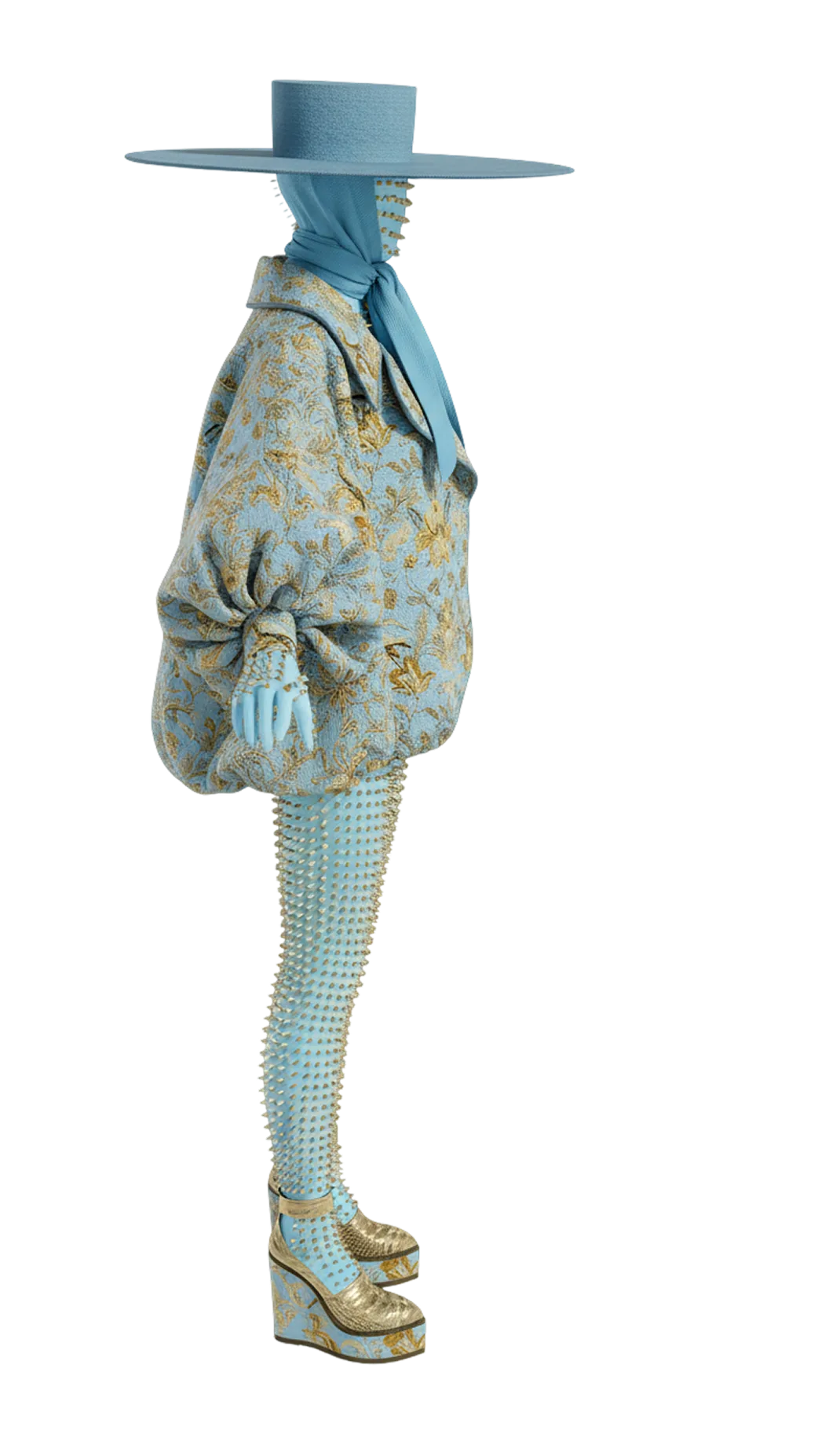
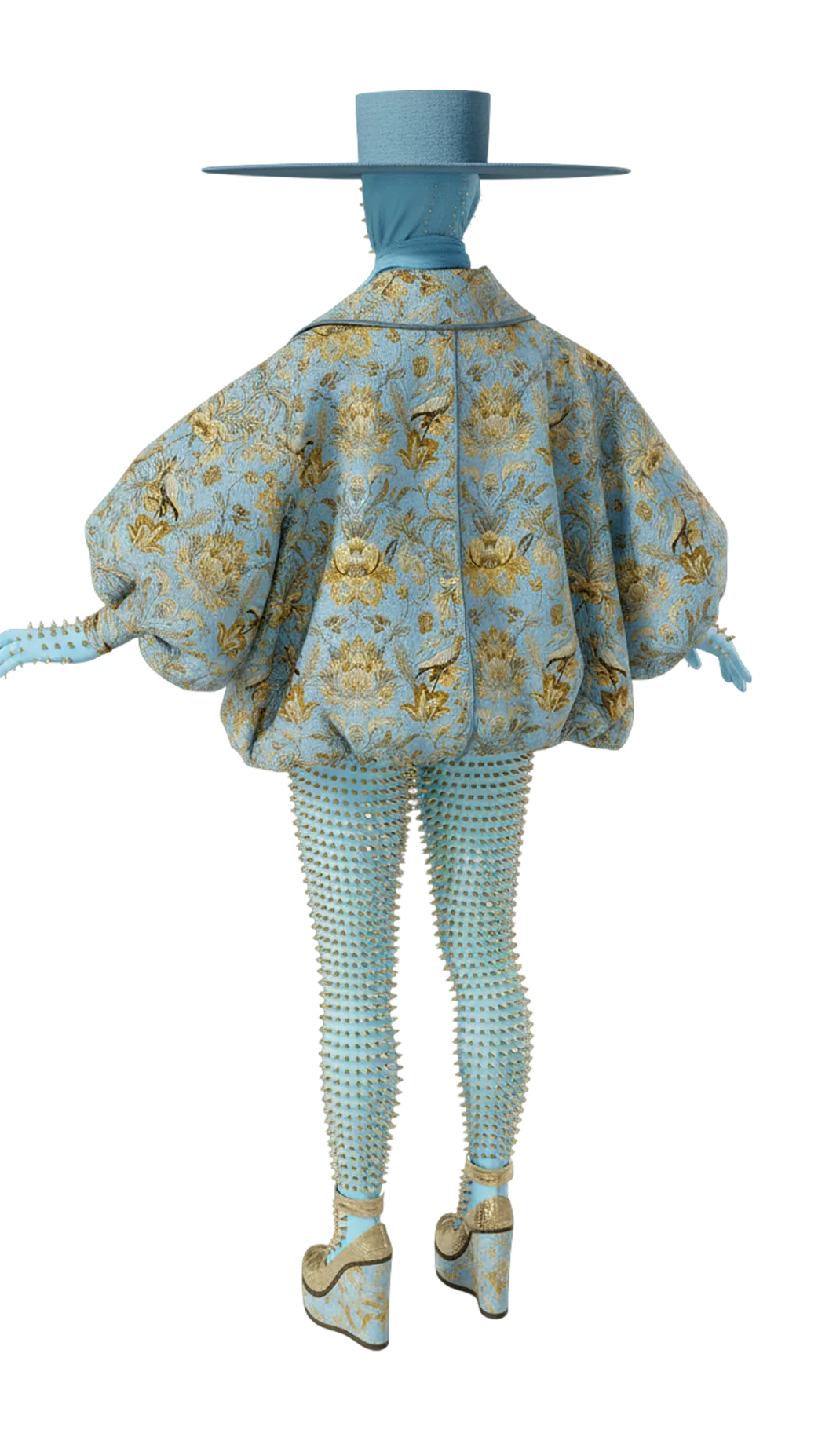
Conheça Monica Findeis, uma designer brasileira que atualmente trabalha exclusivamente como freelancer usando o CLO! (Saiba mais sobre sua história e como ela está ganhando a vida com a moda digital.) Nesta entrevista, gostaríamos de focar em sua última obra de arte, na qual ela recriou o visual @artemisigallery usando o CLO.
(English version follows)
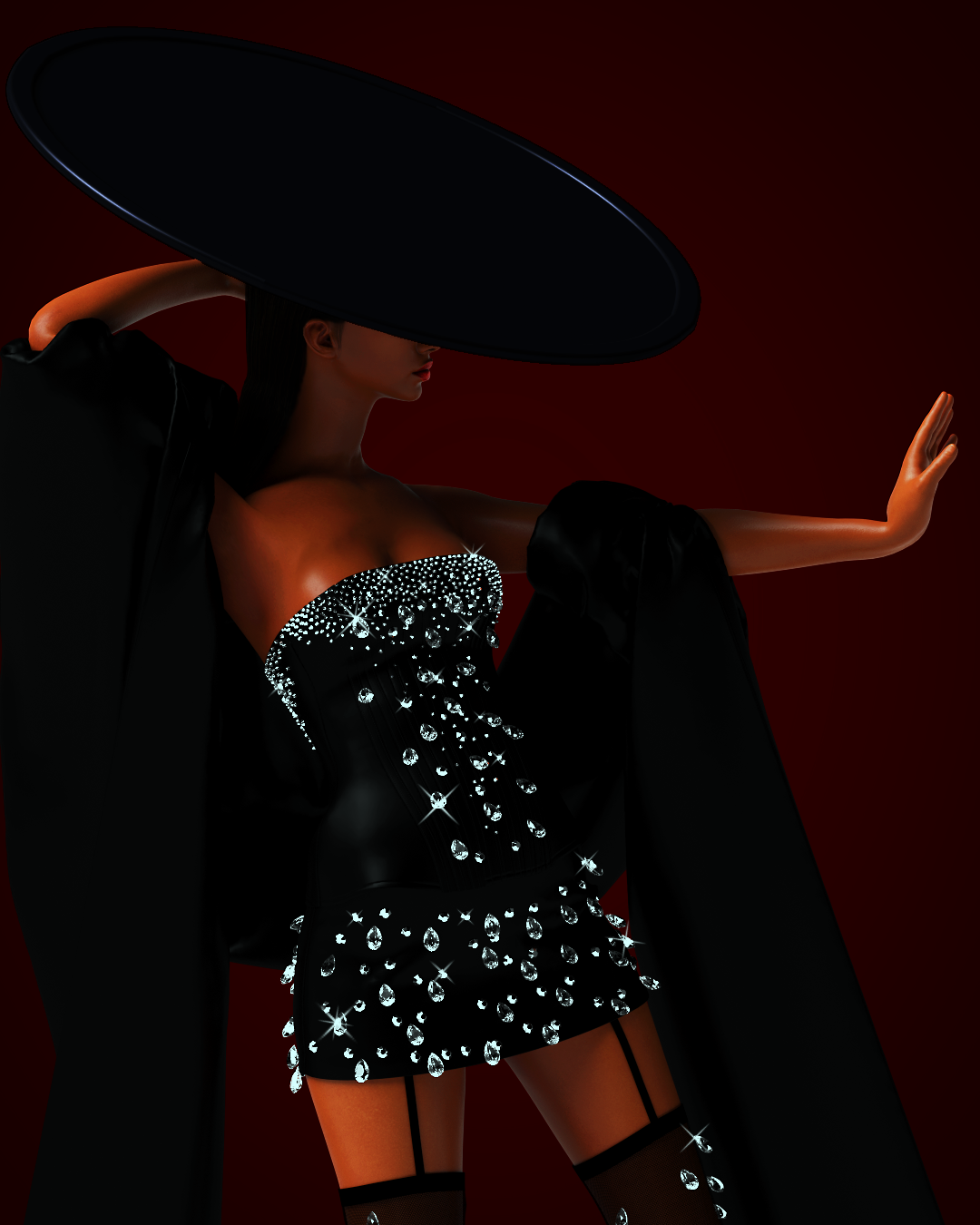
Visão geral da arte O que te inspirou a recriar esse visual Artemisi?
Realizei este projeto como conclusão do Curso Básico de Moda 3D que leciono. Estava procurando referências para meu projeto final em moda 3D quando vi o desfile da Artemisi na SPFW. Ele me impactou tanto que pensei: "É isso!" O look era perfeito para mostrar várias técnicas e truques do 3D, provando que dá para criar algo visualmente complexo de forma simples e prática.
Conte-nos sobre os recursos do CLO que foram particularmente úteis na criação desta arte.
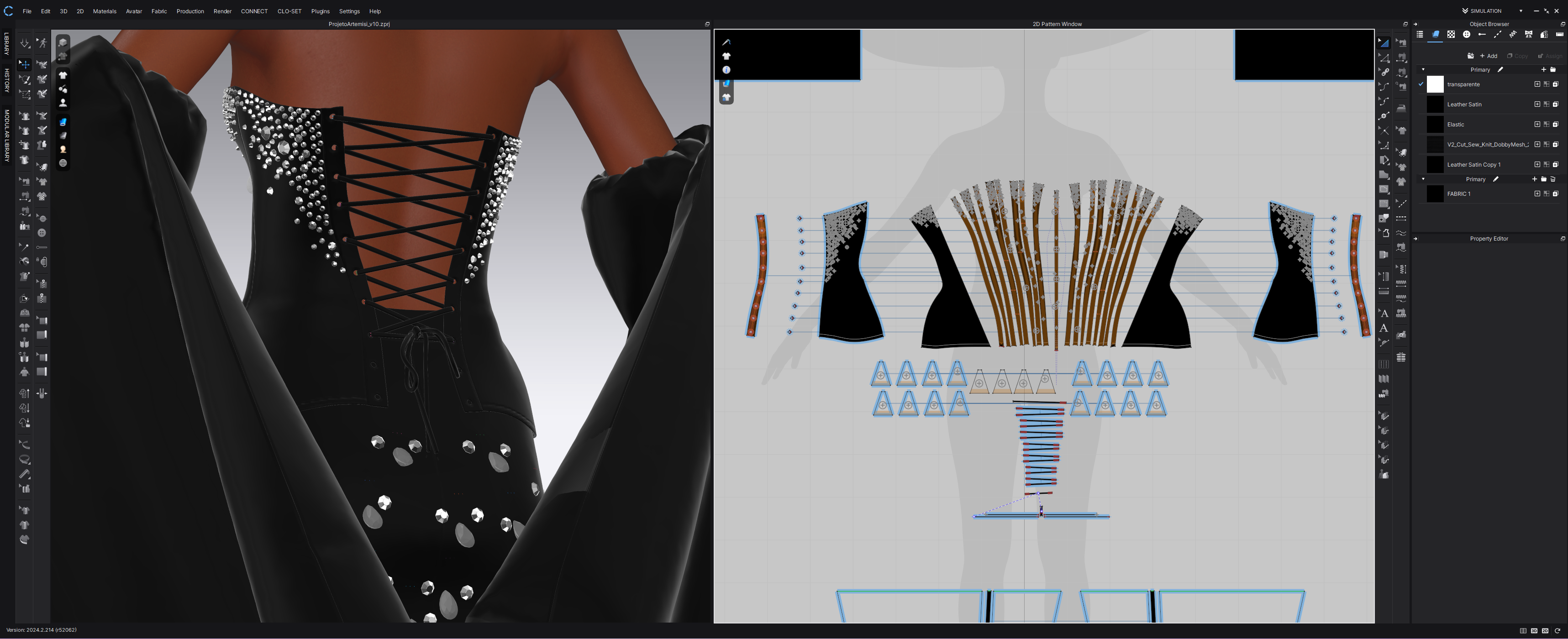
Usei o CLO desde o começo, modelando direto no avatar com a 3D Pen e o Flattening Tool para criar os moldes. Depois, trabalhei na animação tanto da peça quanto da câmera, aproveitando as ferramentas do próprio CLO. Finalizei tudo no renderizador do próprio software, garantindo a alta qualidade das texturas.
Qual foi sua parte favorita na criação desta peça?
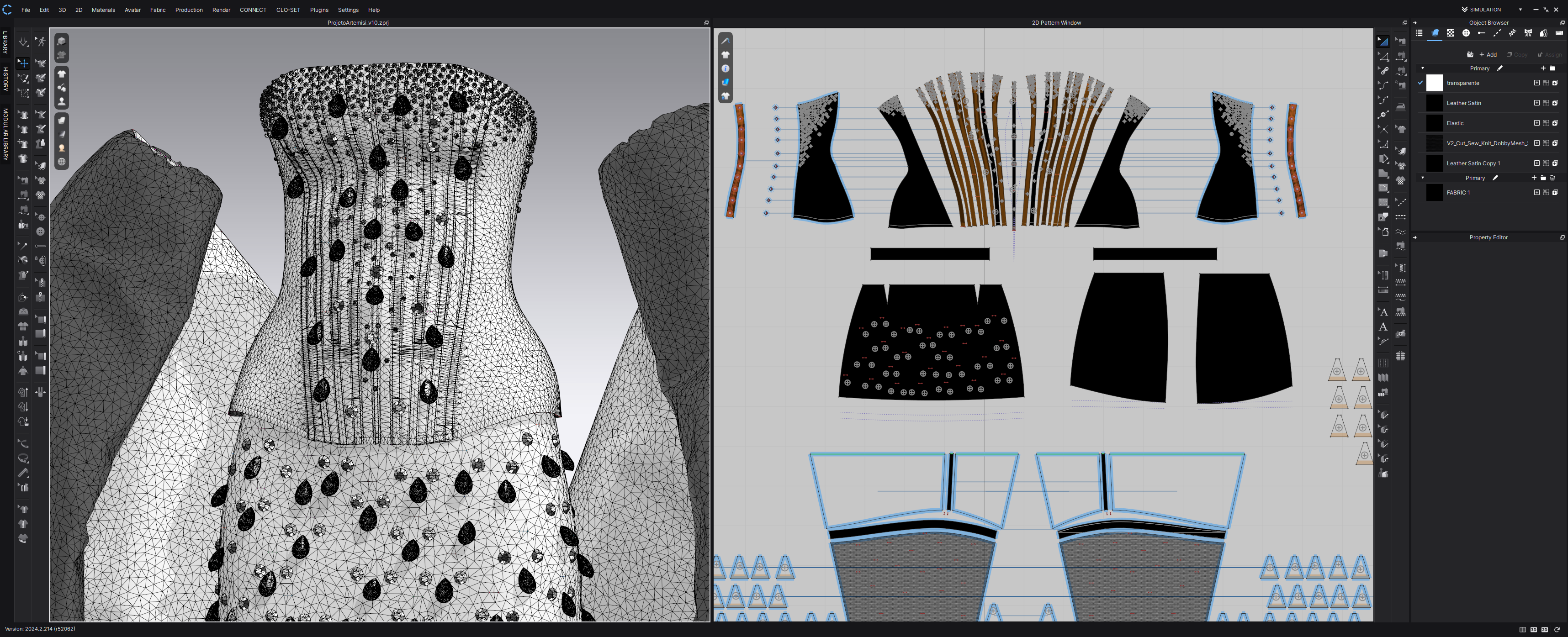
O que eu mais gostei foi recriar o movimento das jóias aplicadas na peça. Eu não queria abrir mão desse detalhe, então criei moldes invisíveis costurados na roupa para aplicar os aviamentos. Isso fez com que as jóias se movimentassem junto com o movimento do look, deixando tudo mais realista.
Você pode compartilhar um desafio específico que enfrentou durante o processo de design e como o superou?
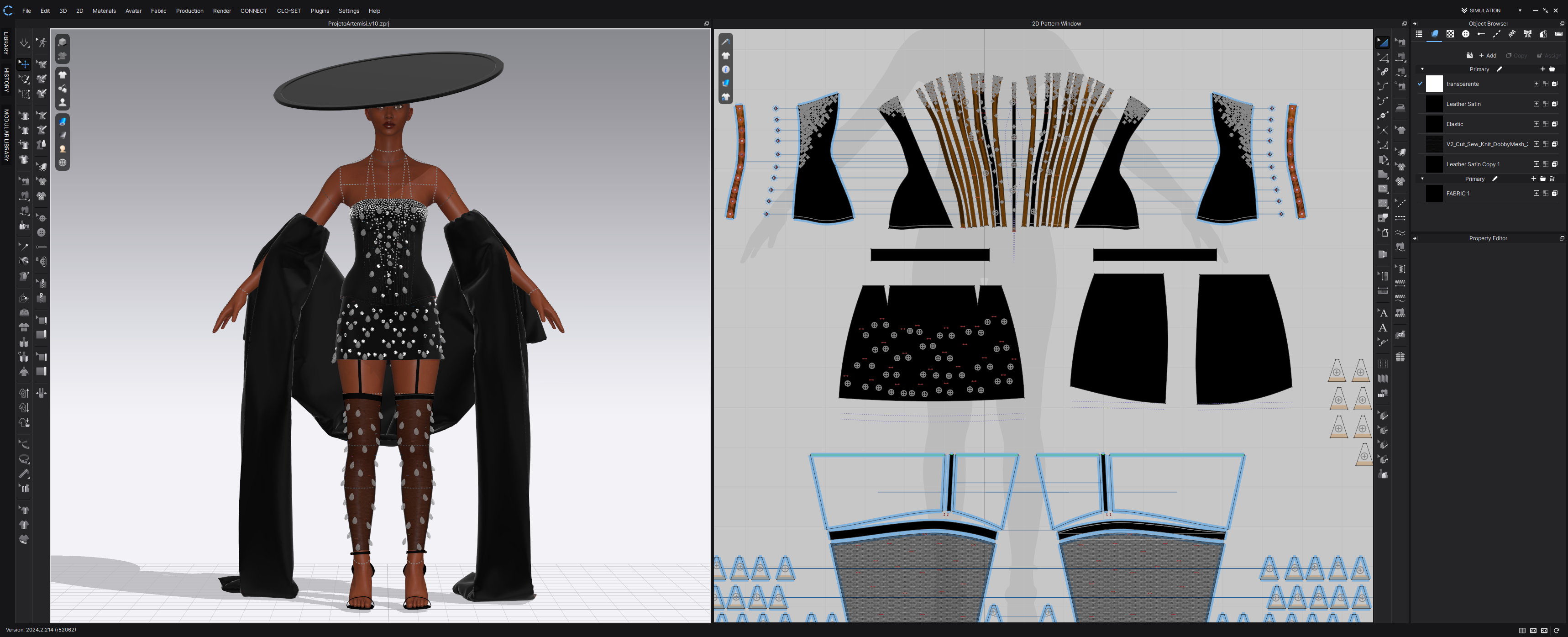
Enfrentei dois desafios principais nesse projeto. O primeiro foi o chapéu, pois precisava garantir que ele mantivesse sua forma durante a animação sem desmoronar. Para resolver isso, decidi registrá-lo como um acessório do tipo "cabelo", o que assegurou sua estabilidade. O segundo desafio foi preservar o movimento das joias aplicadas na peça, um detalhe que, na minha opinião, faz toda a diferença na animação. Para isso, converti o arquivo .obj das joias em botões personalizados. Depois, apliquei moldes do mesmo tamanho das joias na peça e posicionei os botões personalizados sobre esses moldes. Por fim, desativei a colisão dos botões para evitar conflitos com o tecido, garantindo um resultado fluido e realista.
Você recriou o look da Artemisi, uma marca que apresentou um dos desfiles mais comentados do SPFW. O look que você desenvolveu possui bastante complexidade principalmente em bordados, como foi a experiência de criar todos estes detalhes no CLO?
Foi um trabalho desafiador pela complexidade de detalhes. Para as jóias, utilizei um .obj no formato da peça e ajustei manualmente a posição de cada elemento. Me esforcei para capturar os mínimos detalhes e trabalhei bastante nas propriedades do tecido para que o movimento ficasse realista. Apesar da complexidade, o processo foi super divertido e o resultado final valeu muito a pena.
Você tem alguma dica para outros usuários do CLO que desejam aprimorar seus designs?
Teste e explore ao máximo as ferramentas do software. Por exemplo, trabalhar com diferentes configurações de propriedades do tecido faz uma diferença enorme na animação, não tenha medo de explorar! Além disso, pratique a organização de cada projeto: nomear e manter tudo claro ajuda muito, especialmente em designs mais complexos. E claro, aproveite a Comunidade CLO CONNECT, que é ótima para trocar ideias e aprender coisas novas.
Quais são seus projetos futuros e como você vê a evolução do seu trabalho no cenário da moda digital?
O mercado de moda 3D está se expandindo rapidamente, indo além de campanhas virtuais para ser integrado desde a fase de desenvolvimento de coleções, o que está criando novas oportunidades para designers e marcas. Pretendo ampliar minhas mentorias para ajudar mais criadores a se posicionarem no mercado. Acredito que meu papel seja conectar criatividade, tecnologia e moda, ajudando a consolidar o 3D como uma ferramenta indispensável para o design de moda no presente e no futuro.
English Version:
Recreating Artistry: Monica Findeis Brings Artemisi Gallery’s Look to Life Using CLO
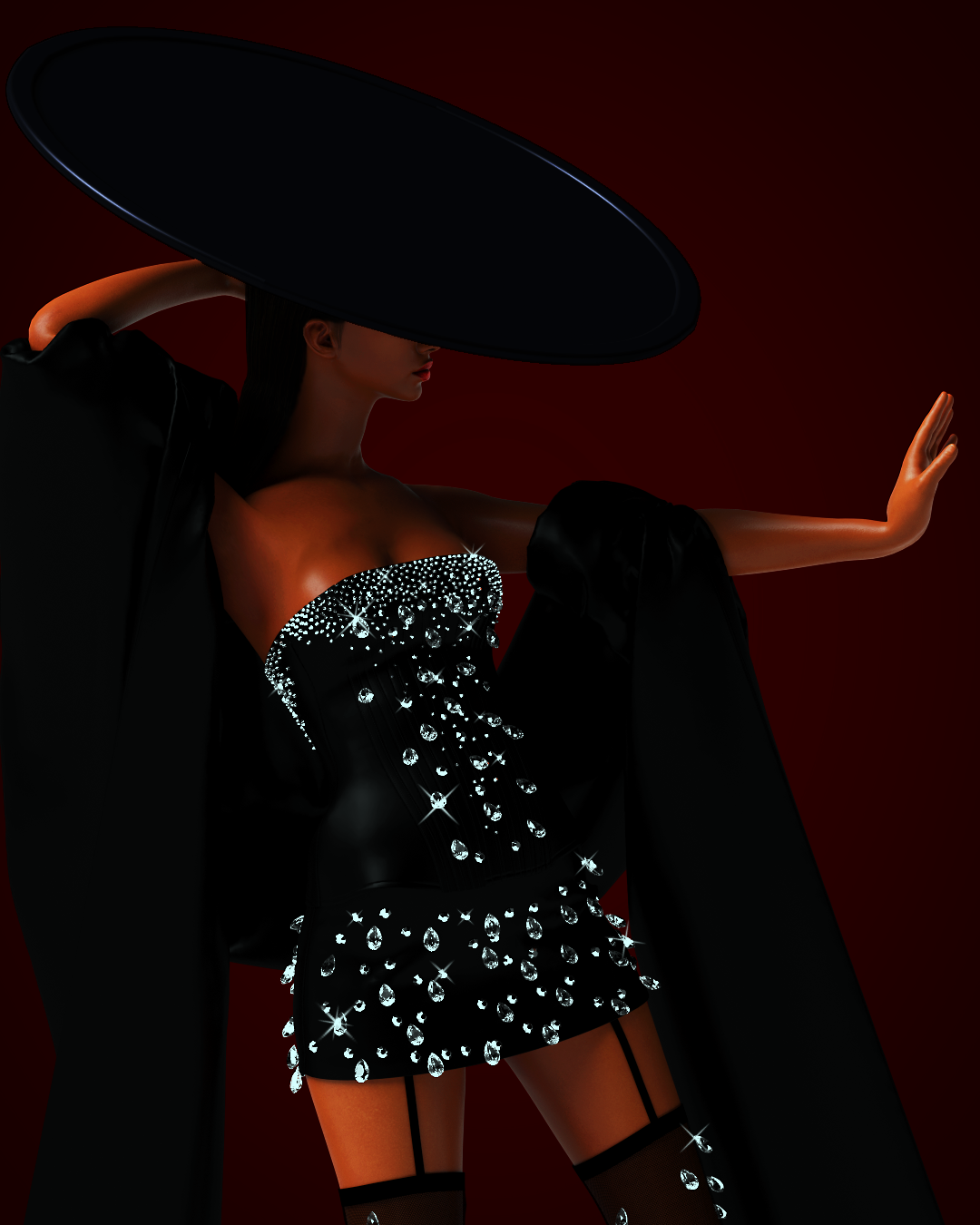
Meet Monica Findeis, a Brazilian designer who currently works exclusively as a freelancer using CLO! (Learn more about her story and how she is making a living with digital fashion.) In this interview, we would like to focus on her latest artwork, in which she recreated the @artemisigallery look using CLO.
What inspired you to recreate this Artemisi look?
I carried out this project as a conclusion to the Basic 3D Fashion Course that I teach. I was looking for references for my final project in 3D fashion when I saw the Artemisi show at SPFW. It made such an impact on me that I thought, "This is it!" The look was perfect for showcasing various 3D techniques and tricks, proving that it is possible to create something visually complex in a simple and practical way.
Please tell us about the CLO features that were particularly useful when creating this artwork.
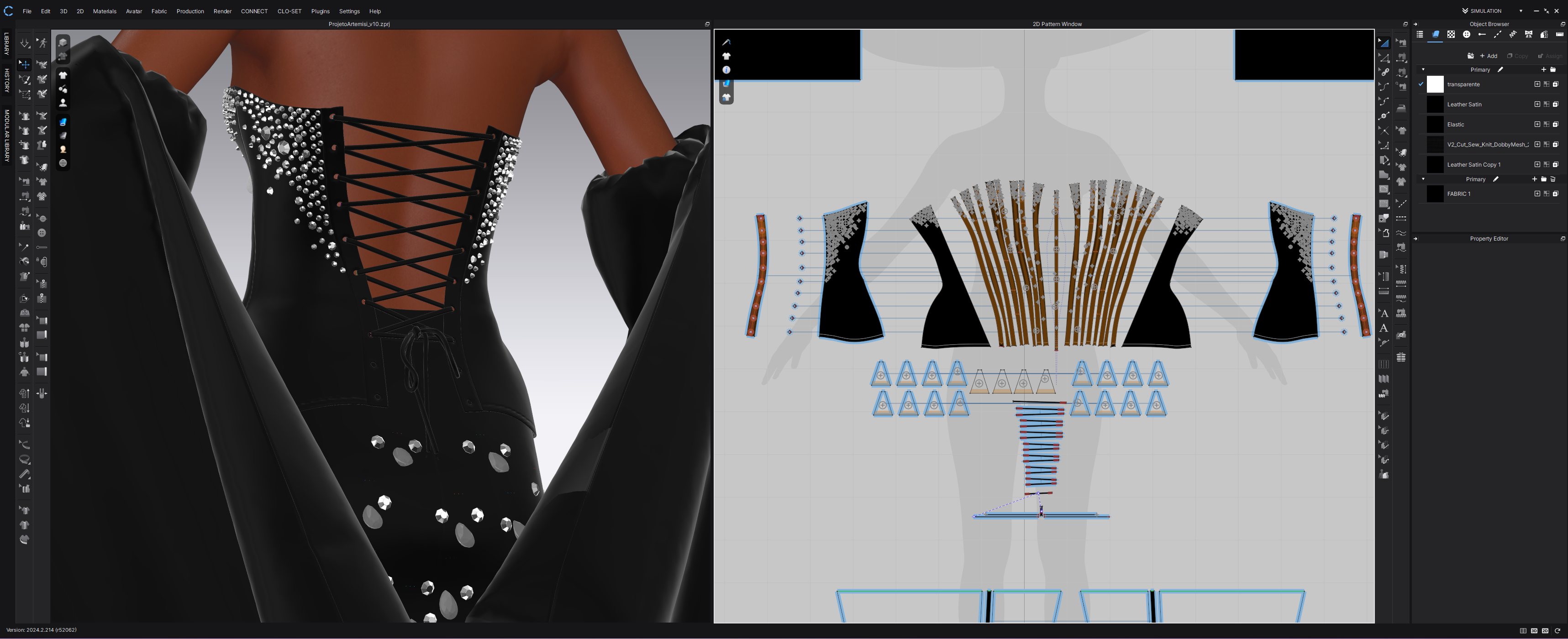
I used CLO from the beginning, modeling directly on the avatar with the 3D Pen and the Flattening Tool to create the patterns. Then, I worked on the animation of both the piece and the camera, taking advantage of CLO's tools. I finished everything in the software’s own renderer, ensuring the high quality of the textures.
What was your favorite part of creating this piece?
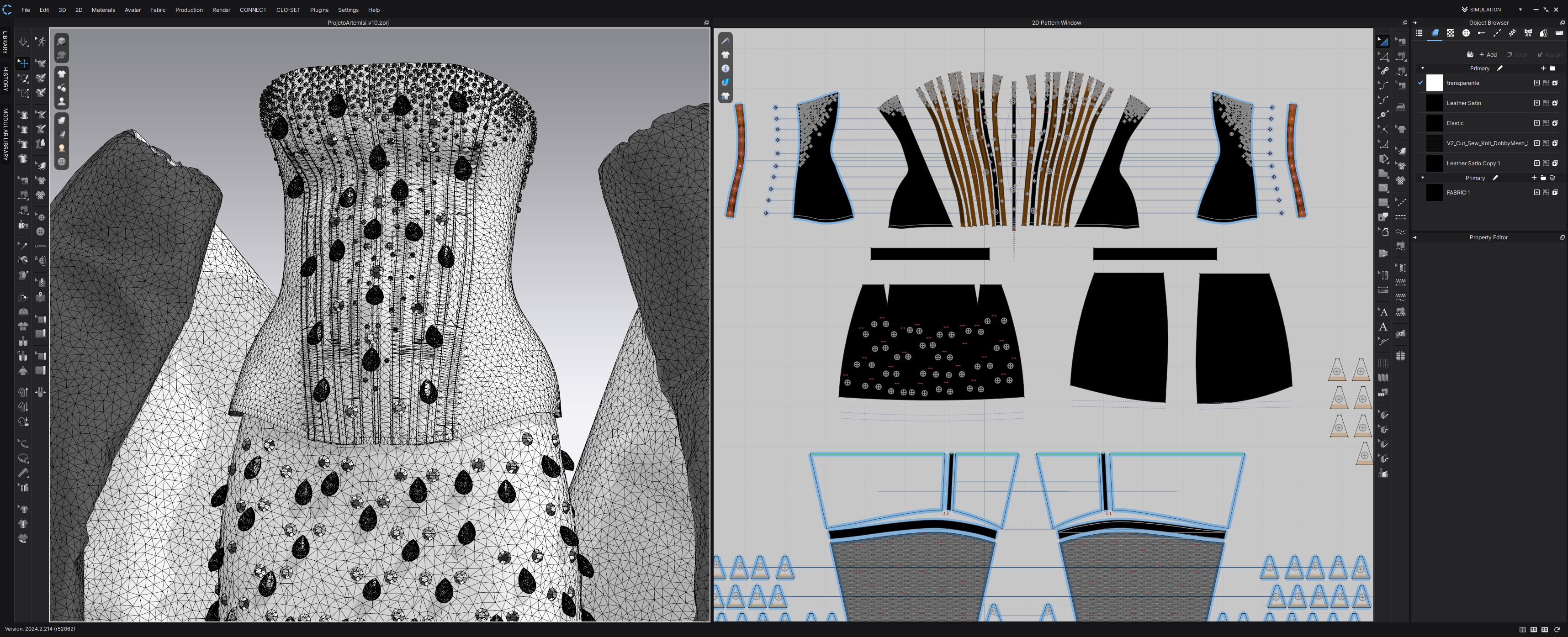
What I liked most was recreating the movement of the jewelry applied to the piece. I didn’t want to give up on this detail, so I created invisible patterns sewn into the garment to apply the trimmings. This made the jewelry swing along with the movement of the look, making everything more realistic.
Can you share a specific challenge you faced during the design process and how you overcame it?
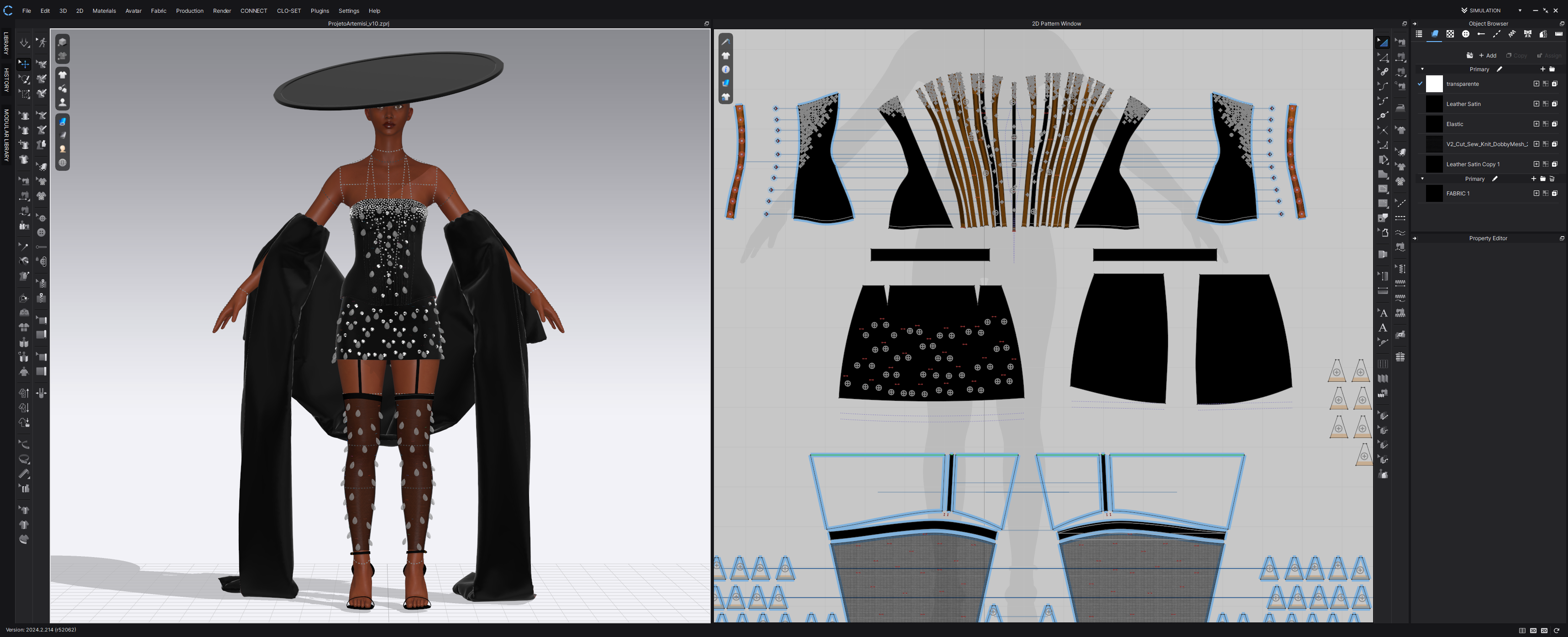
I faced two main challenges with this project. The first was the hat, as I needed to ensure it would maintain its shape during the animation without collapsing. To solve this, I decided to register it as a “hair” type accessory, which ensured its stability. The second challenge was preserving the movement of the jewels applied to the piece, a detail that, in my opinion, makes all the difference in the animation. To do this, I converted the .obj file of the jewels into custom buttons. Then, I applied patterns of the same size as the jewels to the piece and positioned the custom buttons on top of these patterns. Finally, I disabled the collision of the buttons to avoid conflicts with the fabric, ensuring a fluid and realistic result.
You recreated the look for Artemisi, a brand that presented one of the most talked-about shows at SPFW. The look you created is quite complex, especially in terms of embroidery. What was the experience of creating all these details in CLO like?
It was a challenging project due to the complexity of the details. For the jewelry, I used an .obj in the shape of the piece and manually adjusted the position of each element. I worked hard to capture the smallest details and fine-tune the properties of the fabric so that the movement would be realistic. Despite the complexity, the process was super fun, and the end result was well worth it.
Do you have any tips for other CLO users looking to improve their designs?
Experiment and explore the software’s tools to the fullest. For example, working with different fabric property settings can make a huge difference in your animation, so don’t be afraid to experiment! Also, practice organizing each project—naming and keeping everything clear helps a lot, especially with more complex designs. And of course, take advantage of the CLO CONNECT community, which is great for exchanging ideas and learning new things.
Can you share your future projects and how you see your work evolving in the digital fashion scene?
The 3D fashion market is expanding rapidly, going beyond virtual campaigns to be integrated into the collection development phase, which is creating new opportunities for designers and brands. I intend to expand my mentoring to help more creators position themselves in the market. I believe my role is to connect creativity, technology, and fashion, helping to consolidate 3D as an indispensable tool for fashion design both in the present and in the future.