


Conheça Carol, uma designer brasileira que fundou o Murph Studio, onde ela une criatividade com tecnologia de ponta. Nesta entrevista, ela compartilha detalhes sobre sua arte inspirada na marca JW PEI, explorando como o design 3D desempenha um papel fundamental em sua abordagem inovadora à moda.
(English version follows)
Por favor, apresente-se e compartilhe um pouco sobre sua formação.
Olá, meu nome é Carol, sou designer 3D e criadora da Murph Studio. Formada em moda pela FAAP, atuei em grandes e pequenas empresas, onde aprofundei minha experiência em desenvolvimento de produto e design. Depois de anos no mercado tradicional, encontrei no universo digital uma nova perspectiva criativa. Criar a Murph foi como reencontrar propósito na moda, com inovação, sustentabilidade e visibilidade.
Qual é o objetivo do Murph Studio ao explorar o uso do 3D na visualização de produtos?
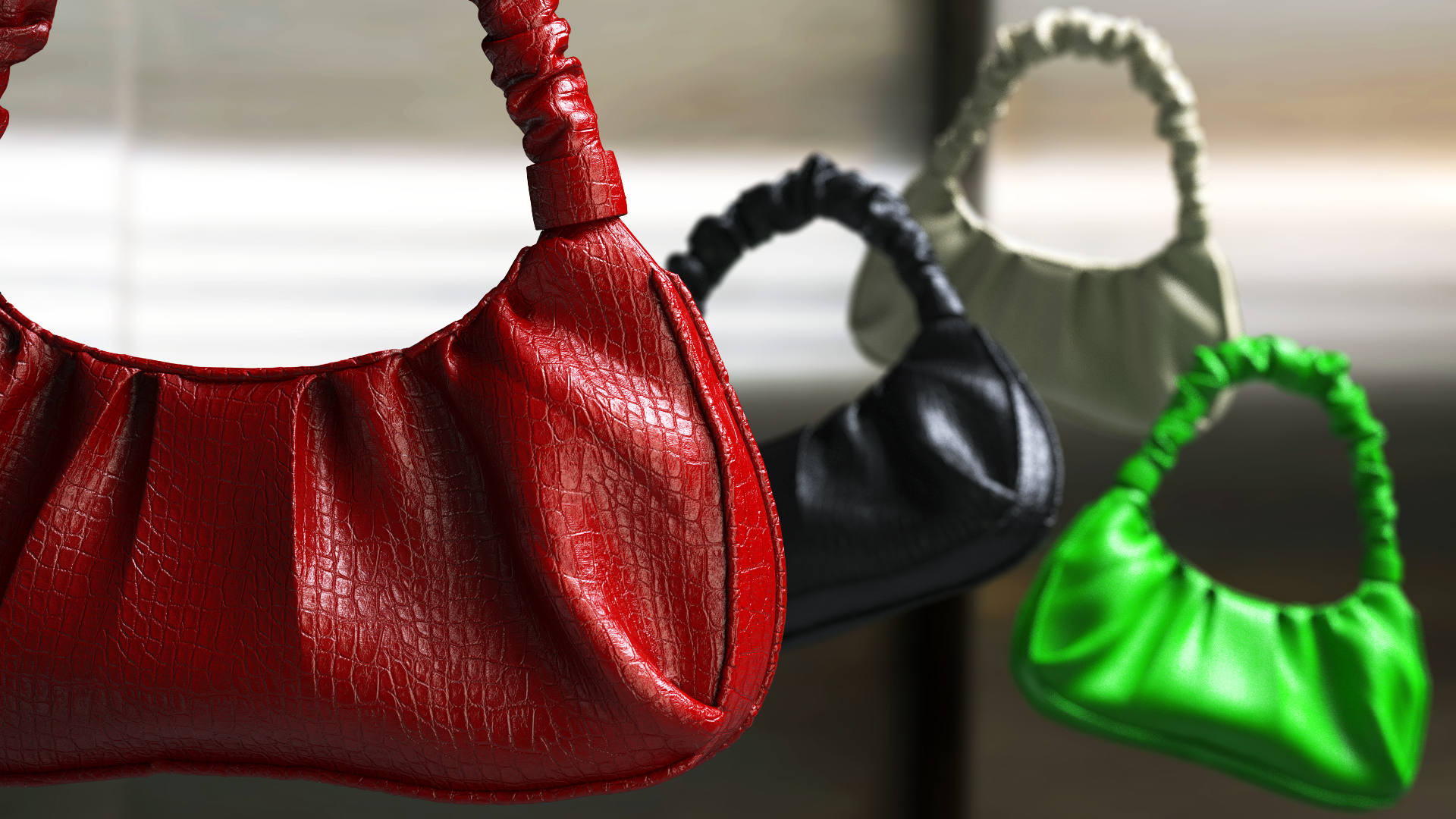
Acredito que o potencial do 3D para a visualização de produtos é um tema que vale muito a pena ser explorado, já que esse é o grande foco do Murph. Nosso objetivo é facilitar a forma como as marcas apresentam suas criações, trazendo mais agilidade, criatividade e impacto visual. Esse projeto é um exemplo claro disso e mostra como o 3D pode transformar o design de produtos e as campanhas visuais.
Visão Geral da Arte:
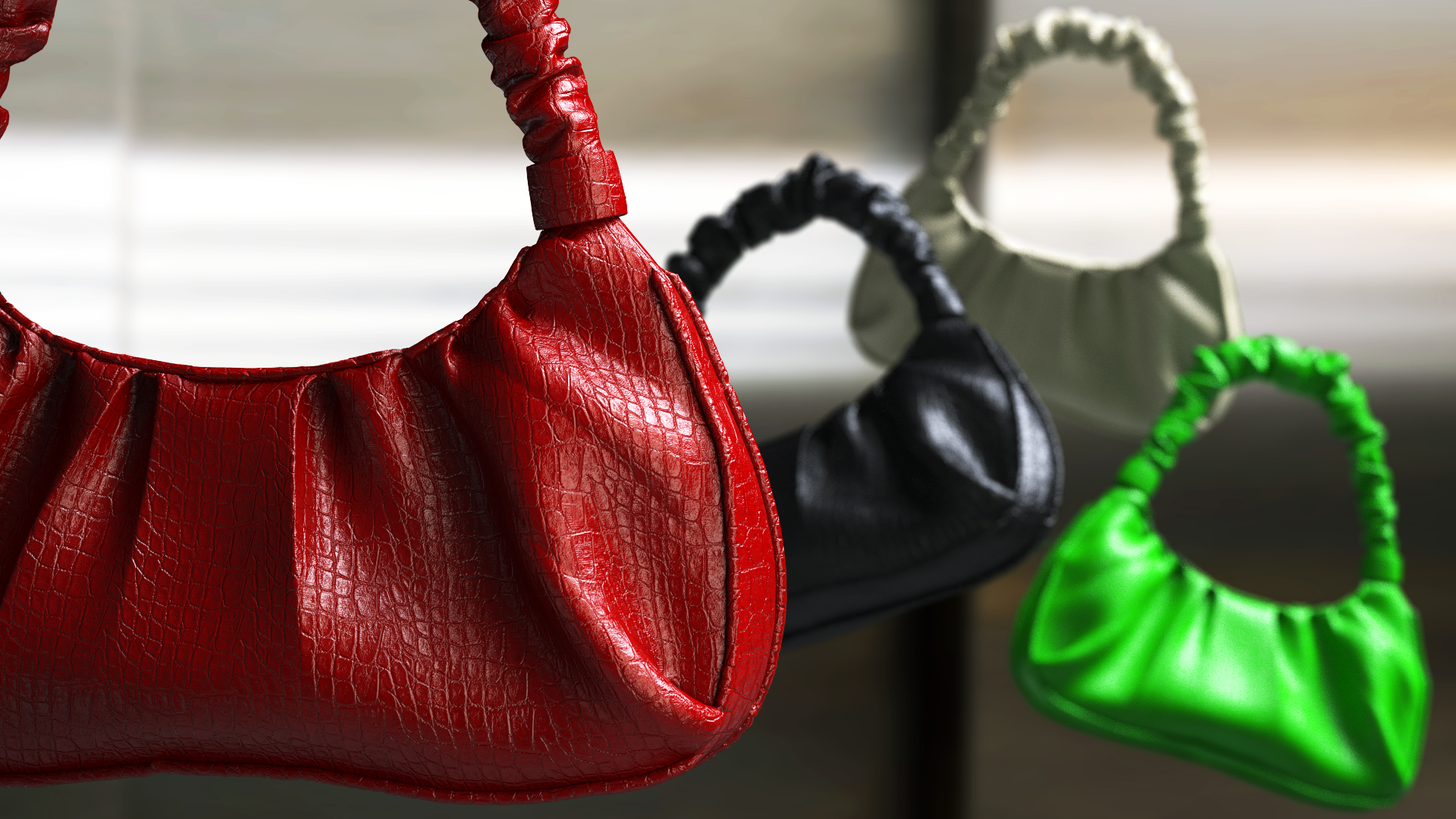
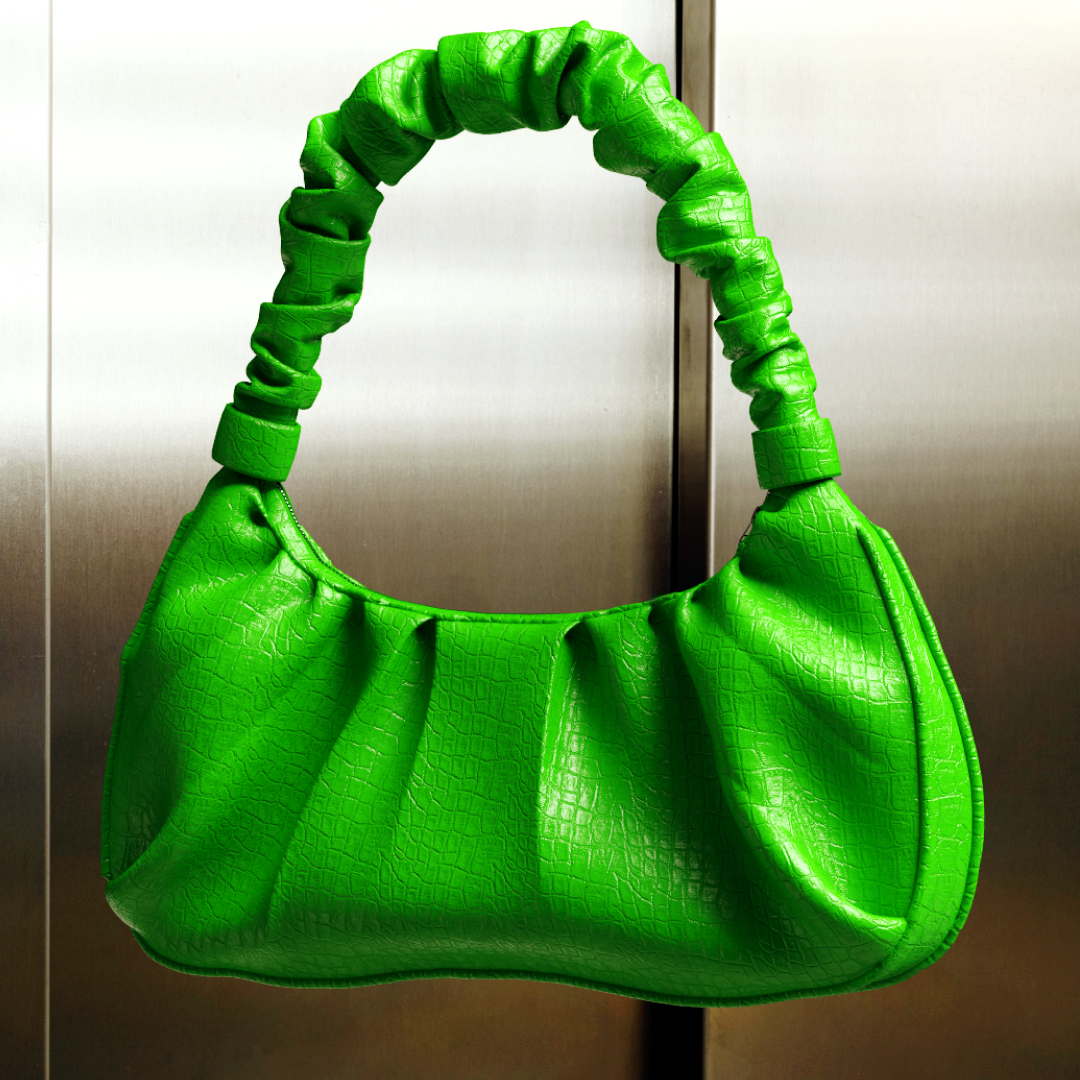
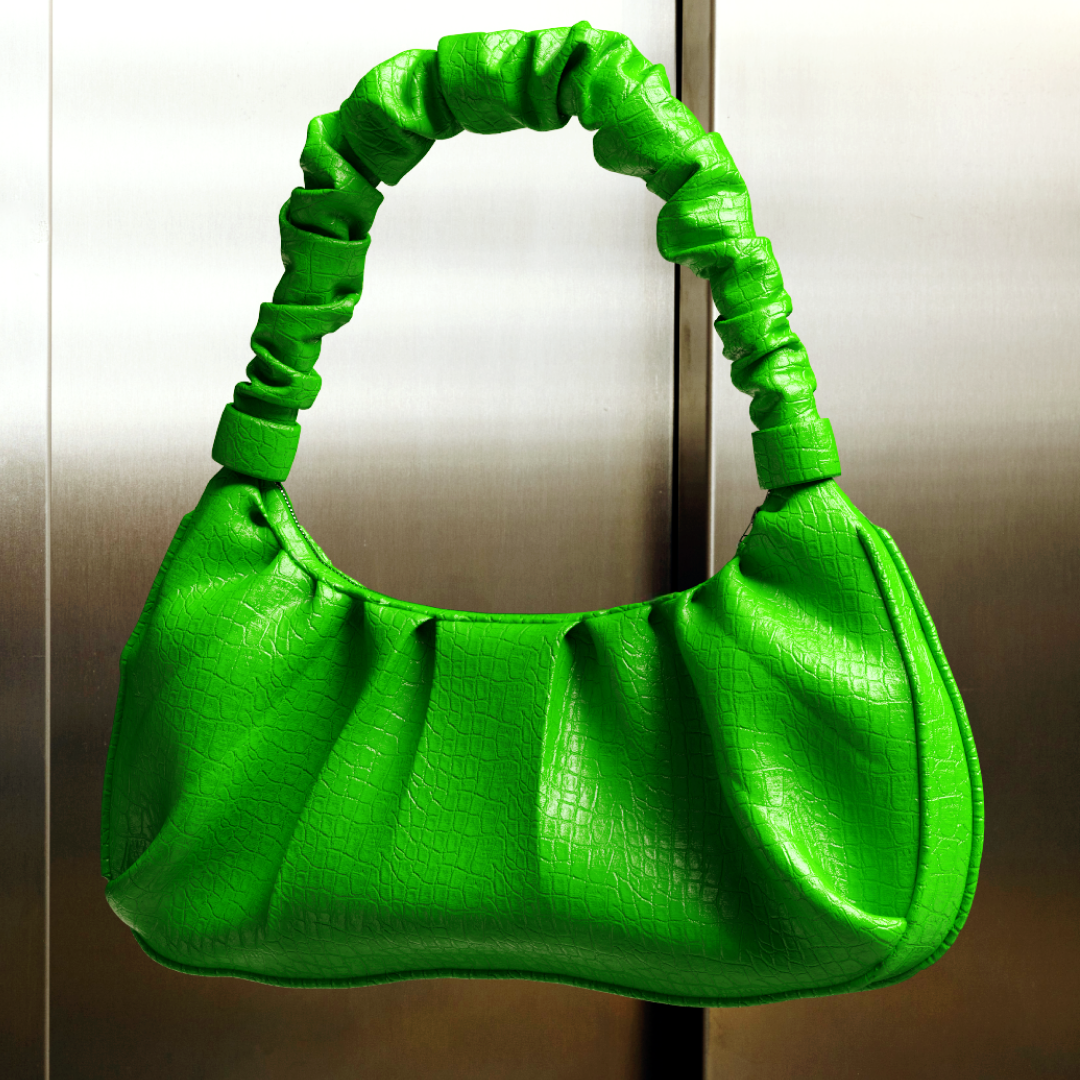
A bolsa foi inspirada na marca JW PEI e surgiu como parte de um estudo e experimentação de desenvolvimento de bolsas em 3D. Fiquei apaixonada pelo design dela, especialmente pelas dobras e os detalhes de construção. Como alguém que vem da área de desenvolvimento de produto, logo comecei a pensar na modelagem e confecção dessa peça. Não deu outra — resolvi criar minha própria versão dela no 3D rs.
Para o cenário, quis trazer um ar urbano e moderno, e foi aí que pensei: O que é mais urbano que elevadores?. Assim, o elevador acabou virando o cenário perfeito para apresentar a peça.
Descreva como e quando você usou a CLO durante a criação desta peça.
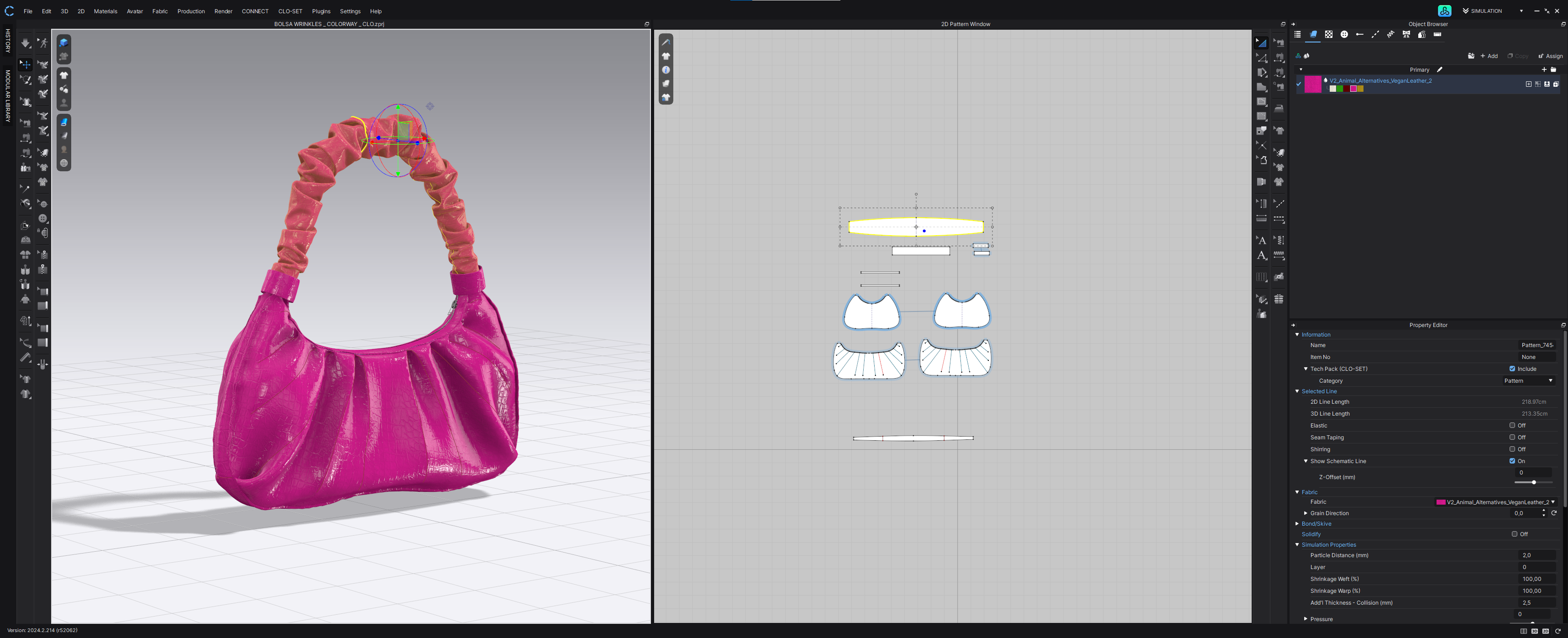
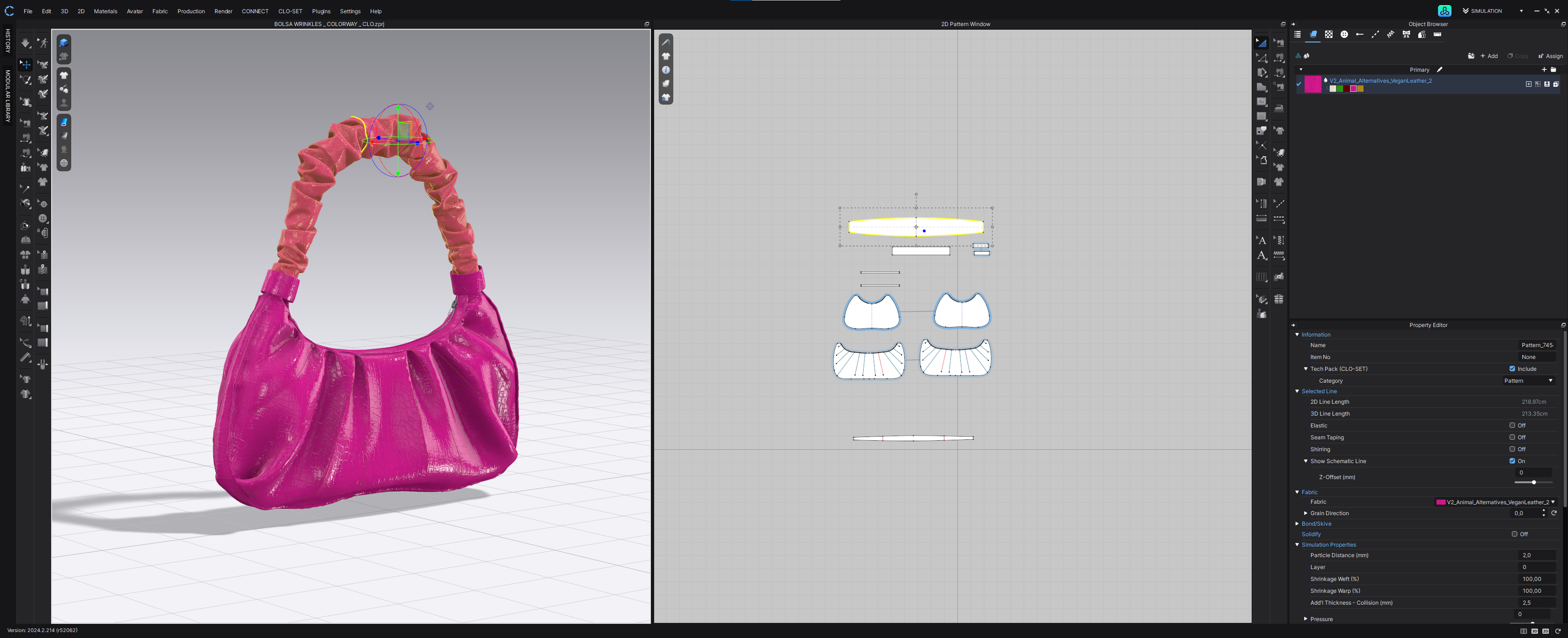
Usei o CLO do início ao fim para desenvolver a bolsa no 3D. Fui observando as imagens de referência e ia traduzindo isso para o 3D, combinando com meus conhecimentos de modelagem e confecção. Foi um processo bem intuitivo, mas também técnico, já que precisei pensar em detalhes de costura e estrutura enquanto construía a peça. O CLO me permitiu testar formas e ajustes em tempo real, o que foi essencial para chegar no melhor resultado final, além de permitir um processo muito mais dinâmico!
Qual foi sua parte favorita da criação desta peça?
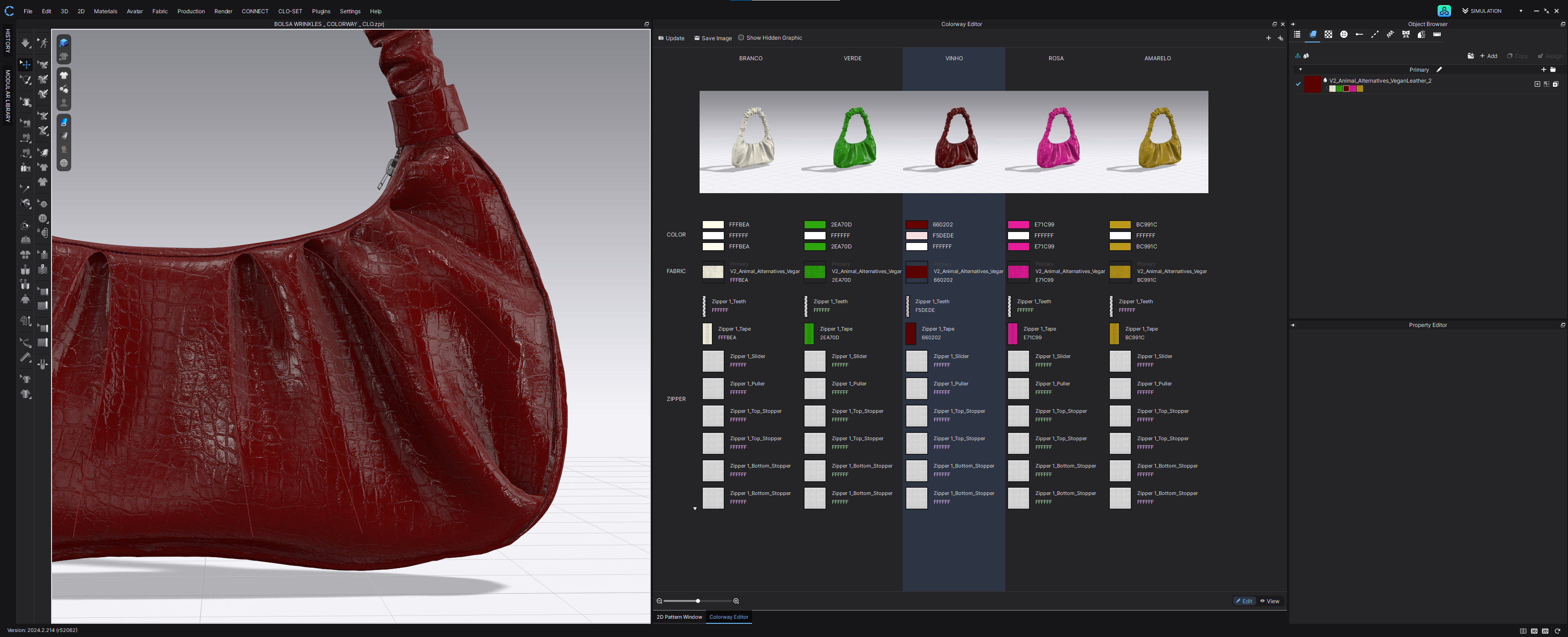
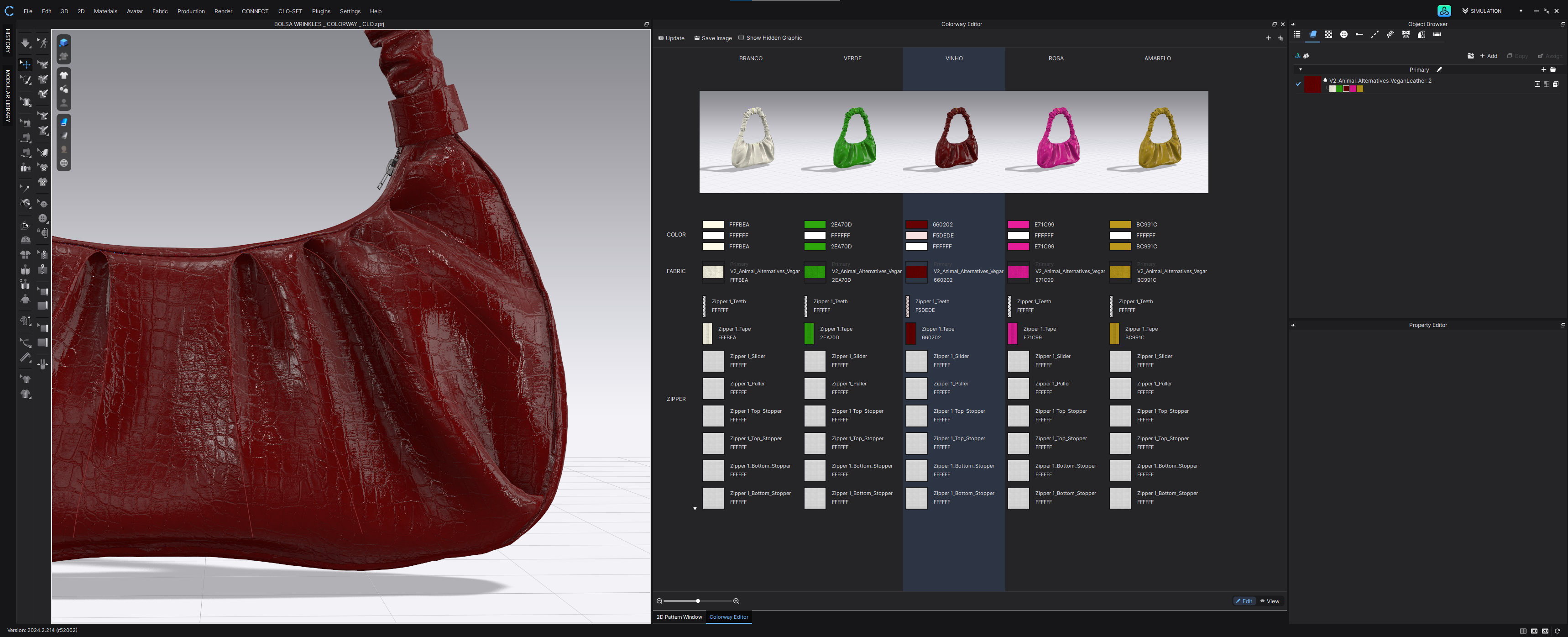
Minha parte favorita foi, sem dúvida, a alça e as cores! Modelar a alça foi super divertido, lembro que fiquei testando para ver o quão enrugada e quão sobreposto o tecido conseguia ficar (rs). Era quase como brincar com as possibilidades de volume e textura!Outra parte que amei foi definir as cores. Fiquei completamente indecisa porque todas as combinações me encantavam (rs). Para sair do impasse, pedi a opinião de pessoas próximas, mas a indecisão só aumentou porque todo mundo gostou de cores diferentes. Então, resolvi perguntar para os meus seguidores quais cores eles preferiam — e foi uma experiência super legal de interação e feedback também!
Você pode compartilhar um desafio específico que enfrentou durante o processo de design e como o superou?
Ah, sim, a modelagem das pences foi um grande desafio! Percebi que elas não seguiam um único padrão — nem todas eram para o mesmo lado e o tamanho diminuía gradualmente. Fiquei um tempo tentando resolver só no digital, mas por um momento pensei: preciso ver isso fora da tela.
Peguei uma folha de papel, dobrei várias vezes até encontrar o resultado que queria e, com isso, consegui entender como replicar no CLO. Foi um momento de experimentação prática que me ajudou a transformar a lógica das dobras na bolsa digital que eu queria.
Esse processo reforçou que combinar técnicas é super válido e pode trazer ótimos resultados! Às vezes, recorrer ao básico, como dobrar um papel, pode ser a chave para destravar soluções no 3D.
Você tem alguma dica para outros usuários do CLO que desejam aprimorar seus designs?
Minha principal dica é simples: procure pela lógica. Se uma modelagem parecer confusa, faça testes no básico, procure informações sobre a base (de modelagem por exemplo). Experimente e veja como a lógica do design funciona no físico, que é a base do 3D, e como você pode trazer esse resultado final no digital. Isso ajuda a entender as estruturas e proporções de maneira muito mais intuitiva.
Com essa clareza, é só transferir a ideia para o CLO e deixar a mágica do 3D acontecer. Ah, e experimente sempre! O CLO é uma ferramenta tão rica que, às vezes, descobrimos novas possibilidades só testando, sem medo de errar.
Quais são seus projetos futuros e como você vê a evolução do seu trabalho no cenário da moda digital?
O futuro da Murph está cheio de novidades!
Temos alguns projetos finalizados que em breve serão lançados, e mal posso esperar para compartilhar.
Nosso foco é continuar explorando e aprofundando na moda digital, conectando com criatividade, tecnologia e funcionalidade.
Além disso, queremos fortalecer nossas parcerias estratégicas no mercado, conectando-nos a marcas e plataformas que conversem com o posicionamento e o propósito da Murph.
Também queremos ampliar e representar o impacto do 3D no mercado, trazendo soluções de inovação da área com nossos parceiros.
E, claro, um dos nossos objetivos é me tornar uma CLO Creator, representando a parceria com a marca enquanto exploramos juntos as infinitas possibilidades do 3D.
A evolução da Murph é algo que vejo nitidamente a cada ano. Com cada projeto, enfrentamos novos desafios que nos levam a explorar ferramentas e estratégias mais eficientes. Isso não apenas aprimora nosso domínio técnico no 3D, mas também nos torna mais ágeis e criativos na resolução de problemas.
O CLO 3D tem sido essencial nessa jornada. A cada update, sinto que evoluímos juntos — as novas ferramentas e funcionalidades tornam o processo mais dinâmico e realista, e isso reflete diretamente nos resultados finais. Para mim, essa relação entre a Murph e o CLO é mais do que um uso de ferramenta; é uma parceria criativa que quero levar ainda mais longe no futuro.
English Version:
Turning Inspiration into Design: Murph Studio's Creative Journey with CLO
Meet Carol, a Brazilian designer who founded Murph Studio, where she merges creativity with cutting-edge technology. In this interview, she shares details about her artwork inspired by the JW PEI brand, exploring how 3D design plays a key role in her innovative approach to fashion.
Please introduce yourself and share a bit about your background
Hi, I'm Carol, a 3D designer and creator of Murph Studio.
I have a degree in fashion from FAAP, and I've worked in both large and small companies, where I've deepened my experience in product development and design. After years in the traditional market, I found a new creative perspective in the digital universe. Creating Murph was like finding my purpose in fashion again, with innovation, sustainability, and visibility.
What is Murph's Studio goal in exploring the use of 3D in product visualization?
I believe that the potential of 3D for product visualization is a topic worth exploring, as it is Murph's main focus. Our goal is to facilitate the way brands present their creations, bringing more agility, creativity, and visual impact. This project is a clear example of that and shows how 3D can transform product design and visual campaigns.
Artwork Overview:
The bag was inspired by the JW PEI brand and was created as part of a study and experimentation in the development of 3D bags. I fell in love with its design, especially the folds and construction details. As someone with a background in product development, I soon began thinking about the modeling and manufacturing of this piece. It was no surprise — I decided to create my own version of it in 3D, lol.
For the setting, I wanted to bring an urban and modern feel, and that's when I thought: What's more urban than elevators? So, the elevator ended up becoming the perfect setting to present the piece.
Please tell us about the CLO features that were particularly useful when creating this artwork.
I used CLO from start to finish to develop the bag in 3D. I looked at the reference images and translated them into 3D, combining them with my knowledge of modeling and manufacturing. It was a very intuitive process, but also technical, as I had to consider sewing and structural details while building the piece. CLO allowed me to test shapes and adjustments in real time, which was essential to achieving the best final result, while also making the process much more dynamic!
What was your favorite part of creating this piece?
My favorite part was, without a doubt, the strap and the colors! Modeling the strap was super fun; I remember testing it to see how wrinkled and how overlapping the fabric could be (lol). It was almost like playing with the possibilities of volume and texture!
Another part that I loved was choosing the colors. I was completely undecided because I loved all the combinations (lol). To get out of the impasse, I asked for the opinions of people close to me, but the indecision only increased because everyone liked different colors. So, I decided to ask my followers which colors they preferred — and it turned out to be a really cool experience of interaction and feedback too!
Can you share a specific challenge you faced during the design process and how you overcame it?
Oh, yes, modeling the darts was a huge challenge! I realized that they didn’t follow a single pattern — they weren’t all facing the same way, and their size gradually decreased. I spent some time trying to solve it digitally, but at one point, I thought: I need to see this off-screen.
I took a sheet of paper, folded it several times until I found the result I wanted, and with that, I was able to understand how to replicate it in CLO. It was a moment of practical experimentation that helped me transform the logic of the folds into the digital bag I envisioned.
This process reinforced that combining techniques is super valuable and can yield great results! Sometimes, resorting to the basics, like folding a piece of paper, can be the key to unlocking solutions in 3D.
Do you have any tips for other CLO users looking to improve their designs?
My main tip is simple: look for logic. If a pattern seems confusing, test it out using the basics, and look for information about the fundamentals (like patternmaking, for example). Experiment and see how the design logic works in the physical world, which is the foundation of 3D, and how you can bring that final result into the digital space. This helps you understand structures and proportions in a much more intuitive way.
With this clarity, just transfer the idea to CLO and let the magic of 3D happen. Oh, and always experiment! CLO is such a rich tool that sometimes we discover new possibilities just by testing, without fear of making mistakes.
What are your future projects and how do you see your work evolving in the digital fashion scene?
Murph’s future is full of exciting things!
We have several projects in the works that will be released soon, and I can’t wait to share them.
Our focus is to continue exploring and delving deeper into digital fashion, connecting creativity, technology, and functionality.
In addition, we aim to strengthen our strategic partnerships in the market, connecting with brands and platforms that align with Murph’s positioning and purpose.
We also want to expand the impact of 3D in the market, bringing innovative solutions in the area alongside our partners.
And, of course, one of our goals is to become a CLO Creator, representing our partnership with the brand as we explore the infinite possibilities of 3D together.
Murph’s evolution is something I see clearly every year. With each project, we face new challenges that push us to explore more efficient tools and strategies. This not only improves our technical mastery in 3D but also makes us more agile and creative in problem-solving.
CLO 3D has been essential on this journey. With each update, I feel like we’re evolving together — new tools and features make the process more dynamic and realistic, and that directly reflects in the end results. For me, this relationship between Murph and CLO is more than just a tool; it’s a creative partnership that I want to take even further in the future.