


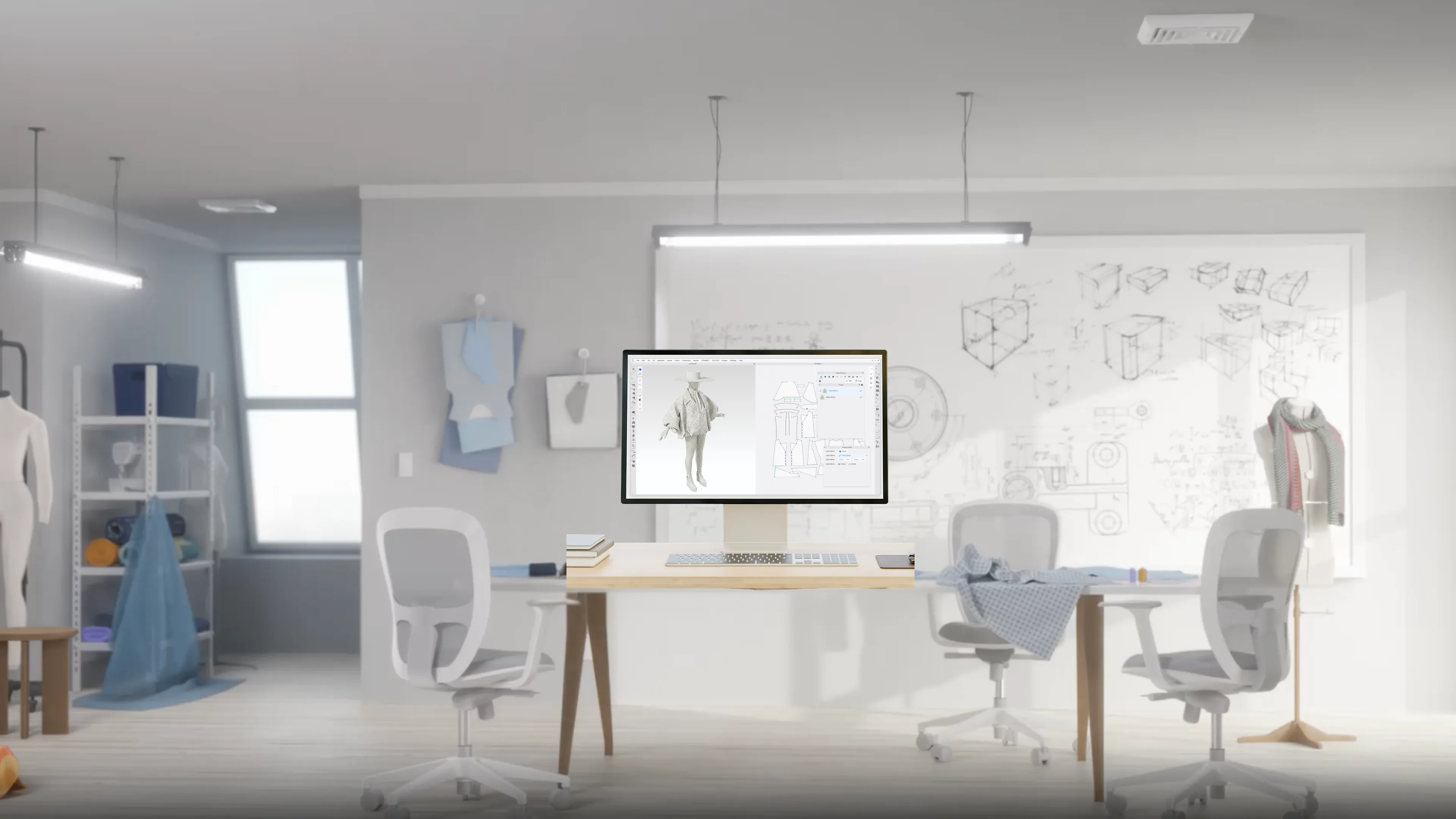
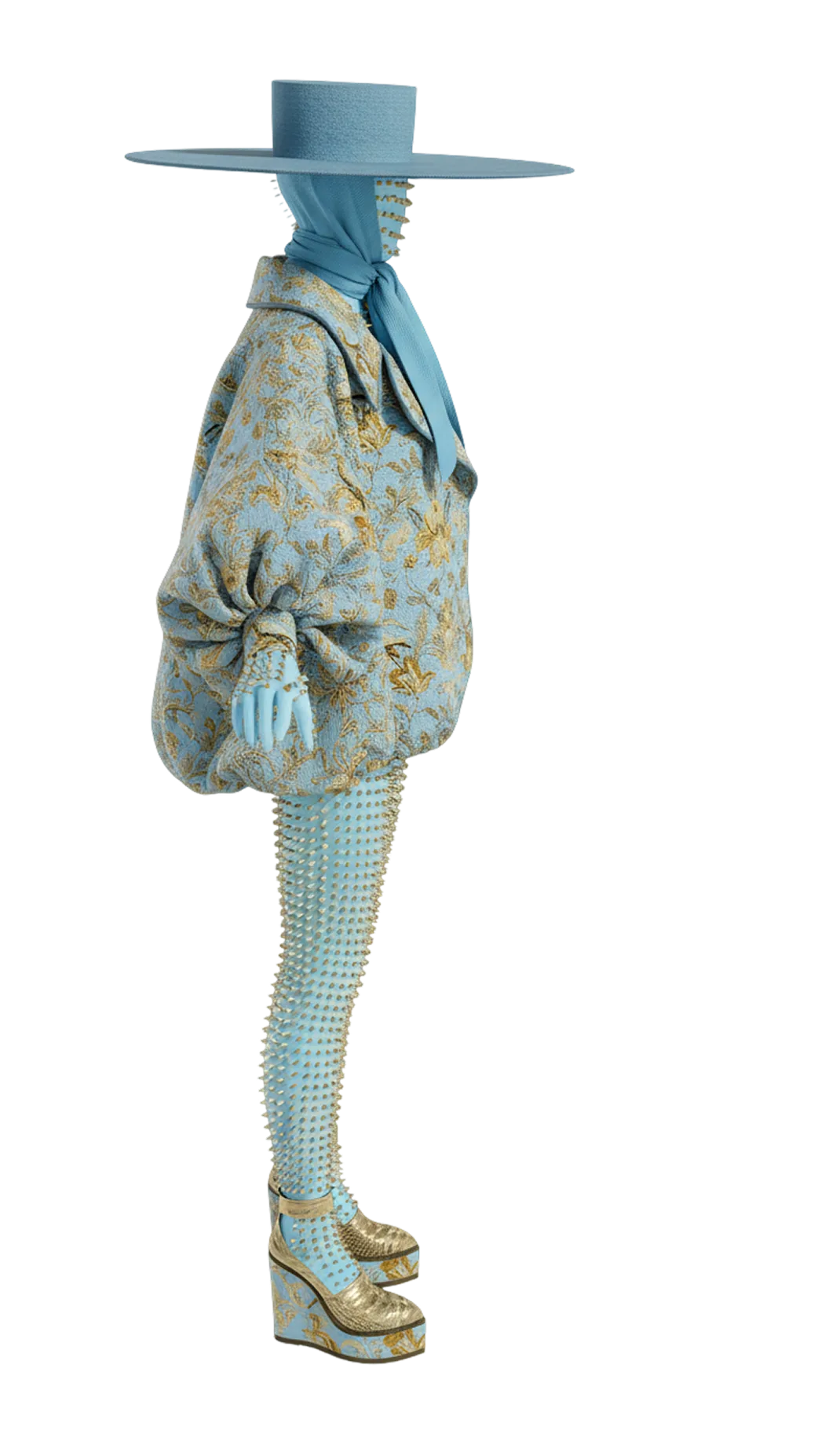
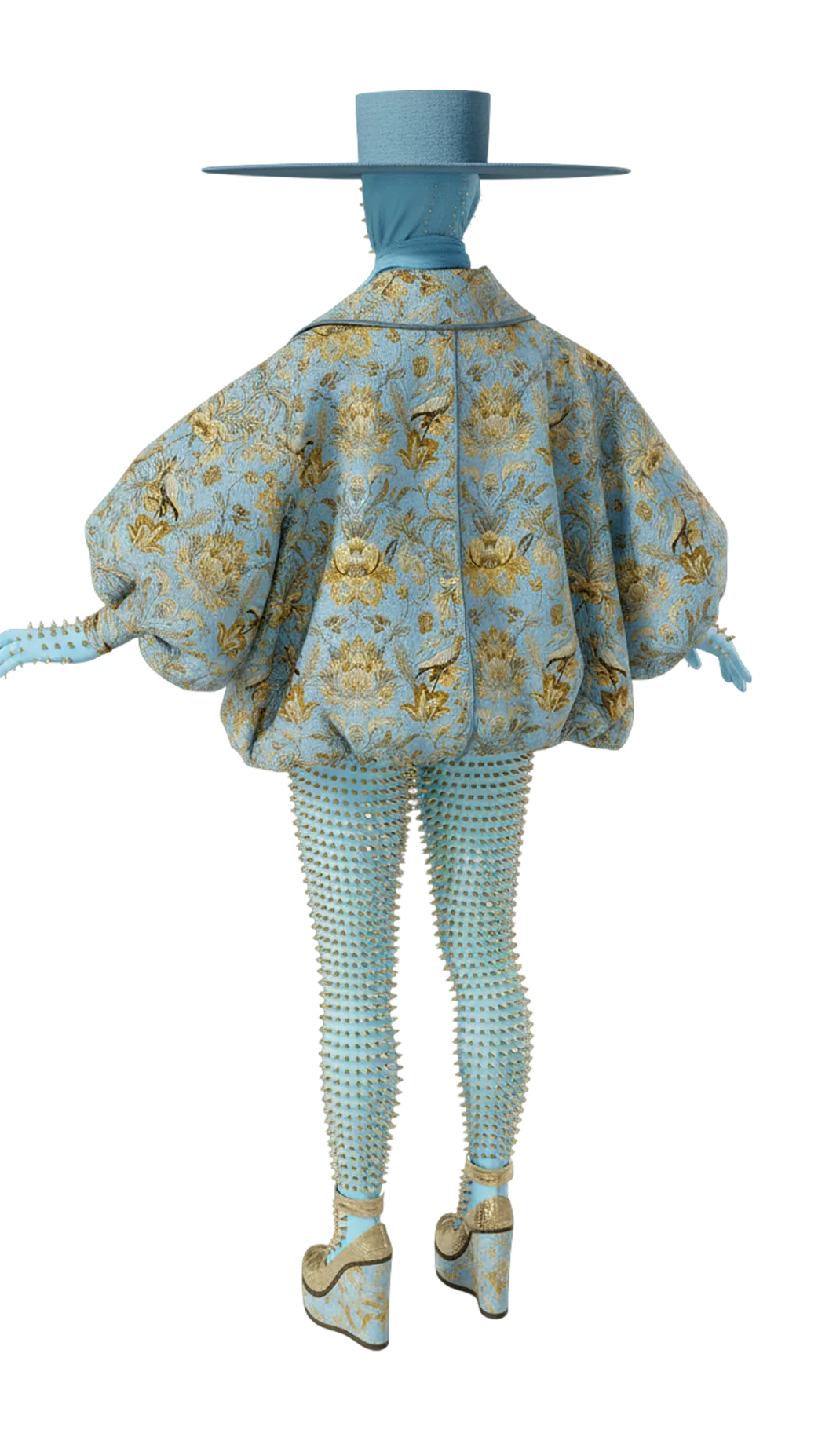
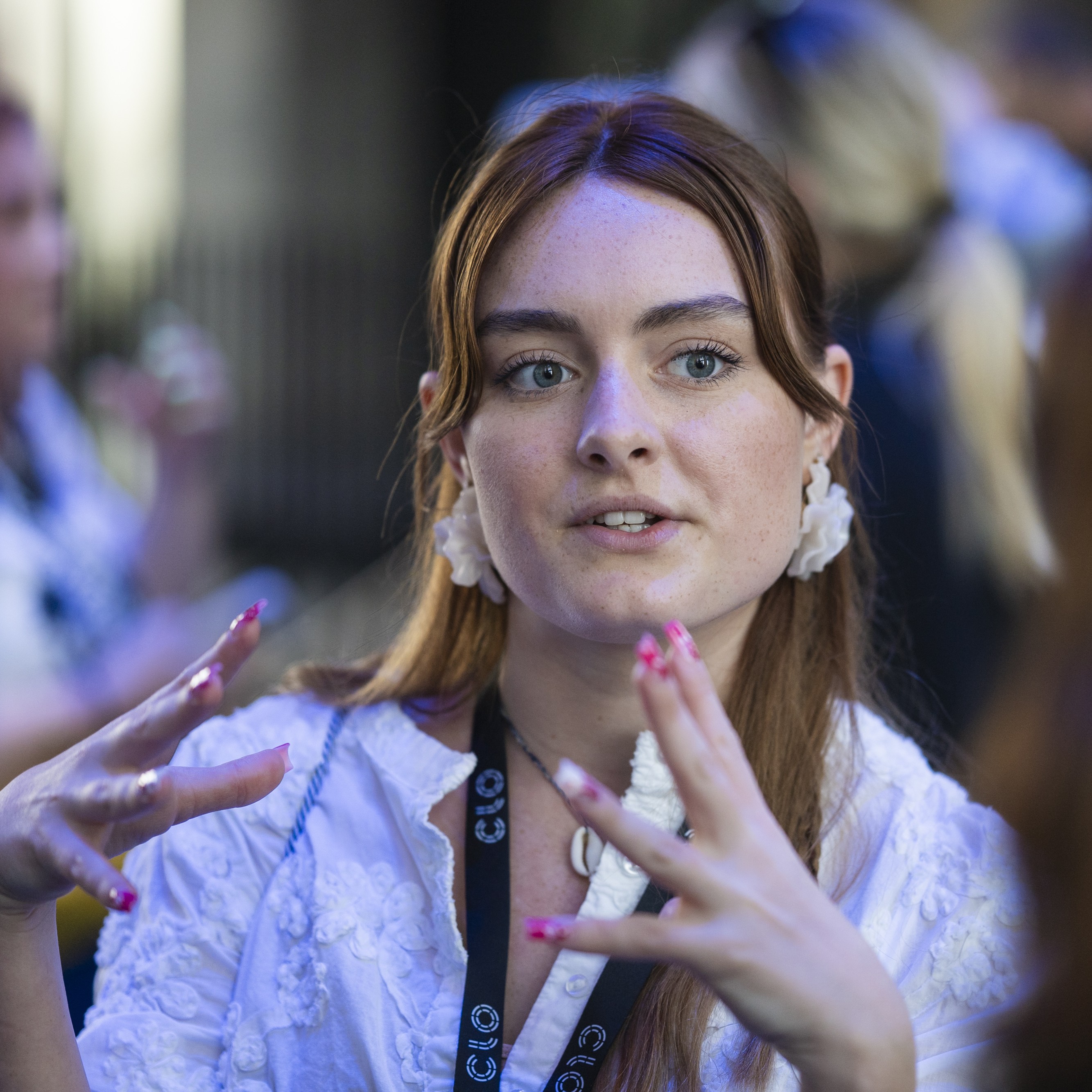
Holly New is the founder of STUDIOOFNEW and has been recognised by the BBC as the world's first fully VR fashion designer. She recently graduated with Distinction from the MA Digital Fashion Innovation at Arts University Bournemouth, where she also completed her BA (hons) in fashion. During her second term, she discovered CLO and quickly became fascinated by its potential. Later, through AUB's Innovation Studio, she encountered VR and began developing workflows that merged immersive sketching with garment precision. This exploration became the focus of her Master's degree and laid the foundation for STUDIOOFNEW—a pioneering VR fashion studio built to demonstrate how immersive design can transform the future of fashion.
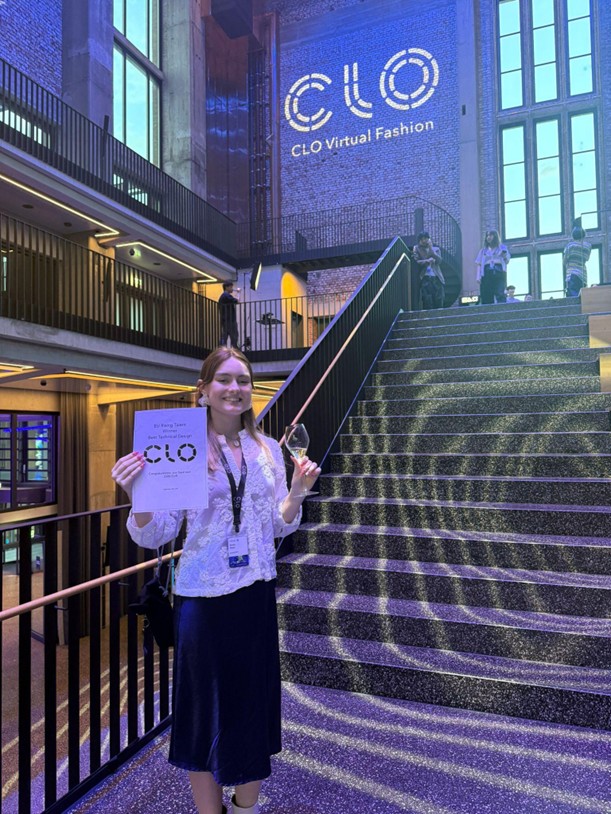
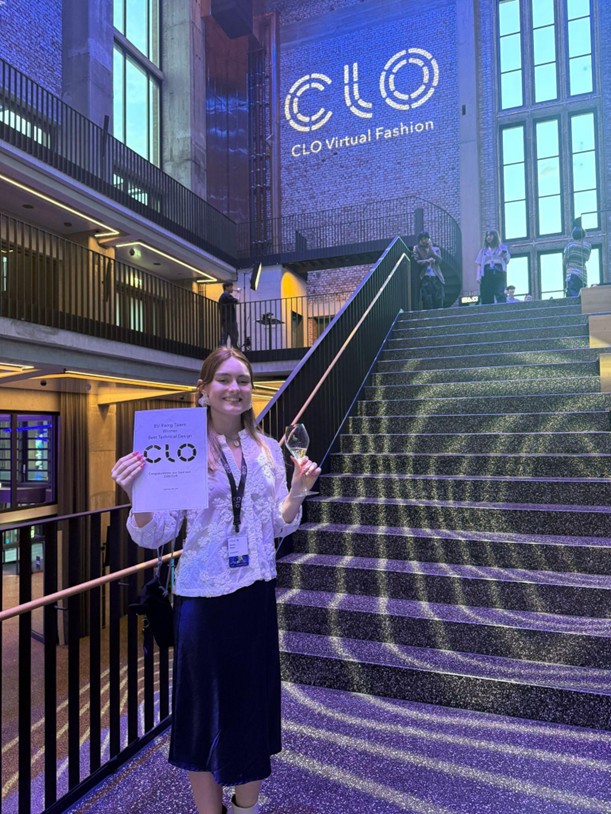
Congratulations on your Rising Talent 2025 award. How did it feel to be recognized as a finalist and to receive the Best Technical Design award at the CLO Summit?
Thank you so much. It truly meant everything to me. At first, I did not even realize I had been selected. I saw the public vote finalists and assumed they were chosen by the CLO team. I thought, “Wow, there was so much amazing work this year they must have added an extra person!”
Weeks later, I was at the hairdresser when my lecturer, Penelope Norman, messaged me in all caps saying to check my emails. I opened them casually, then suddenly realized what had happened. I was in shock. I had already accepted that others were better, so finding out I was chosen felt surreal.
That recognition was the real win. CLO saw my work, understood the vision, and thought the VR-to-fashion idea was cool. When I arrived in Munich, I already felt like a winner. I met amazing people from IKEA and Twin Motion and saw how CLO is used far beyond fashion.
As one of the ten Rising Talent finalists, I just enjoyed sharing my story. My entry combined AI, VR, and CLO, and I think people connected with that.
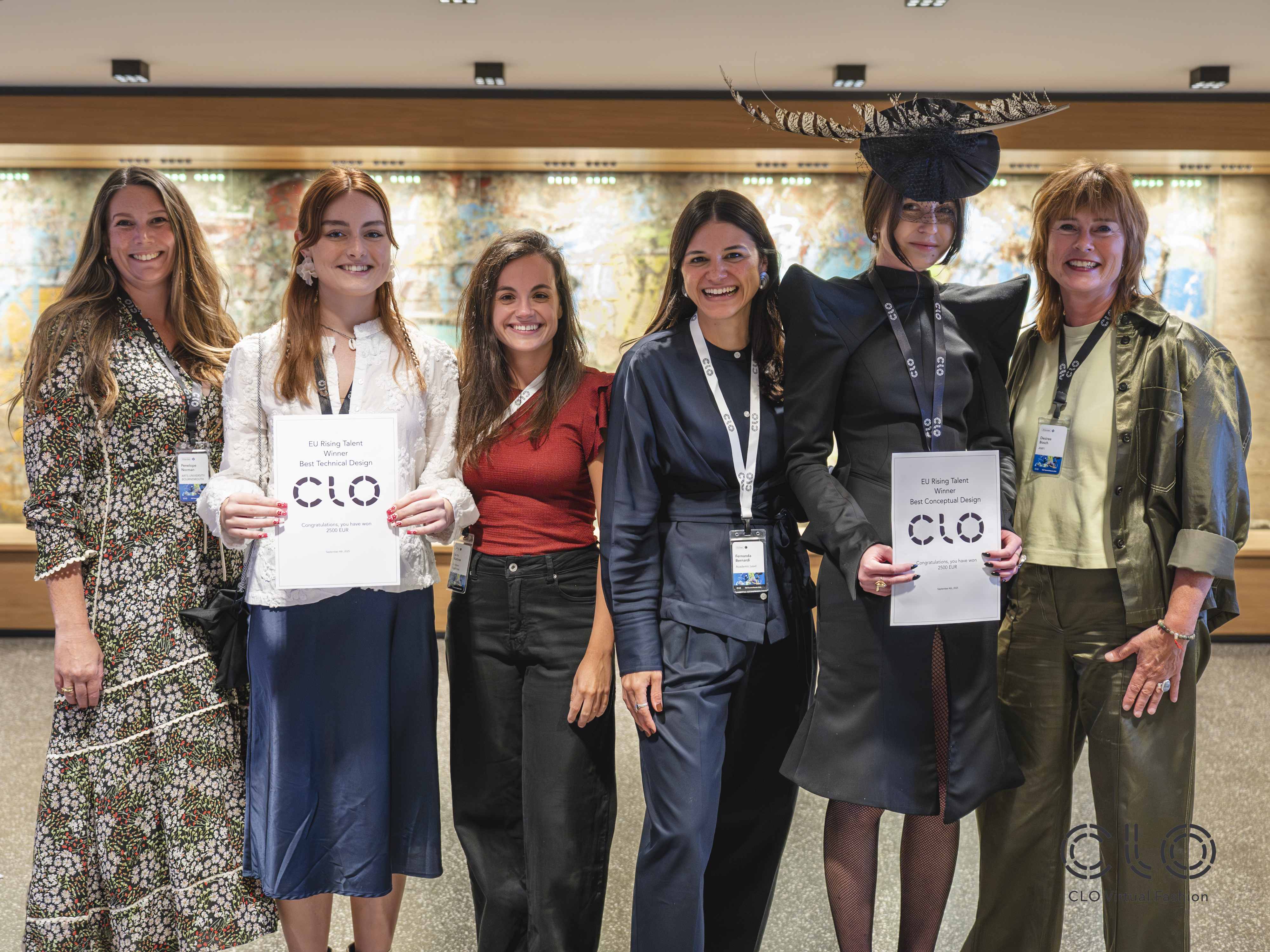
During the awards, I was sure I had not won. I even pointed out another finalist near the stage. They announced Best Conceptual Design, and she went up. Then they announced the Best Technical Design and my work appeared. I clapped, thinking it was someone else’s… until I realized it was mine.
Winning felt like a victory not just for me, but for VR in fashion. It showed technology is ready and people love the results. The moment was a blur, but I will never forget it. The real prize was being surrounded by such inspiring designers.
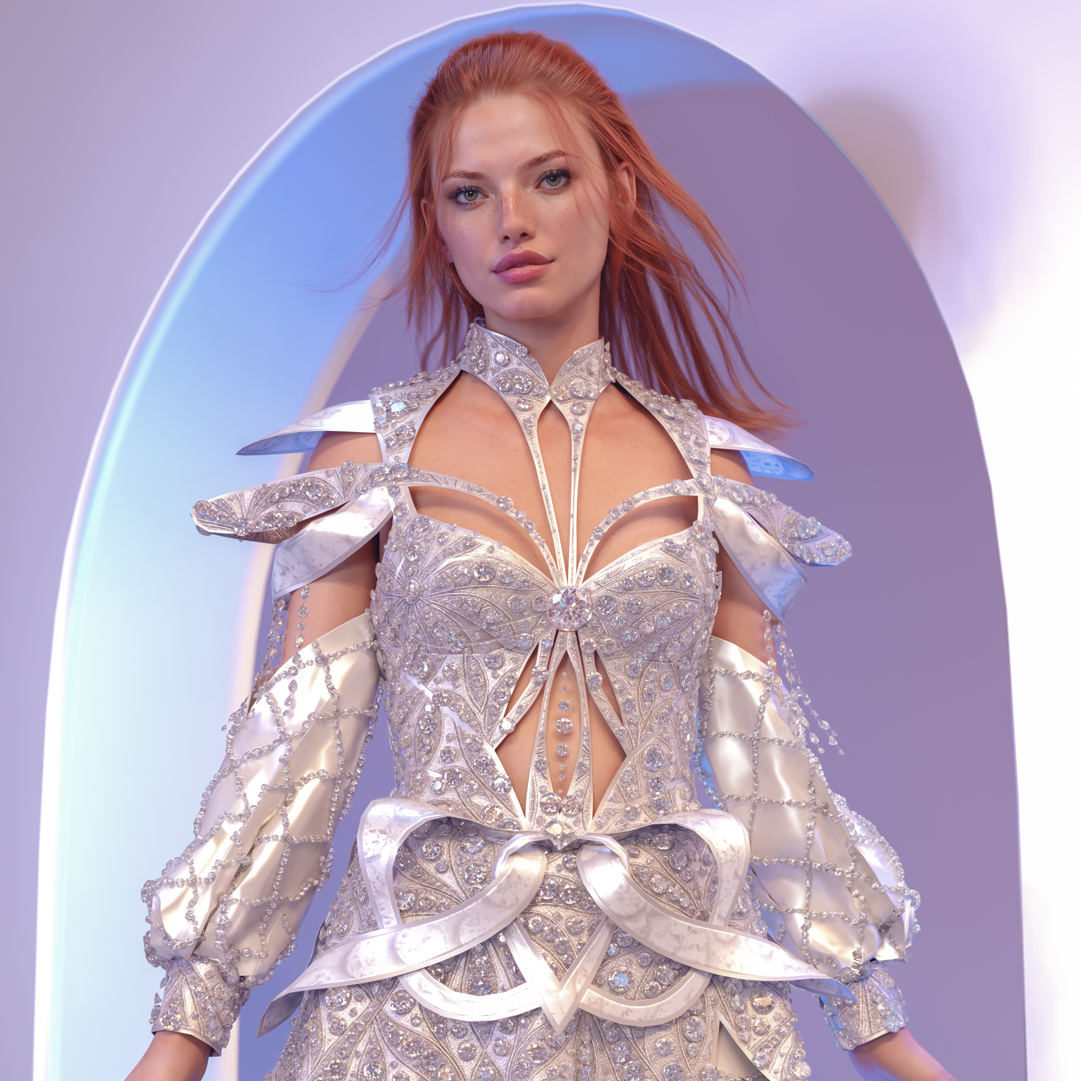
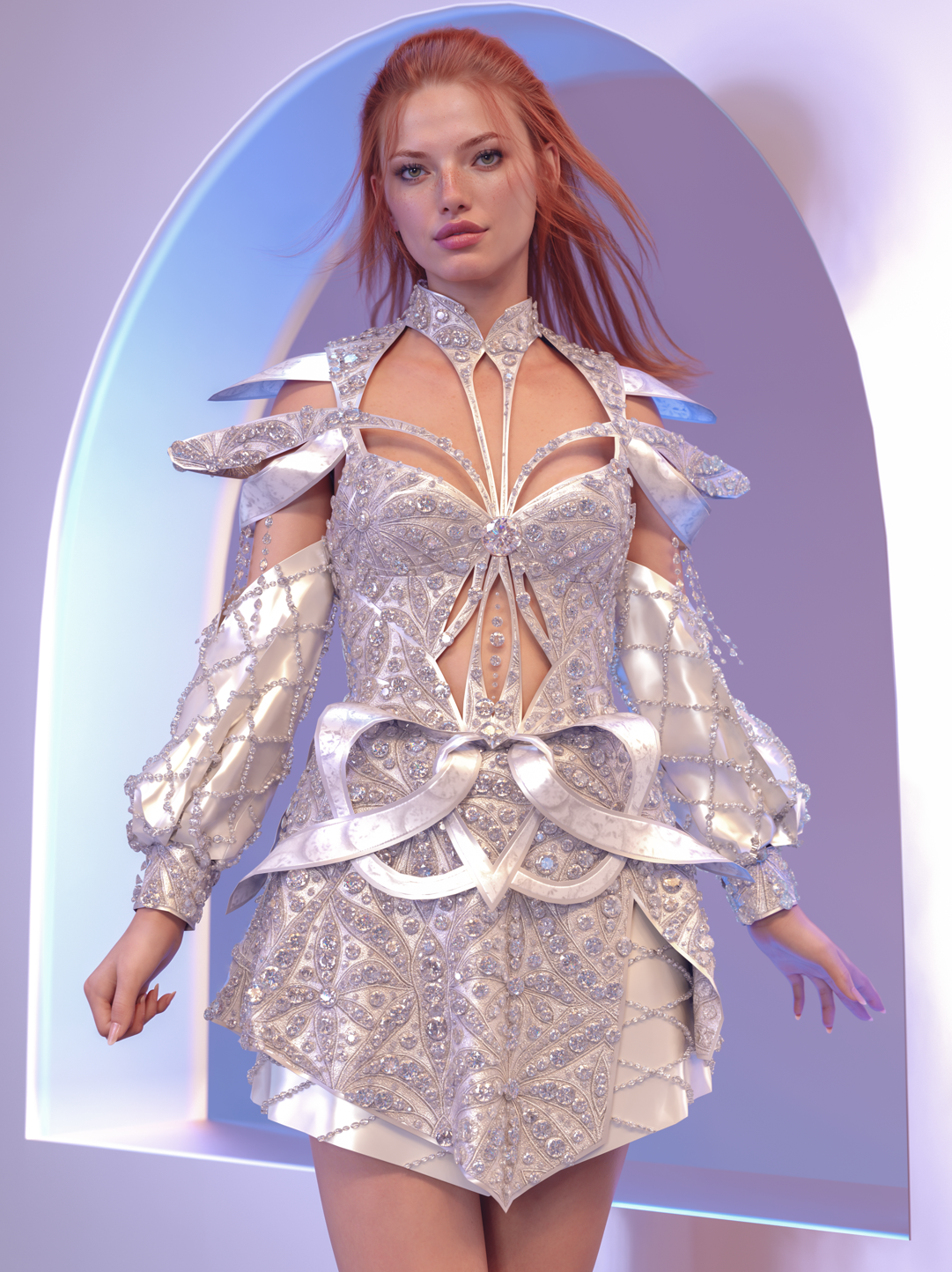
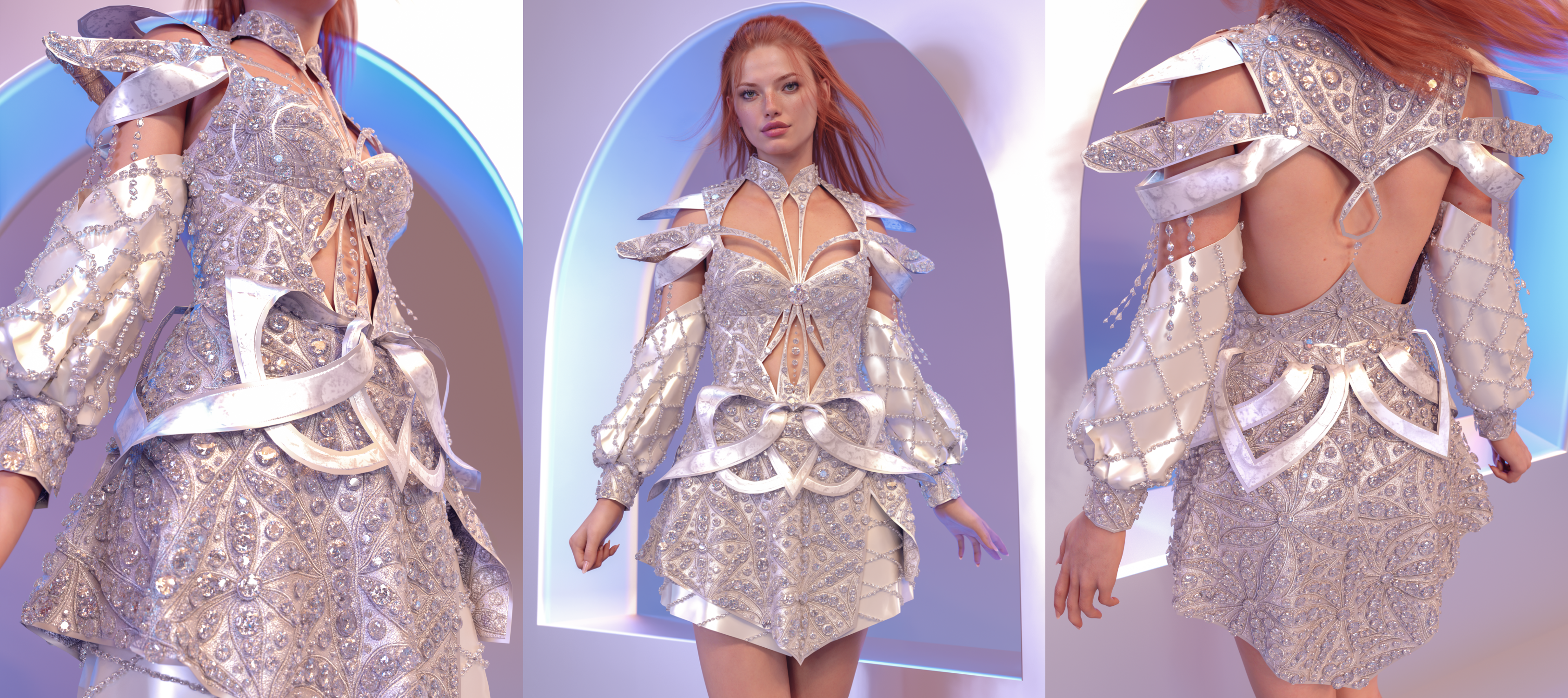
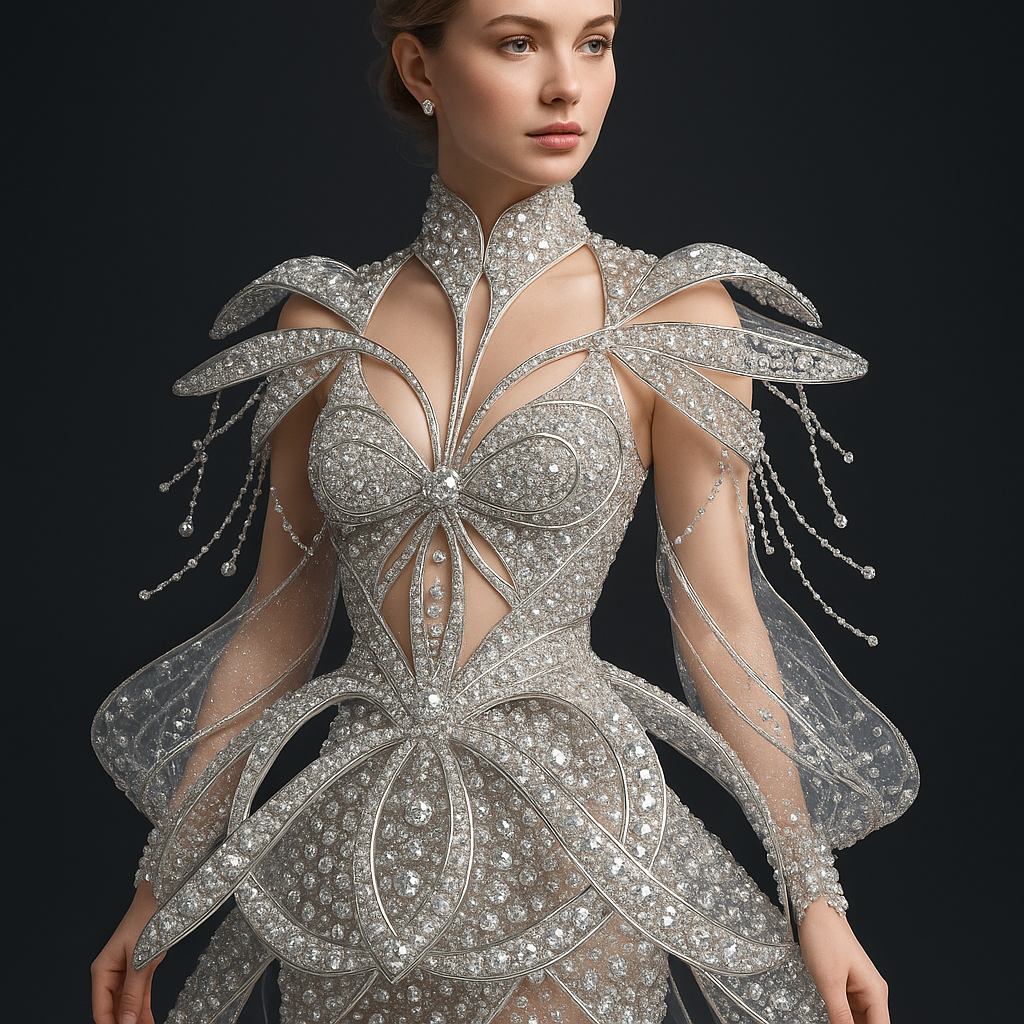
Your design, The Dress That Should Not Exist left everyone speechless. How did the idea for this garment come to life?
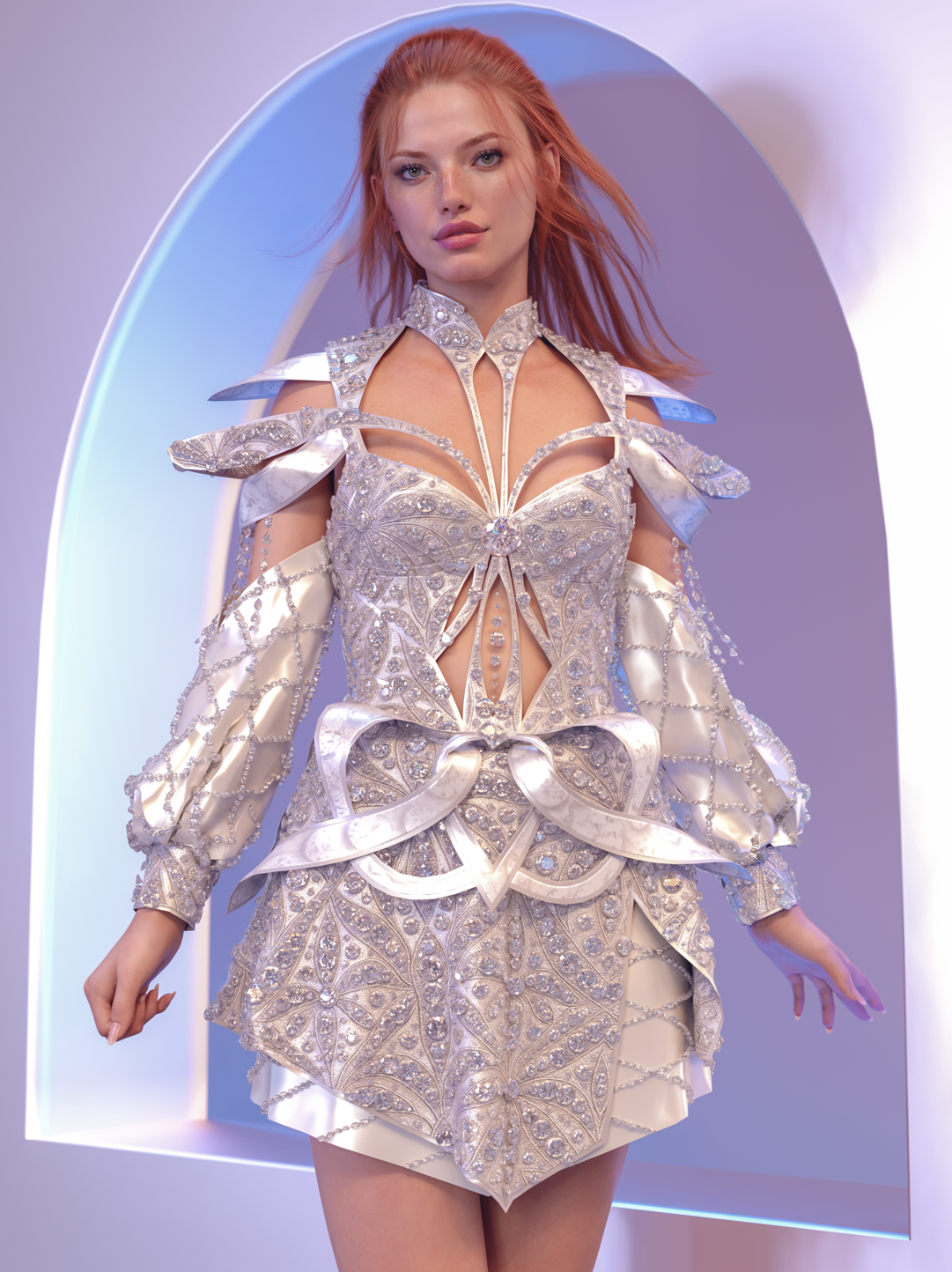
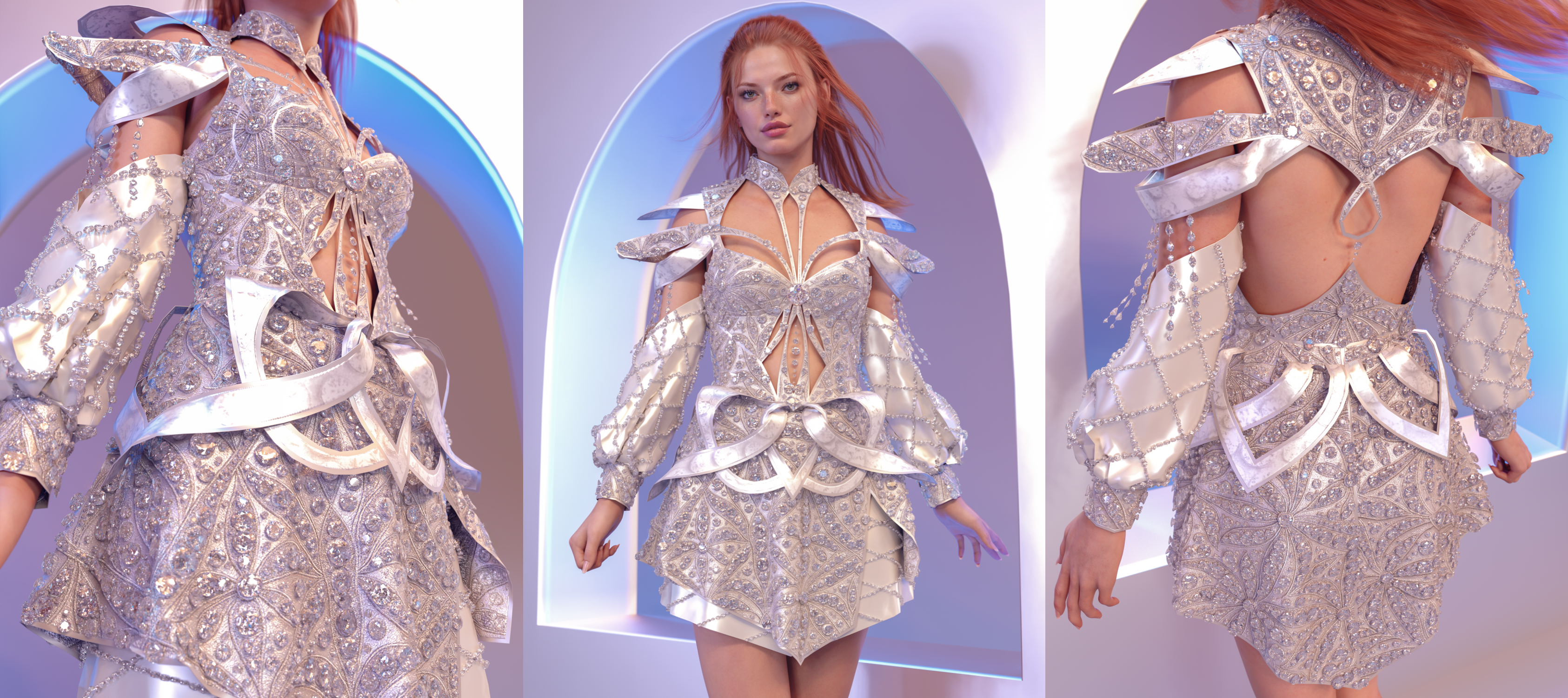
The idea started with a simple question: what happens when a designer moves beyond human limits? I used a custom AI model to create early concepts of a digital diamond dress. At first, it looked realistic, but I kept pushing it to ignore physics, weight and logic. It eventually produced something no human would naturally design. AI helps me unlearn bias. Designers think about gravity and fabric tension, but AI does not. It reveals what we cannot imagine, and that is where innovation begins. That became The Dress That Should Not Exist. It was not made for the real world, but as a study of form, light and structure brought to life through technology.
Could you walk us through the entire design process behind it and some of the technical challenges you faced?
Once I had the AI-generated imagery, I imported it into Gravity Sketch and began sculpting directly in VR, tracing around an imported CLO avatar to reinterpret the AI’s vision into a form that could exist spatially. It’s a strange mix of human control and machine inspiration; I’m guiding the shape, but the concept was born from code.

When the base design was finished, I returned to the AI to generate custom diamond textures, which I edited in Photoshop to create repeatable PBR tiles. But, the more I worked with them, the more it frustrated me that they were only 2D. So naturally, I built the diamonds myself! Each one individually modelled and layered to form chains and sculptural detail across the dress.
After exporting through my VR-to-CAD pipeline, which I developed during my Master’s, I imported everything into CLO for simulation and refinement. The final file contained over 6,000 individual diamonds, each with its own physics and reflection data. It was so complex that it refused to simulate, which, in a poetic way, felt right. It was too advanced for its own good. It truly was The Dress That Should Not Exist.
Your workflow combines Gravity Sketch, Blender, DAZ, Photoshop, and CLO. How do you integrate these platforms to achieve a cohesive and technically viable design?
My process is a connected design system where each software plays a specific role but gains strength through integration. AI drives ideation beyond human bias, Gravity Sketch brings ideas into spatial form, Blender ensures clean geometry, Photoshop refines textures, CLO translates vision into technical patterns, and DAZ handles high-density rendering. By looping DAZ outputs back into AI for motion, the workflow becomes a full cycle of machine-assisted creativity. It proves that VR, AI and CAD can work as one intelligent system, amplifying fashion design rather than replacing it.
How did CLO influence your creative and technical process? Which tools or features were key to bringing your vision to reality?
CLO is really at the heart of the way I design, it is where my creative ideas finally take on technical form. It’s the stage where everything I’ve built in AI and VR becomes tangible, logical and beautifully precise.
The fabric customization tools and PBR map controls are huge for me. Being able to fine-tune reflectivity, translucency and surface texture allows me to create digital materials that feel truly alive. For The Dress That Should Not Exist, that level of control was essential for capturing the illusion of diamonds and metallics, it’s where the realism started to shine through.
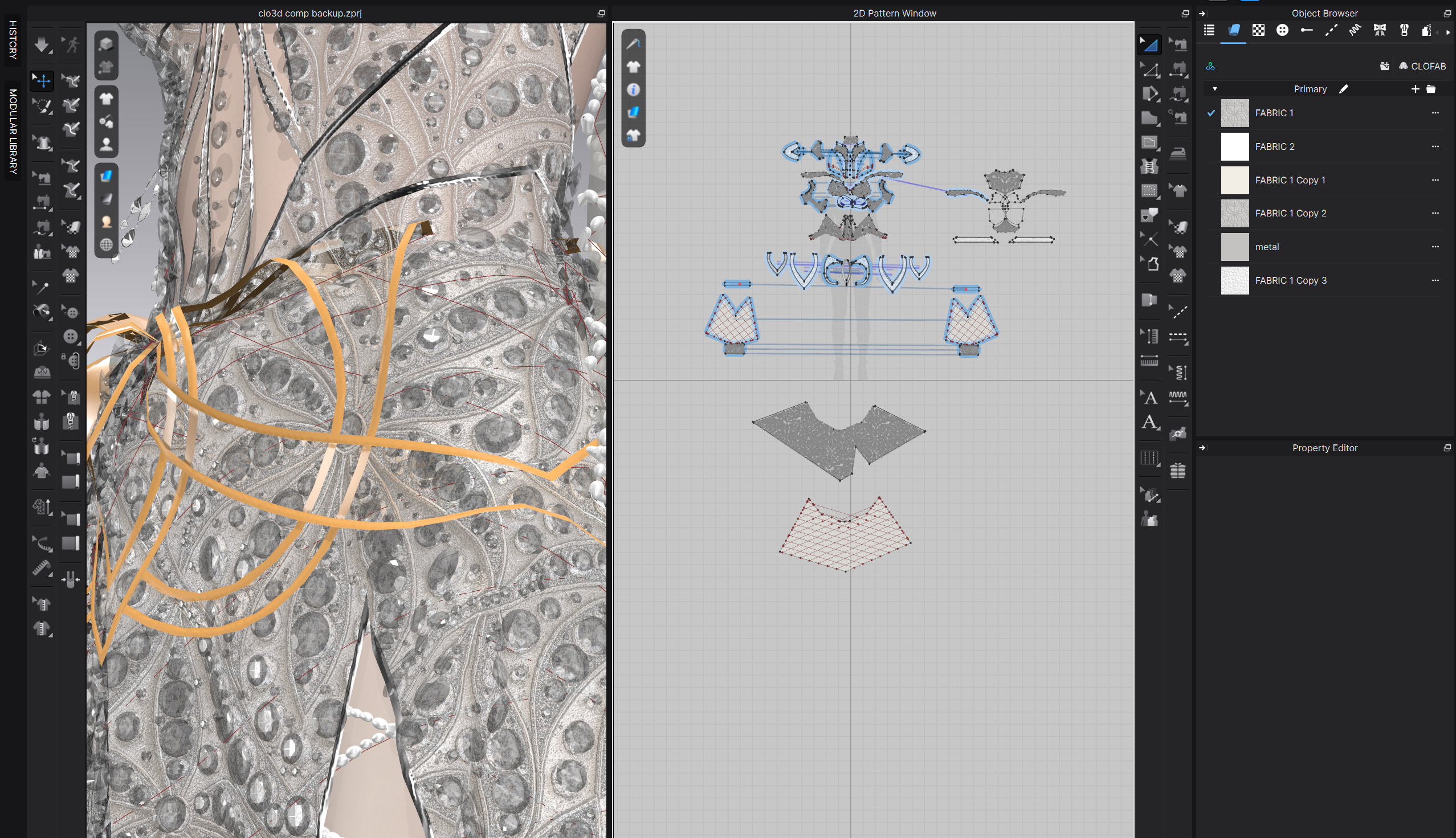
I also love the trim and button customisation features. They might seem small, but the fact that you can assign render properties to trims means you can make something as simple as a button or metal clasp behave like a real reflective surface. And when you start combining that with joined materials in Blender, the creative potential skyrockets. You can take something that’s completely flat and turn it into a gold masterpiece in seconds, something I discovered firsthand while collaborating with a jewellery designer from New York.
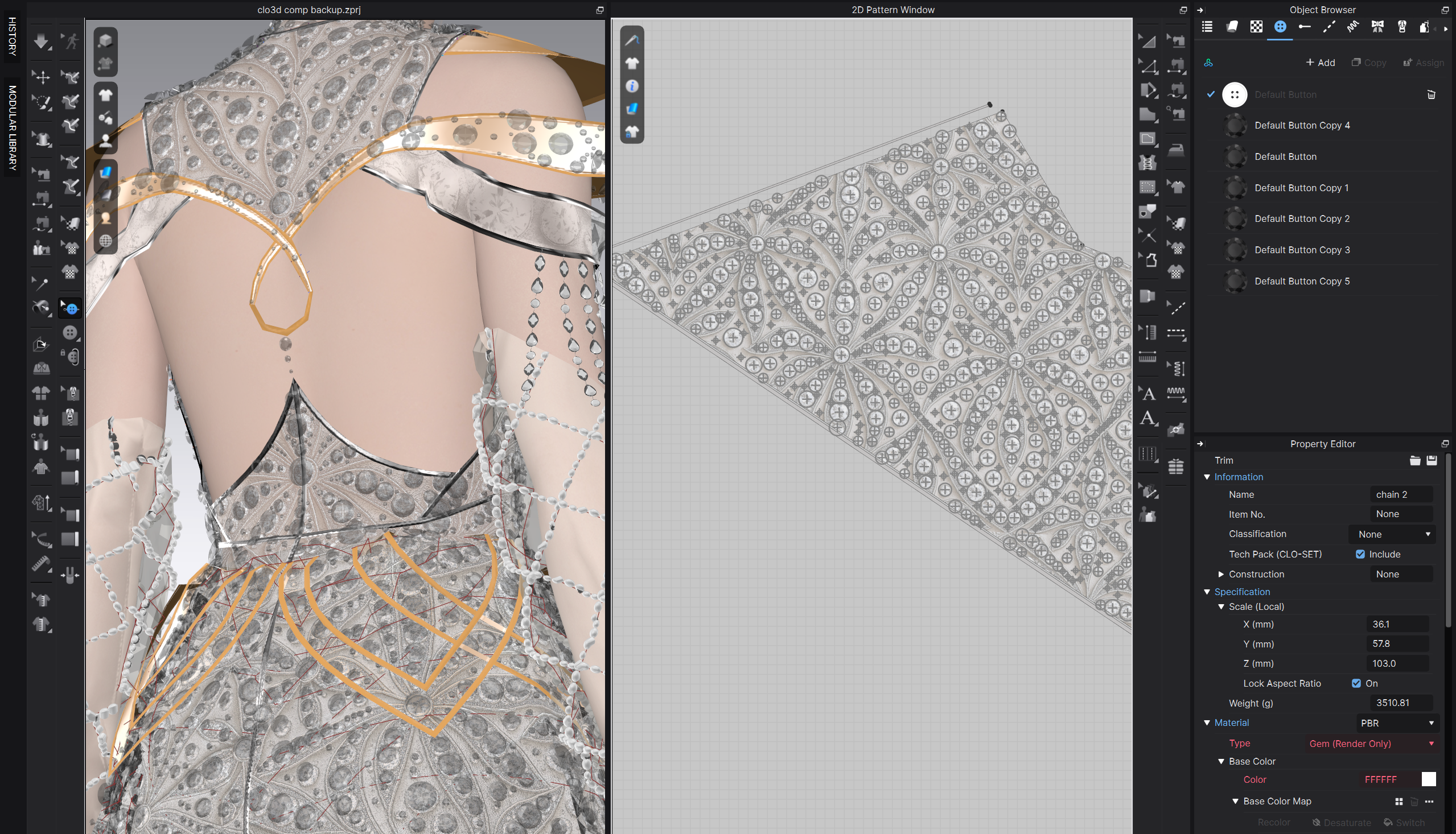
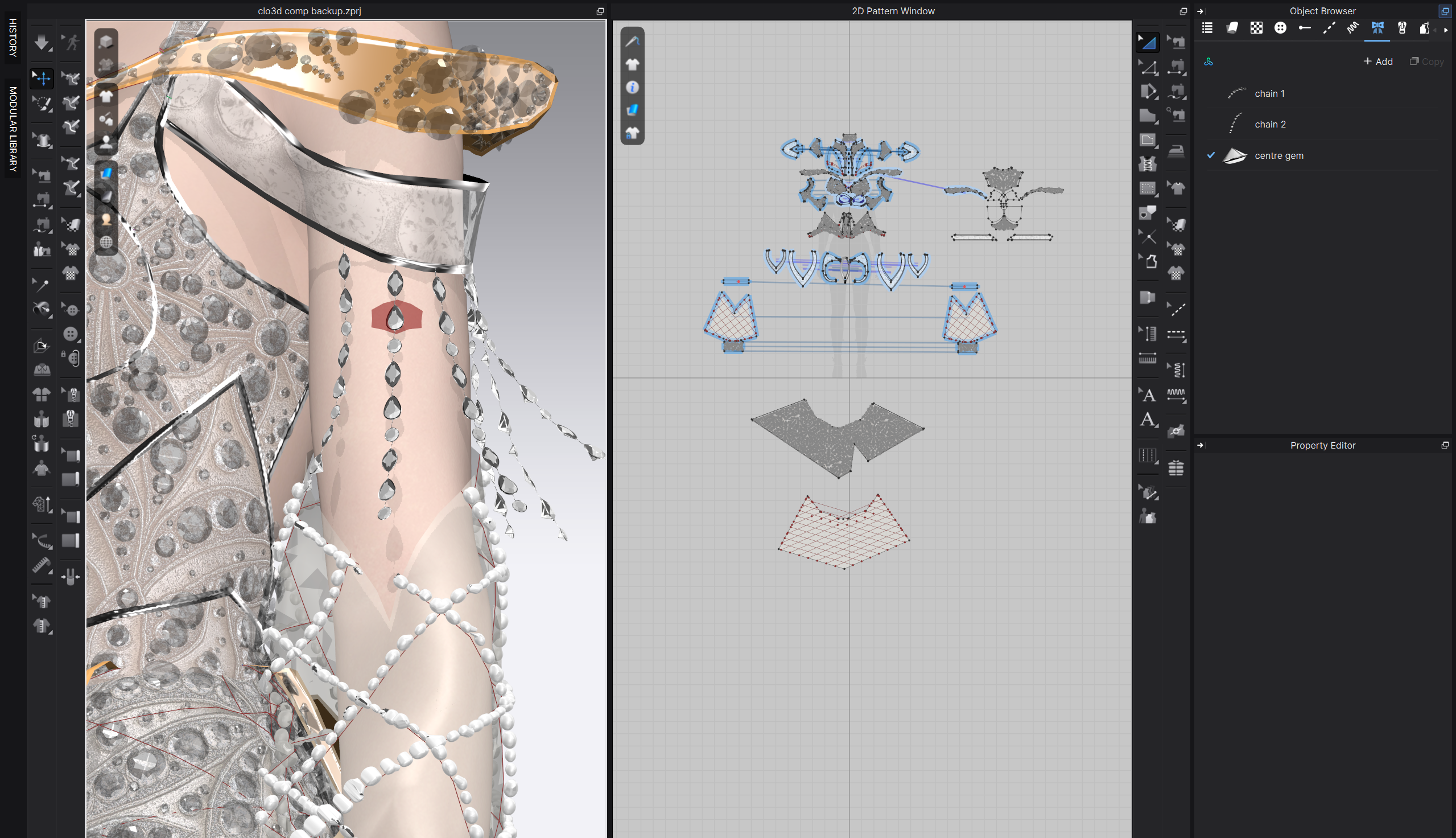
That is what I love about CLO, it is both artistic and scientific! It gives me granular control over materials and structure while keeping the process visual and intuitive. For me, it’s not just software; it’s the foundation that lets my entire hybrid workflow come to life.
At the CLO Summit you had the opportunity to network with designers, brands, and educators. What impact did that experience have on your career?
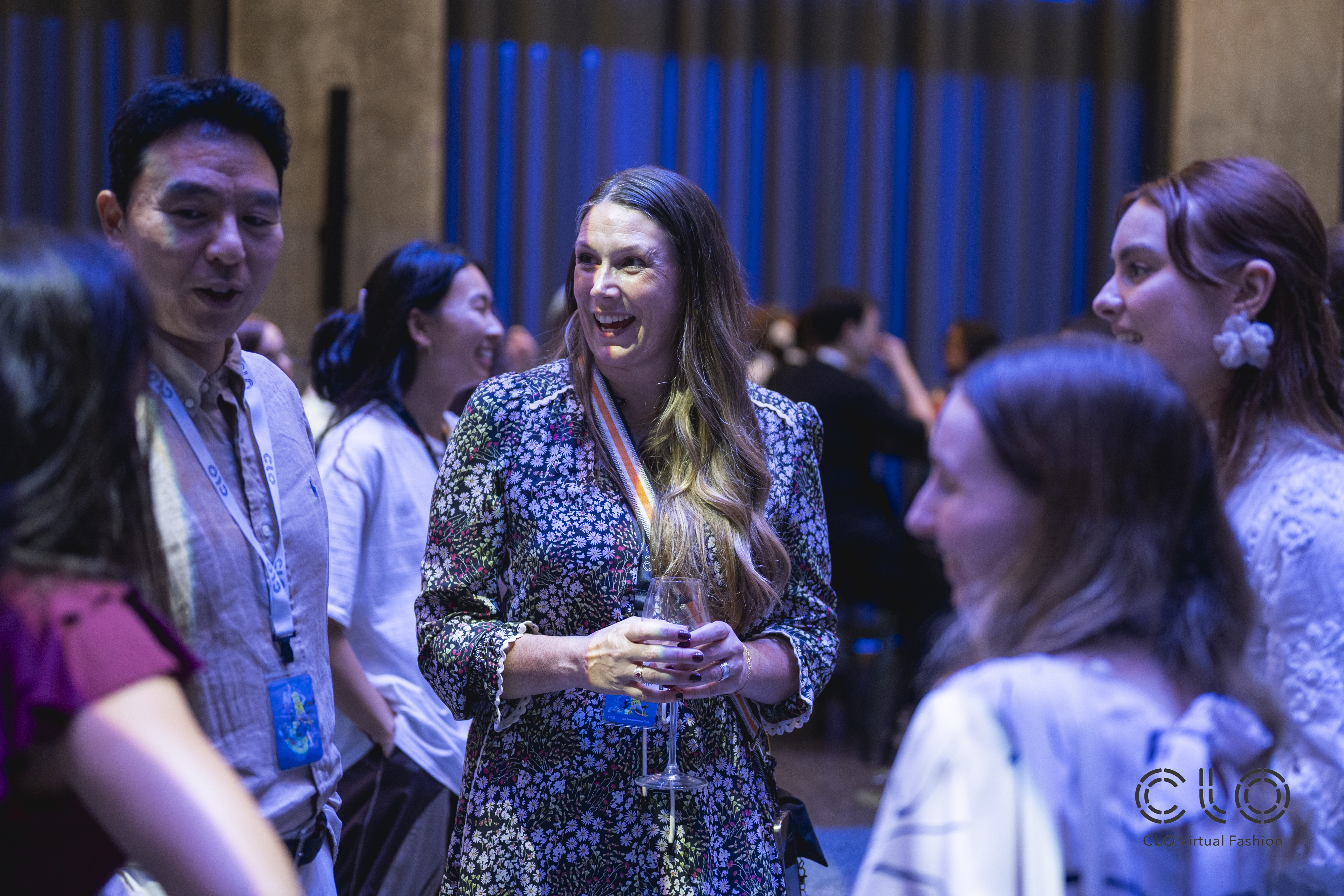
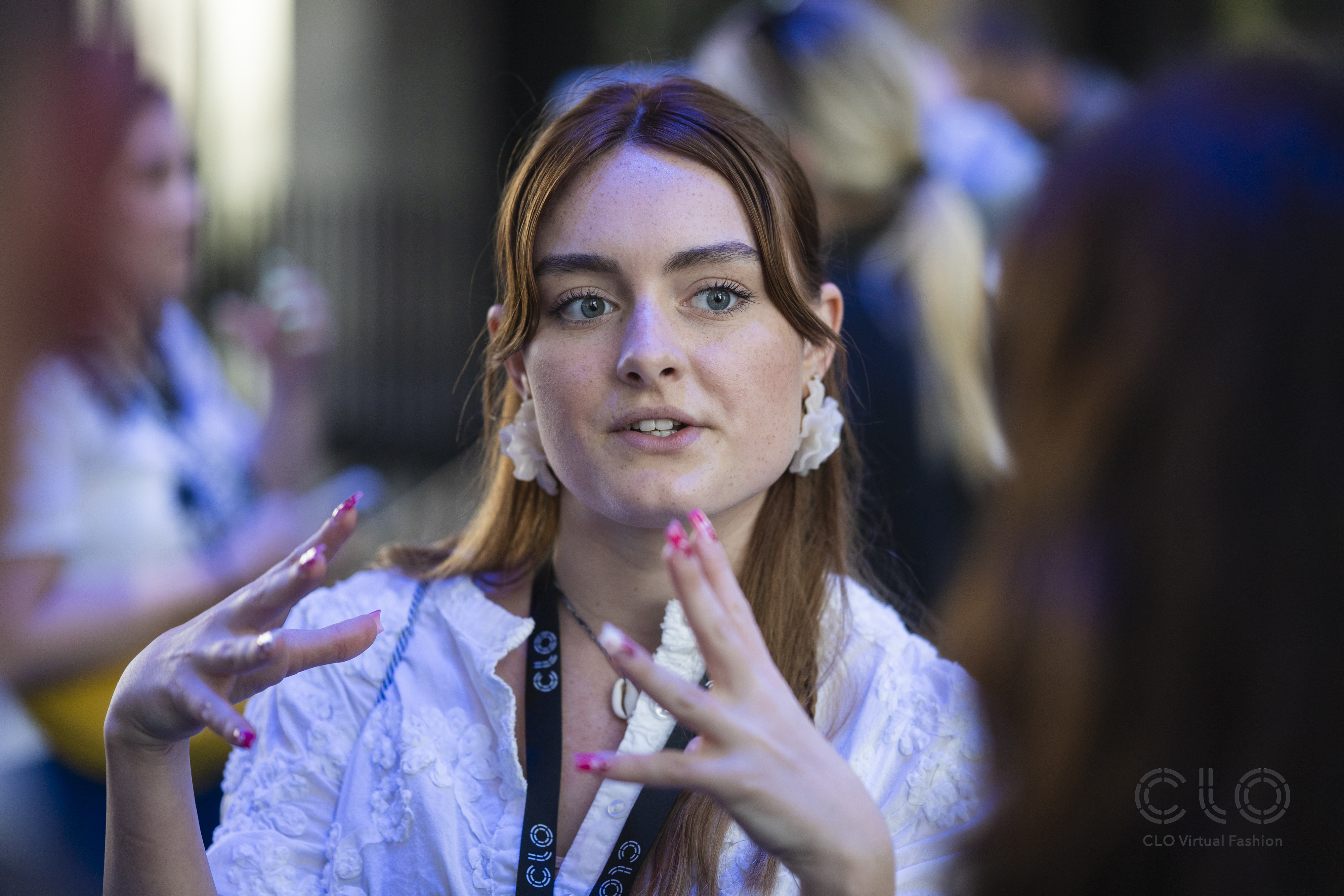
The CLO Summit changed everything for me. It was the first time I saw real curiosity about VR and AI in fashion across the industry. I had been working in isolation, but suddenly I was surrounded by people who understood and wanted to talk about immersive design.
It expanded my network and sparked exciting conversations that are still unfolding. More than anything, it gave me confidence that my work is not niche anymore. The energy at the Summit proved that VR and AI are not the future. They are already here.
As the founder of STUDIOOFNEW, the first fully VR-based fashion design studio, how do you see the future of spatial design and its relationship with tools like CLO?
I believe VR is the future of fashion. It speeds up the creative process, makes design more intuitive and allows real-time collaboration across the globe. You can build full-scale garments in 3D space with your hands, which changes everything.
VR also supports sustainability by cutting waste and reducing physical sampling. A student lost a t-shirt file, and I rebuilt it in VR in five minutes. What used to take weeks now happens in one session. CLO gives those ideas structure, turning sculpted forms into patterns and fabric. It anchors the digital workflow, connecting VR, AI and rendering into one system. Together, they are reshaping how fashion is created and shared.
What advice would you give to students or young designers who are starting to explore CLO and digital design?
My biggest advice is to trust your vision, even when others do not. In my final year, one lecturer constantly dismissed VR. She criticized a print I had made for weeks, even though it was featured by Graduate Fashion Week. Eventually, I told her I respected her opinion but would stick to my path. She backed off, though still tried to block me from taking a VR footwear course. I did it anyway and graduated with top marks and certifications that helped me land jobs.
That experience taught me that people often project their limits onto you. You must stay true to your direction. Like in the film Soul, we chase validation without realizing we are already in the space we dreamed of. For students starting out with CLO or new tools, keep exploring. The journey will be challenging and nonlinear, but that is how innovation happens. You do not need everyone to understand your vision, just keep climbing.
Finally, what is next for you? Are there any upcoming projects we can look forward to seeing soon?
Absolutely, there is a lot happening right now and I am so excited for what comes next. At STUDIOOFNEW, the focus has evolved from being the first fully VR-based fashion studio to helping others learn how to design with VR themselves. Right now, I am teaching creatives and brands how to integrate VR into their design workflows, showing them how powerful it can be when combined with tools like CLO.
Behind the scenes, STUDIOOFNEW is undergoing some truly exciting development. I cannot reveal too much yet but expect big things soon. We are working with companies that want to harness the power of VR to make design faster, smarter and more sustainable, so expect something along those lines. As for collaborations, two major ones are underway. I am working again with Copper Candle and artist Michael Aldag to bring his look and persona into Fortnite, continuing to merge fashion with gaming and performance. Alongside that, I am collaborating with The Diigitals on a project with Shudu, the world’s first AI supermodel, designing a VR-created liquid dress just for her. It is surreal to work at the intersection of AI, VR and fashion at this level, but it is exactly where I want to be.
So yes, big things are definitely on the horizon. The next chapter is all about expansion, turning this workflow into something that empowers others to build, imagine and design for the future.