


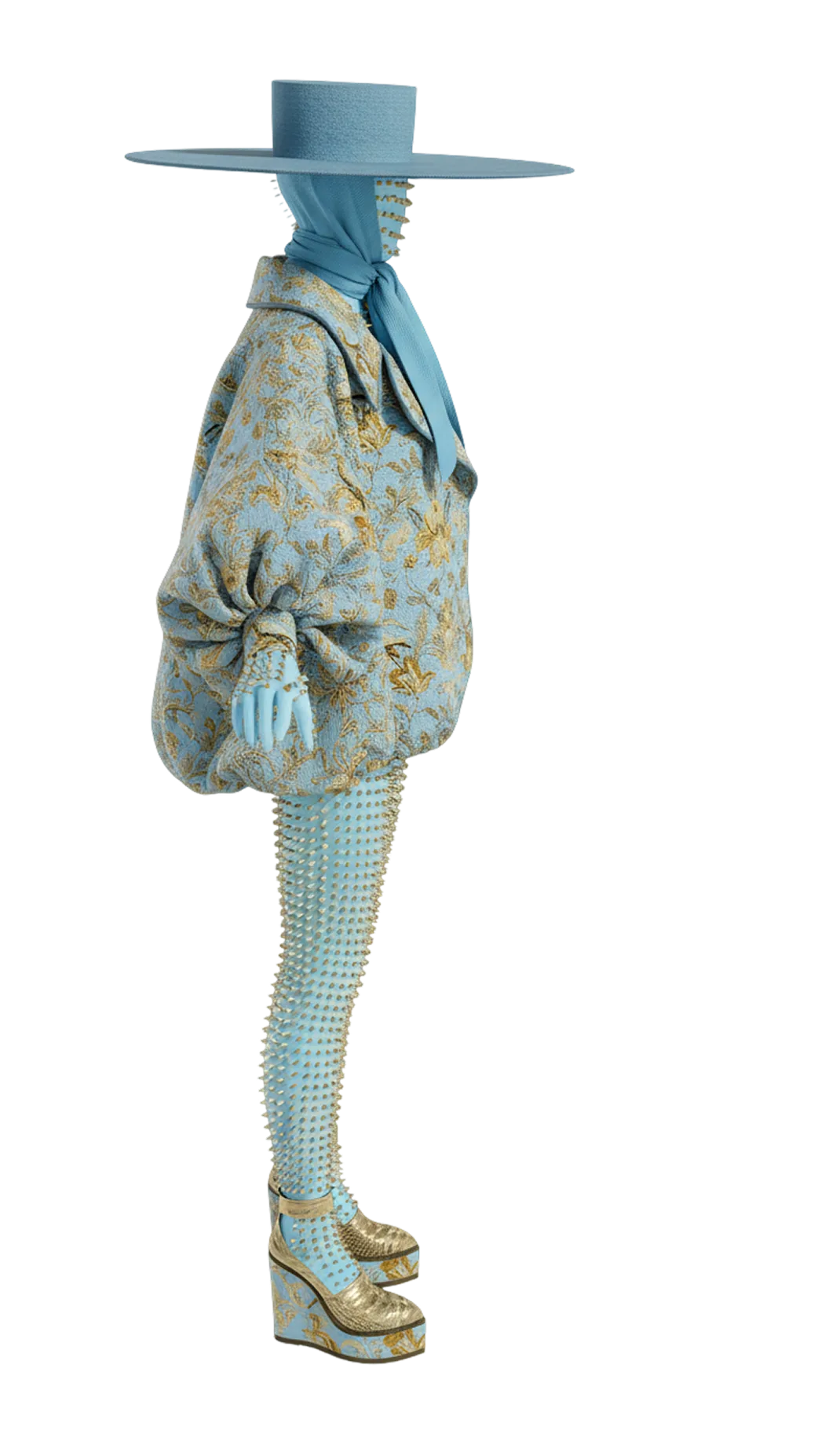
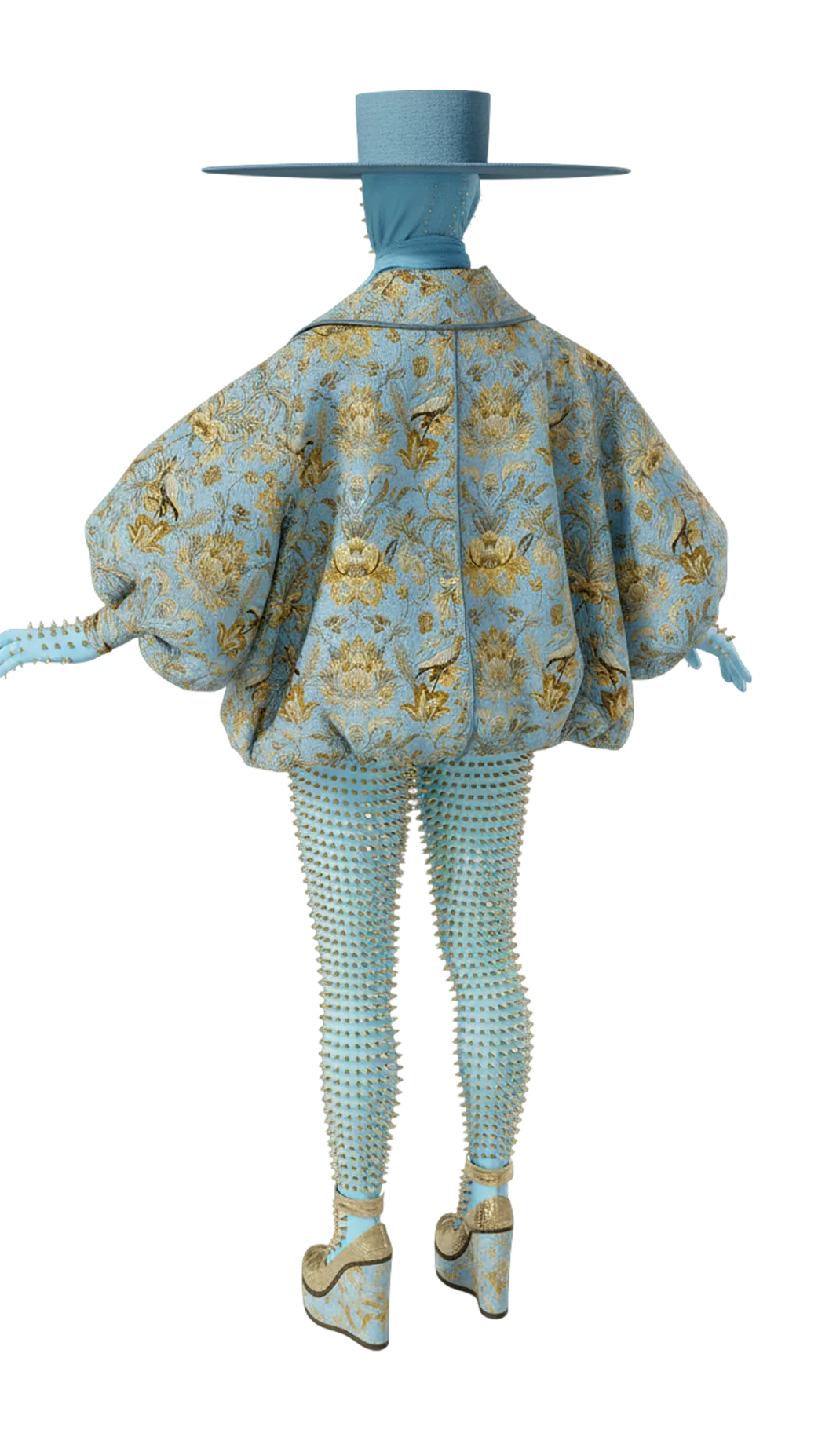
By day, Honolulu-based Collin (@collin3D) is a headwear design manager; by night, he crafts hyper-realistic 3D fashion in CLO. Obsessed with the tiny imperfections that bring digital garments to life, his virtual fits easily trick the eye. In this interview, Collin drops his texturing secrets and reveals why ditching Pinterest for real-world inspiration is his ultimate design cheat code.
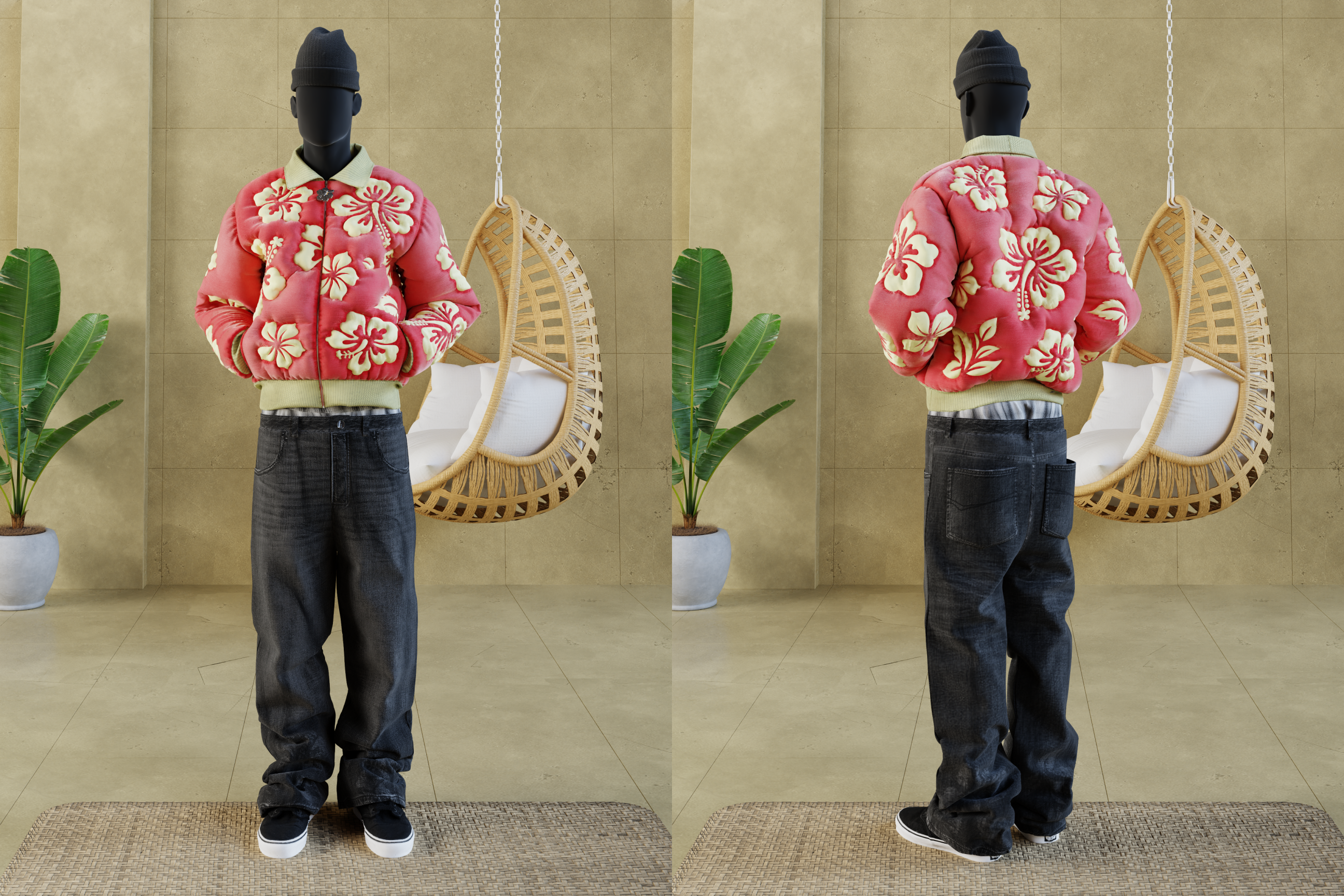
Q. Can you introduce yourself and share a little about your background and current focus in 3D design?
Hello, my name is Collin and I am a 3D designer based in Honolulu, Hawaii. I work full time as a design manager at a premium headwear company. In my free time, I dive into the 3D world creating personal 3D fashion designs as well as 3D modeling and animating for many other brands.
Q. How did you start your journey in 3D fashion, and what made you choose CLO as your primary tool?
My 3D fashion journey started when I was creating clothing cad designs in illustrator for a company I used to work for. Before learning CLO, I was constantly looking for ways to express my ideas and fashion designs. In addition to cad design I was doing simple sketches, modifying existing garments in photoshop, and even trying to sculpt the clothes in different 3D modeling programs. However, I wasn’t ever able to get anything to a point of what I was happy with nor envisioned. I almost started going crazy with all the things I wanted to create and not having a way to express it. I started to research other options and that’s when I quickly ran into CLO.
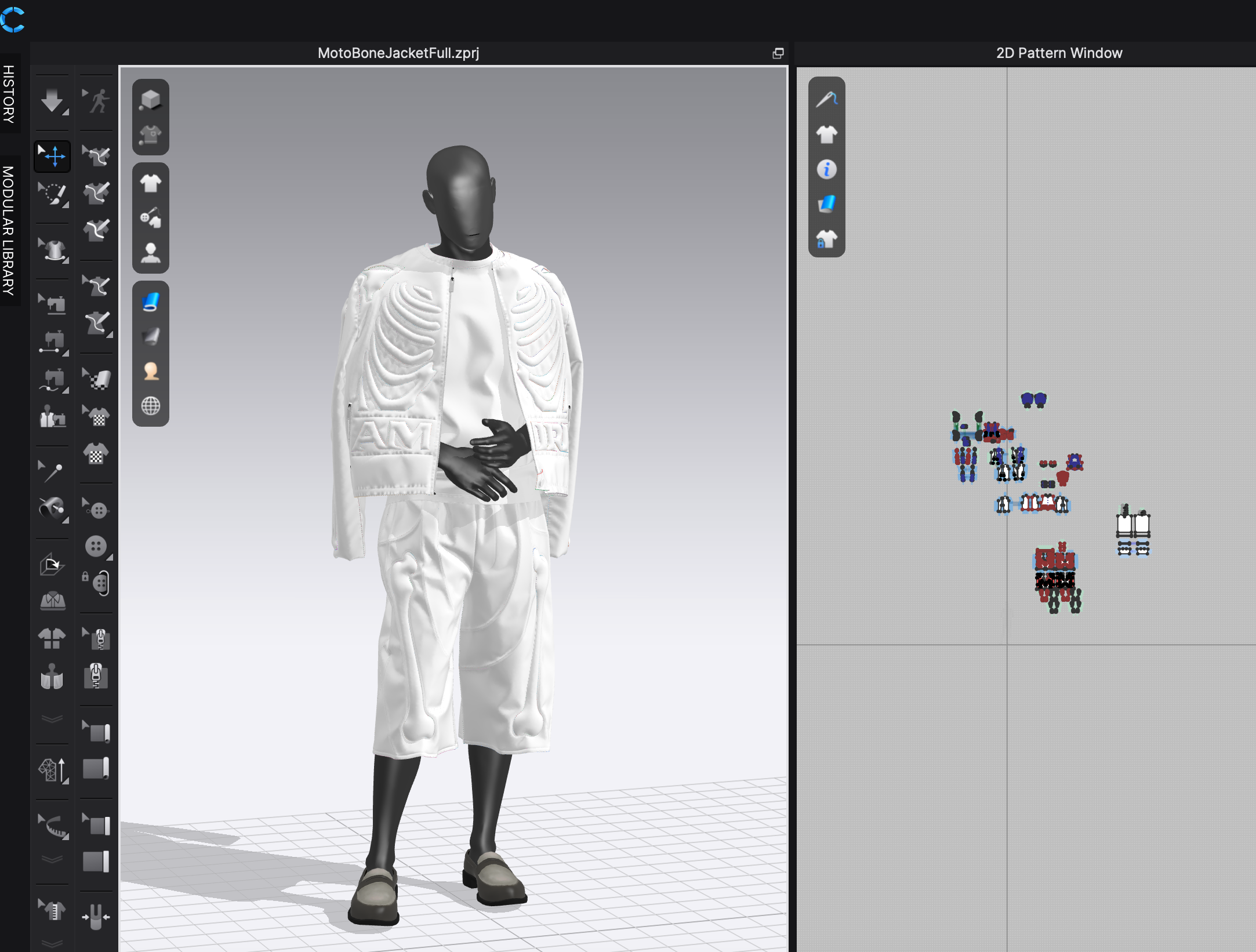
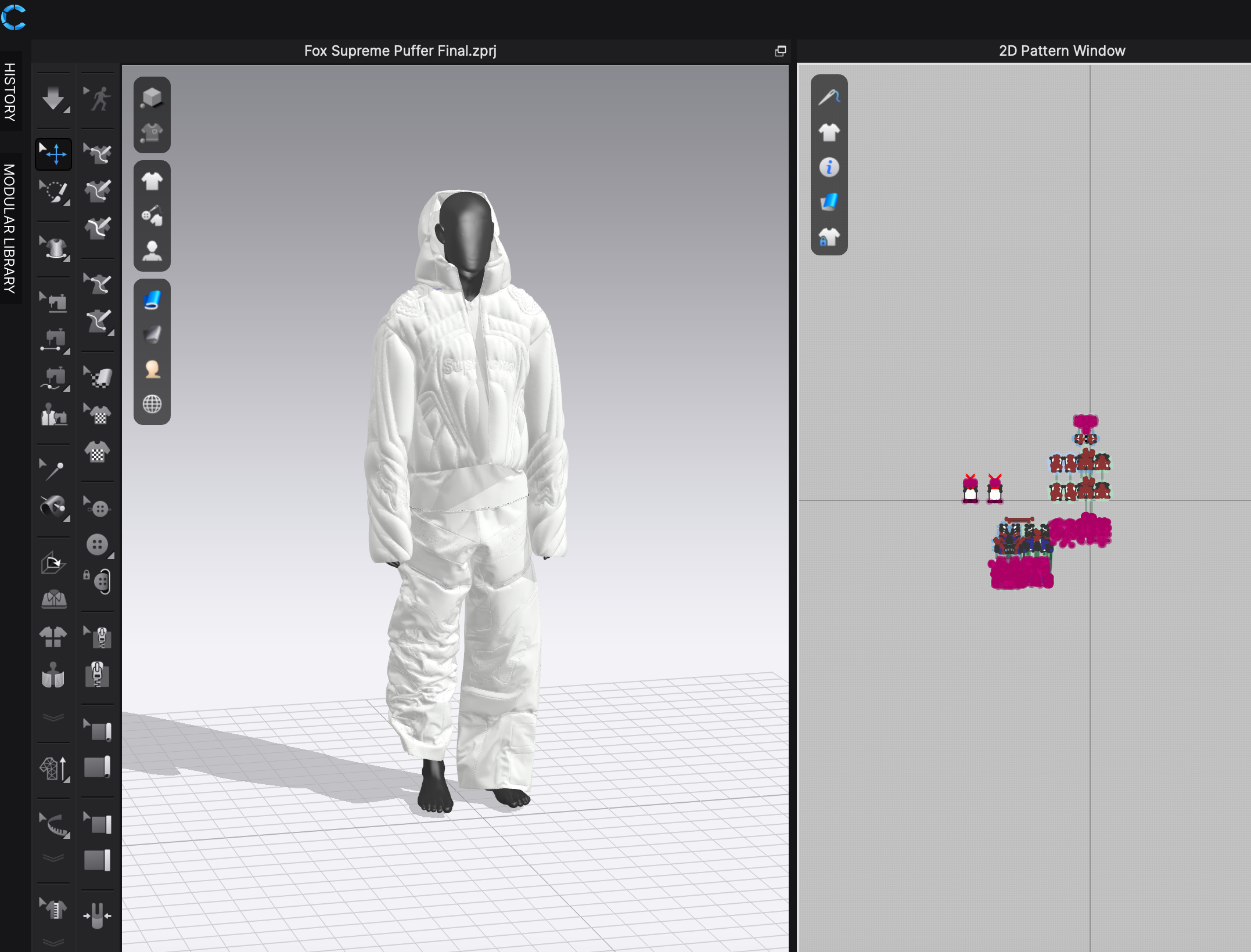
After the steep learning curve, I was so excited to be able to create the designs that I have been keeping in my head for so long. I think one of the worst feelings as an artist is being overwhelmed with things you want to create and not having the proper medium to bring those creations to life. I am happy that CLO has been my medium thus far to showcase my art.
Q. Looking at your posts from the past year, the realistic textures and fabric details stand out. What do you focus on most when creating complex materials like knits or denim?
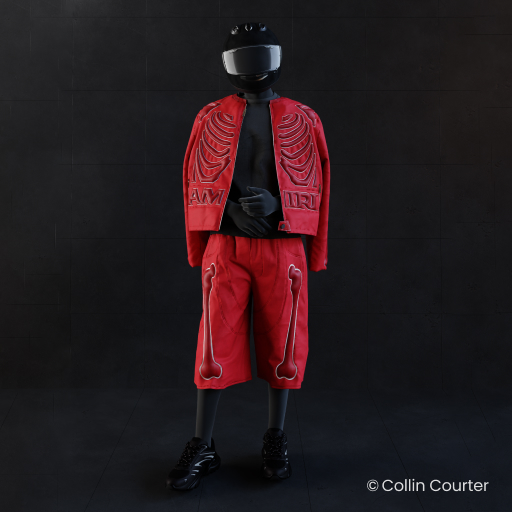
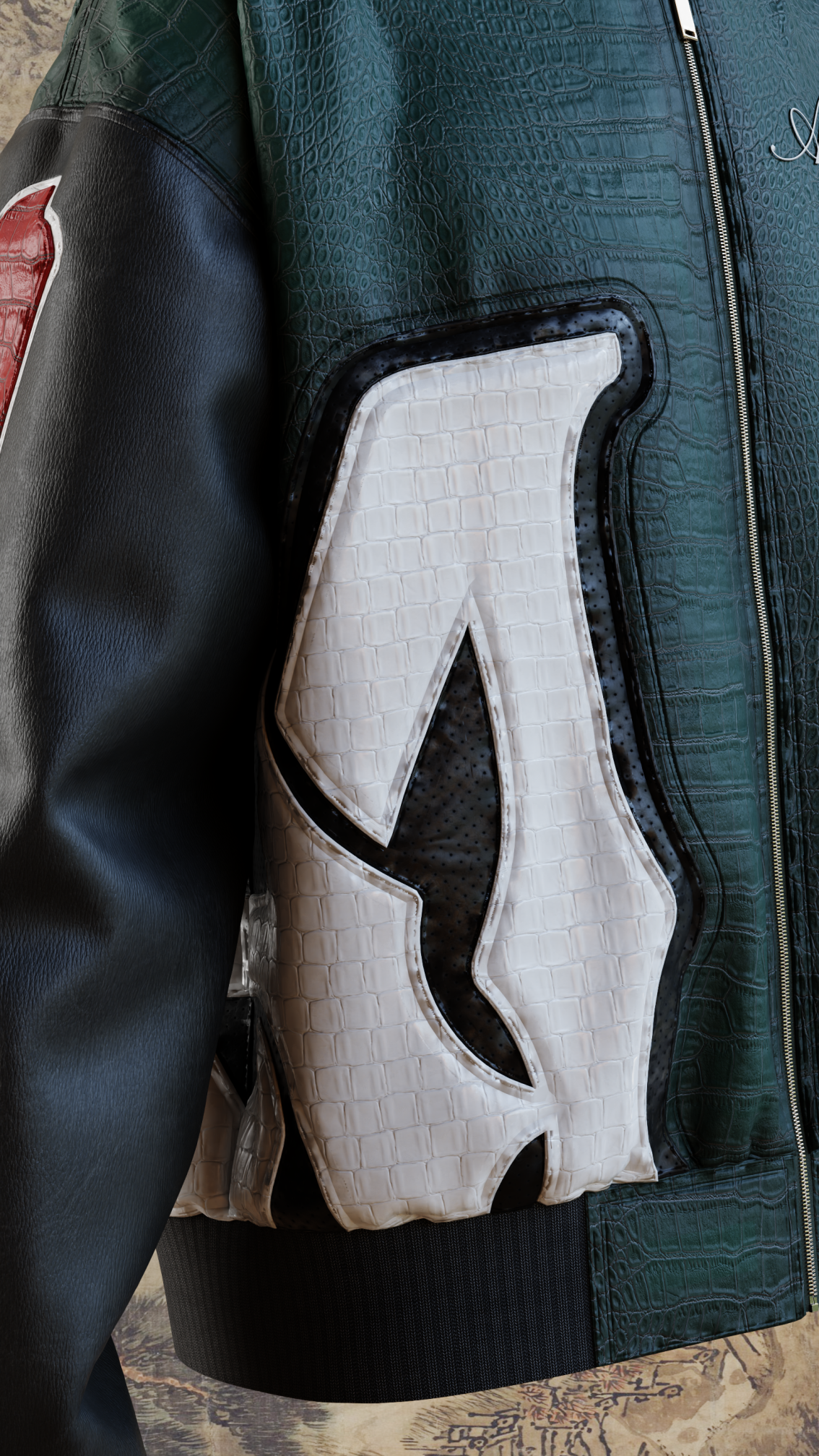
Thank you for the compliment. This is probably the most time consuming part of my work. I try so hard to make all of my renders look like real life pieces to a point where some people might even question if it is a real garment. Real garments in fact are what I focus on to try and achieve this look. I am literally staring at real life pieces looking at say the way nylon wrinkles on the seam, the way denim puckers on the cuffs, or even the little tiny pebbles or imperfections on leather jackets. When you compare a lot of 3D clothing renders and real life pieces, you can often spot the 3D render because of how “perfect” it is. The imperfections of human error and real life material is what I’m looking to capture. Little details like this I think help 3D renders look a little closer to reality.
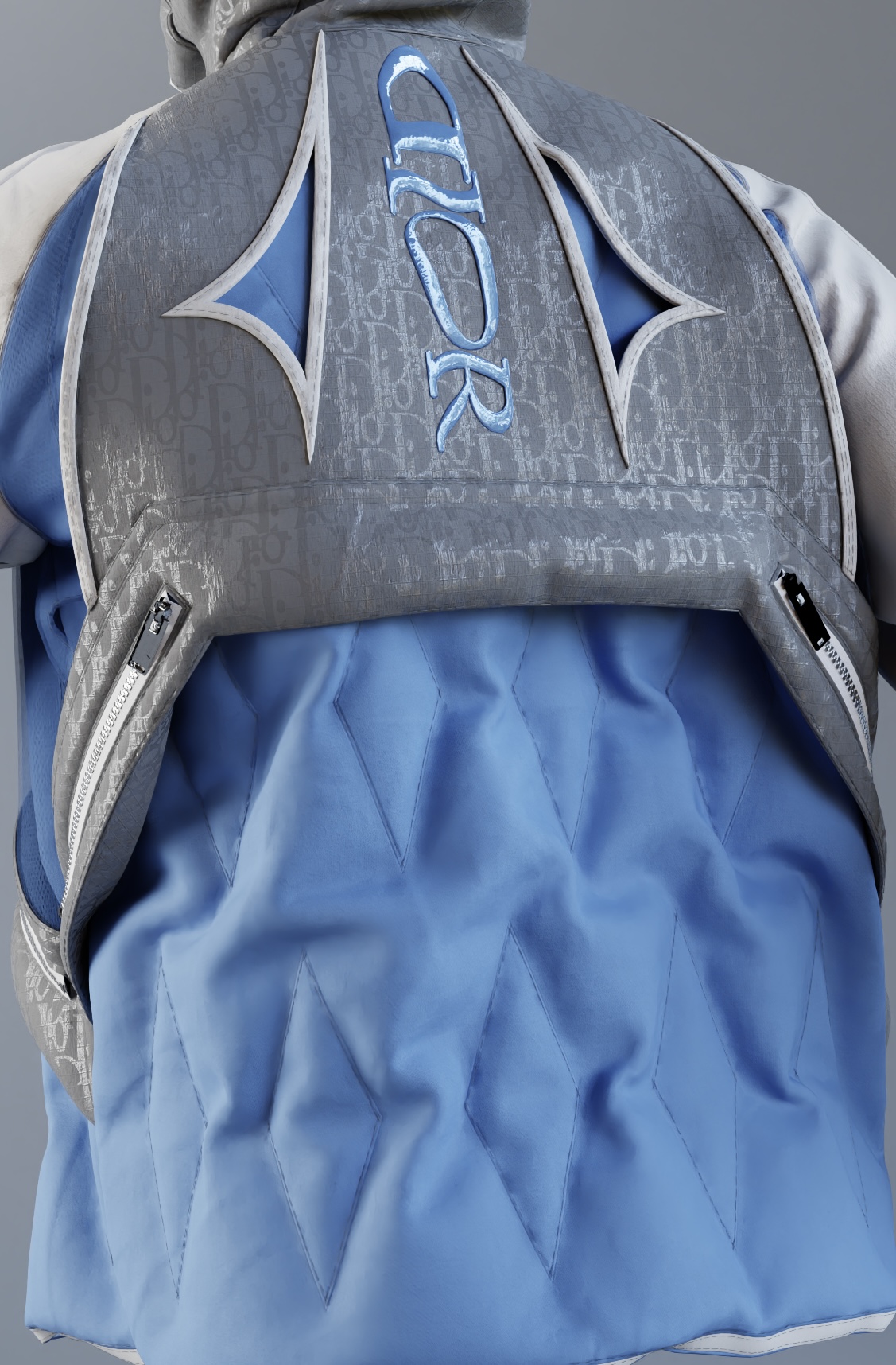
Q. Your work goes beyond showcasing garments; the mood and lighting create a distinct atmosphere. Do you have a specific philosophy or preferred setup when rendering your scenes?
My render setups are simply “if I owned a clothing brand, how would I want to showcase it?” These real life photoshoot environments are the kind of imagery I want to create. It’s much easier to incorporate unique elements like statement couches or distinctive plants into a shoot in 3D than it is in real life. There are virtually no limitations. When it comes to the lighting, I personally try to add as little lights as possible. I want the main light source to come from different HDRIs so that the end result looks very natural and the clothing isn’t blown out by certain studio lights.
Q. Out of all your projects, which one is your favorite or most memorable? Please tell us why.
I think my favorite and most memorable project I did was honestly my first ever clothing post which was a concept I did for a brand and designer I looked up to for a long time. I created 100s of designs before this, but I was so excited that I finally created a product I felt happy showcasing. Looking back, it was just a simple logo puffer jacket, and since then my designs have become far more detailed and intricate. However, that outfit definitely started the journey and I still remember the feeling of posting my first 3D clothing design.
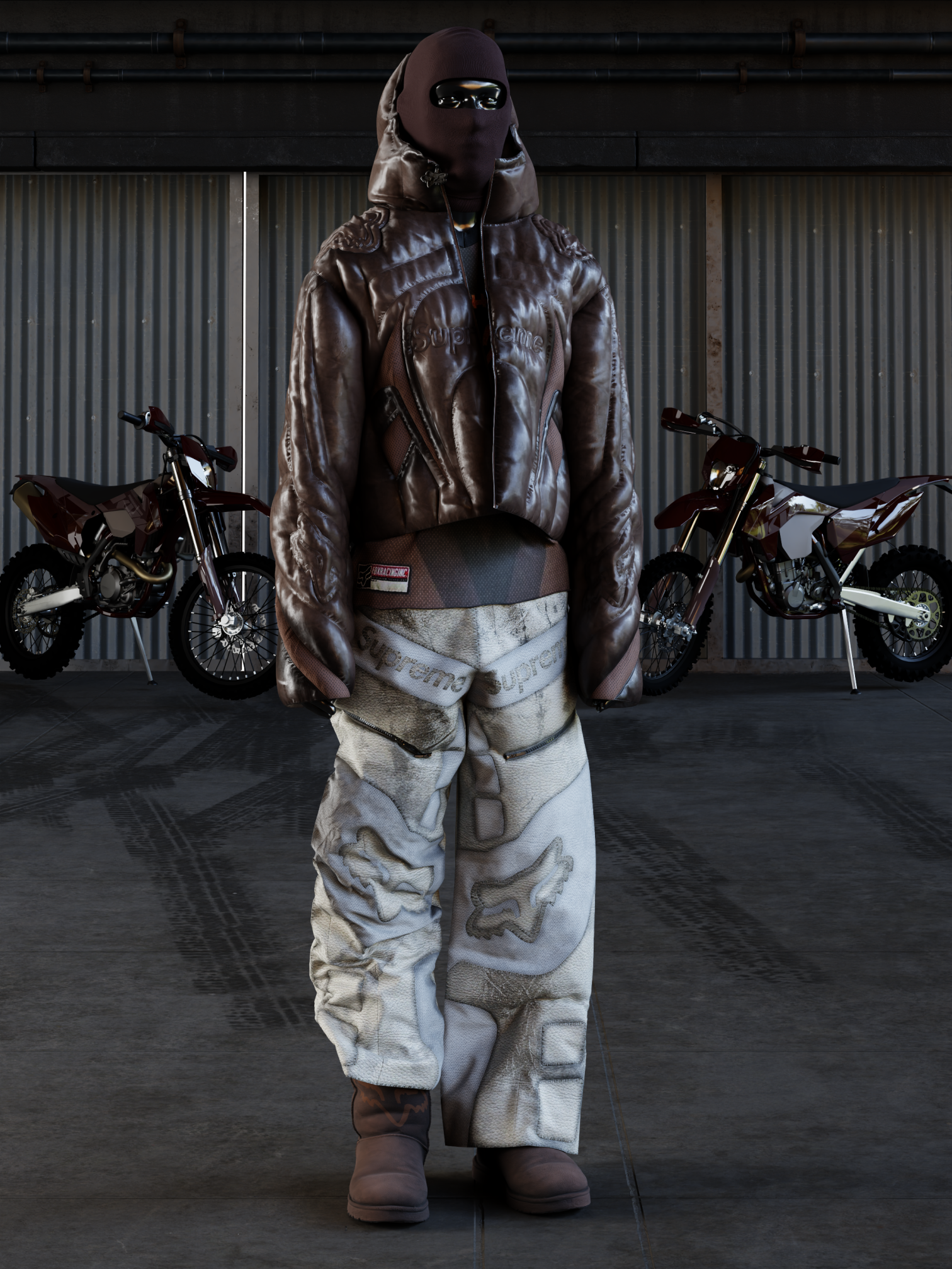
Q. Which CLO tools or features do you find most valuable in your design process?
I think it would be disrespectful to CLO to choose only a couple tools or features that are my favorite lol. Just the fact that I have a digital sewing machine at my finger tips where I can create any clothing item that can be translated to a real life garment is what makes me love CLO.
Q. Given the high quality of your work, it seems you use other software alongside CLO. Could you briefly describe your typical workflow combining different tools?
I use CLO to create all my base clothing designs. I render everything in Blender. My texturing is all over the place haha. Hard to explain my entire process via words, but I use a heavy mix of photoshop and texture stacking with nodes in blender. I look forward to other ways of texturing in the future like substance painter and even more integrations that CLO introduces.
Q. What do you struggle with the most in the creative process, and how do you deal with the feeling of being overwhelmed by wanting to create so many designs?
That’s honestly the thing I struggle with the most. I have so many pictures, notes, mood boards, and random ideas saved on things I want to create. One of the hardest parts is just finding the time to actually bring all those ideas to life.
The only way I’ve been able to somewhat deal with the feeling of being overwhelmed is by fully immersing myself in whatever design I’m currently working on. I try my best to focus only on ways to improve the piece in front of me instead of constantly thinking about the next idea.
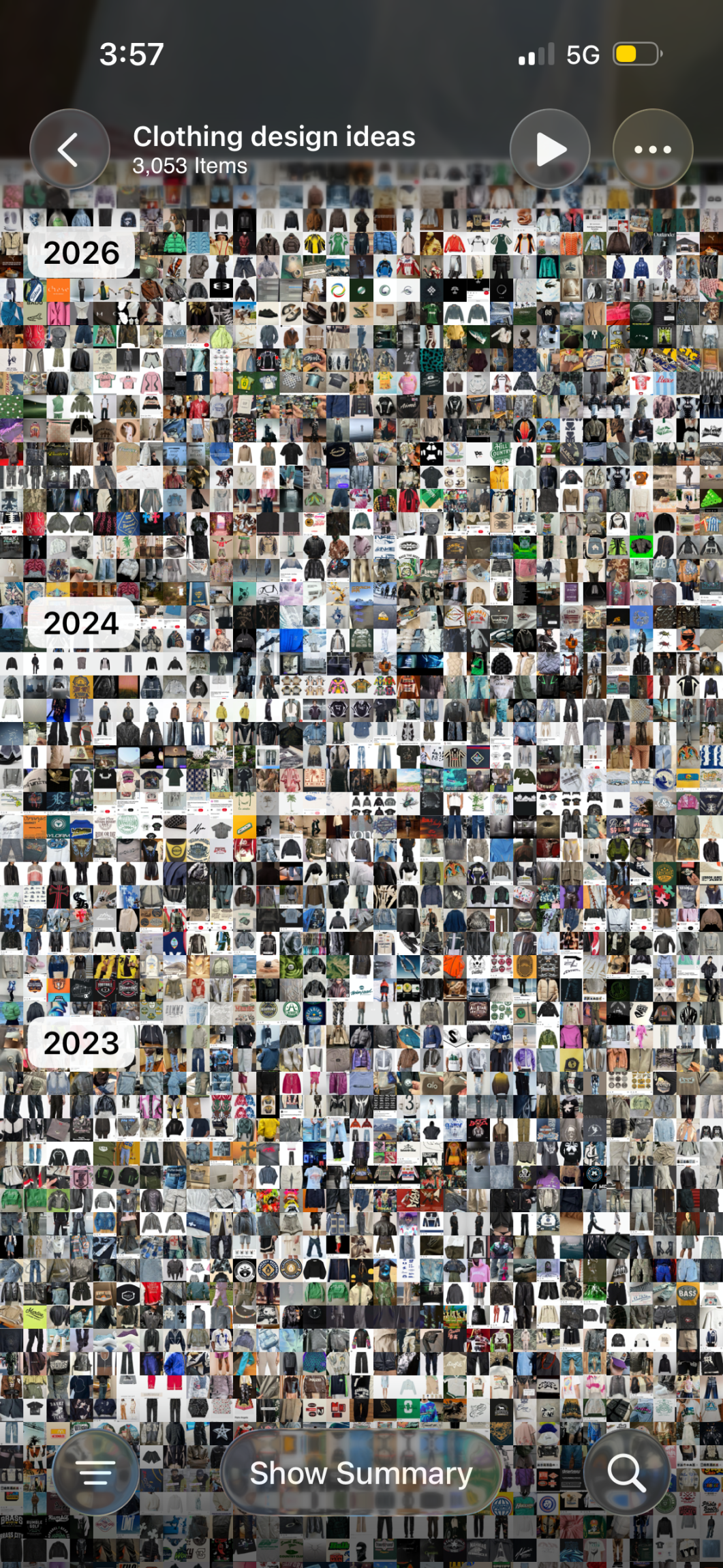
I think a lot of people end up chasing the algorithm, posting as many designs as possible because they believe quantity is more important than quality. I know I probably should post more often too, but sometimes you’ll notice there’s a month gap between my projects. That’s because I treat every design as if it’s actually going to be produced. I keep making small adjustments all the way up until the day I post it.
Sometimes I’ll look back and realize that if I had posted a design any earlier, before those last minute changes, it would’ve been completely different. Those small tweaks, while not trying to overdo it, can make a huge difference.
For any artist who feels overwhelmed, try to see it as a positive sign. It usually means you truly love to create. Use that energy as fuel and channel it into making as much as you can.
Q. What advice would you give to students or beginners who are just starting their journey in 3D fashion?
Design what you love. These programs can get overwhelming and complicated enough to make you want to quit. The only way to push through is by creating pieces and working in categories you’re genuinely passionate about. When I first started, it felt like my entire life revolved around improving my renders. I watched endless YouTube videos and spent hours researching just to fix one small glitch. I thought about my renders, before bed, on walks, in the shower, etc. If you’re not truly obsessed with it, this probably isn’t the space for you and you will eventually get burned out. I believe that 3D fashion is the future and if you are able to conceptualize your ideas in this way, you will stand out against the rest because you aren’t on real world timelines like factories, manual sewing, fitting errors / etc. Also, I think finding someone you can bounce your ideas off of is extremely helpful. I think as designers when we stare at a screen and one design for hours on end, sometimes we need a fresh set of eyes. In my posts you will often see me tag one of my best friends, who runs a page called wonder years studios. We are constantly hashing out new ideas with each other and it helps me tremendously to see something new that I might have missed.
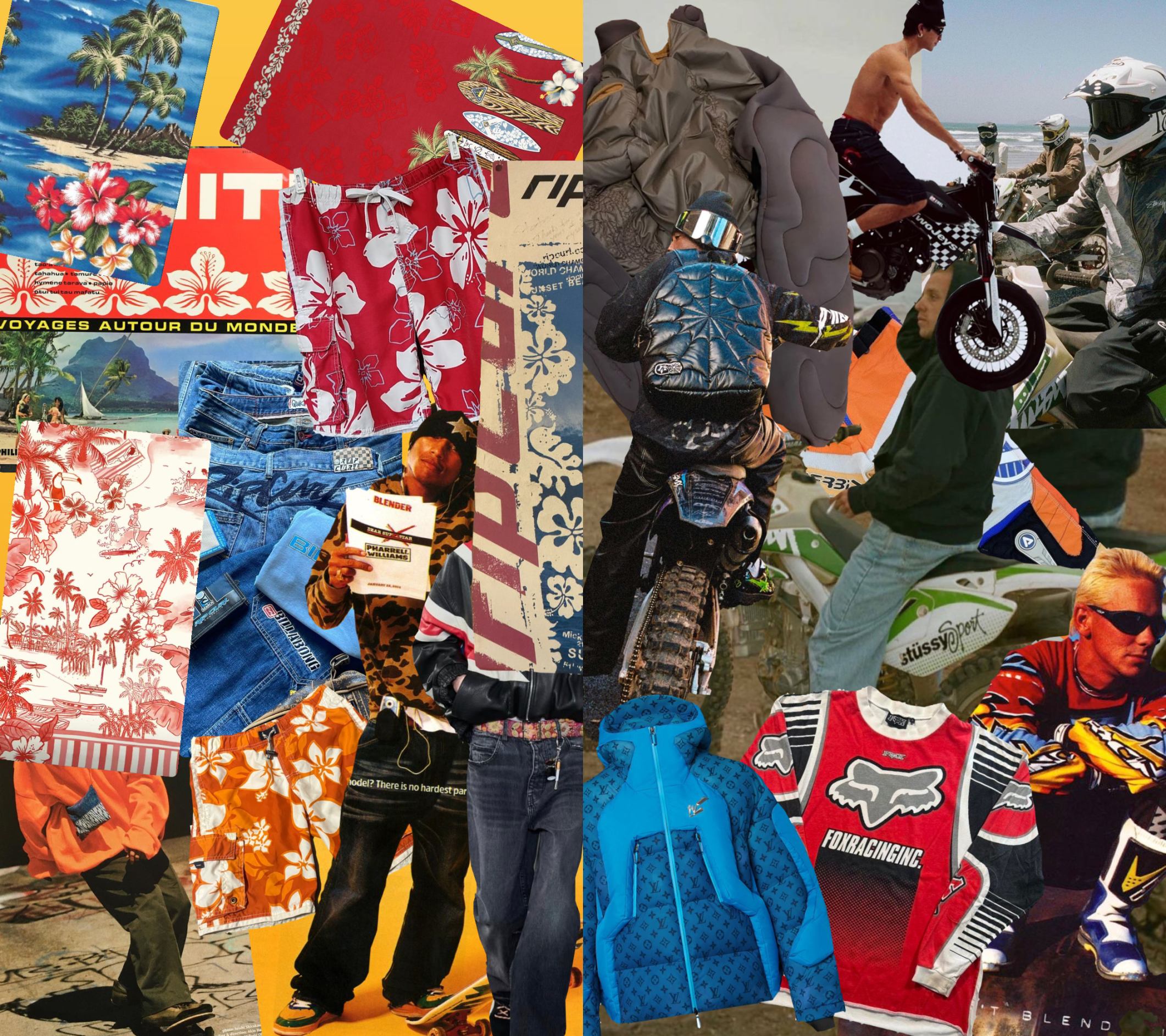
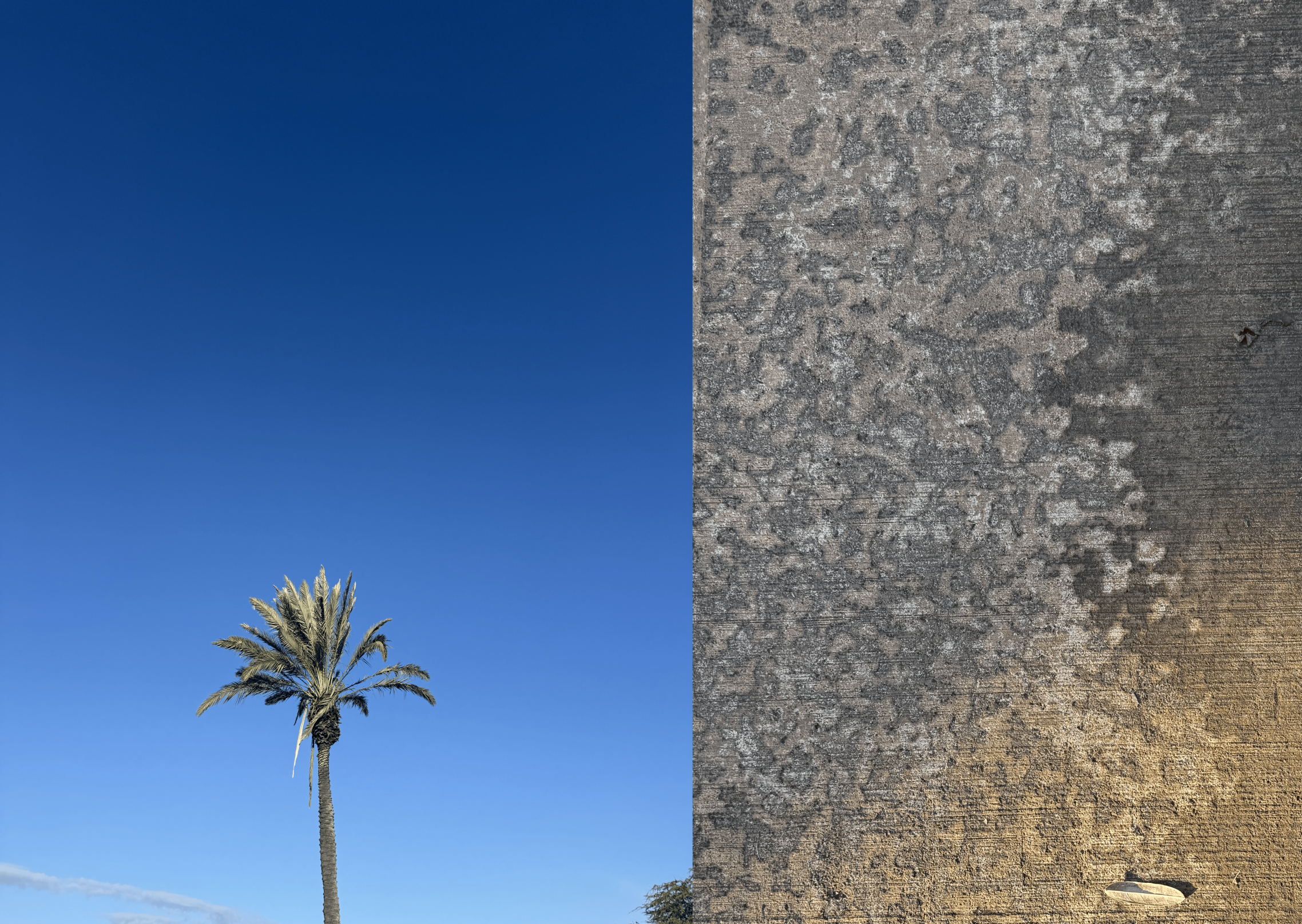
The last piece of advice I’d give is to put the phone down. This industry is flooded with the same designs, slightly tweaked again and again. I’m not saying I’m not guilty of it too, but my strongest ideas usually come when I step away from social media and screens. Go outside. Pay attention to the world around you. Just going for walks can spark new ideas. For example, these pictures (added below) were from my walk today. The way the rain dried on the pavement looked like it could become a new texture for a jacket. The base shape of this palm tree felt like it could inspire a whole new silhouette. Just looking up in real life can really elevate your designs to something original instead of another Pinterest trendy sweatsuit that looks like everything else.
Q. Is there a new style or project you’re excited to try next? What are your future plans?
I wouldn’t say there’s one specific project I’m most excited to work on next. I have so many ideas that I’m eager to share as I continue to grow. Ultimately, I’d love to take my journey toward creating more real world pieces. It’s definitely an expensive process, but I’m passionate about turning my content into something that begins with a sketch, moves into the sewing process in CLO, includes the texture rendering, and then captures the behind the scenes production of the final product coming to life. I think this type of process would create in depth content that really highlights how capable these 3D programs are. Whether that happens through collaborations with other brands or by launching something of my own, I’m open to wherever the journey leads. More than anything, I’d love to see my virtual designs brought into the real world and worn in everyday life.