




Driving Apparel Innovation: How MAS Transforms Digital Product Creation (DPC) with CLO and CLO-SET
TL;DR
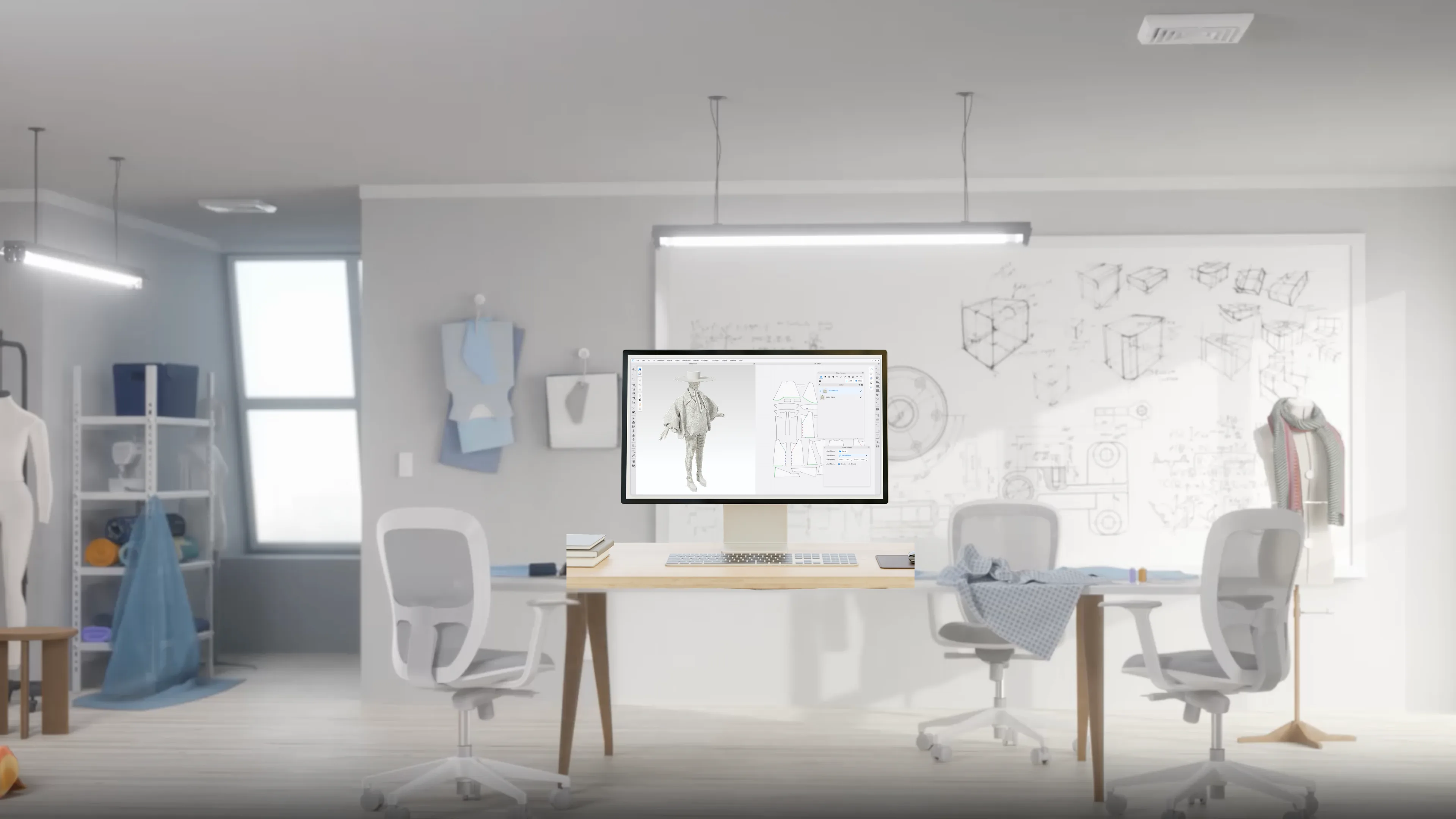
MAS leverages 3D design software CLO and collaboration platform CLO-SET to streamline end-to-end Digital Product Creation (DPC).
Key milestones include digitizing over 4,000 fabrics for 50+ global brands and accelerating digital sampling speeds by more than 40%.
MAS utilizes digital color sampling and 3D Digital Product Creation (DPC) to accelerate print and colorway approvals across complex textile substrates.
This article is based on a recorded video interview featuring Chamupathi Siriwardhana (Project Lead, MAS Holdings/ DPC Center of Excellence), alongside contributors from separate MAS Holdings entities, including Jayanga Amunugama, Anchali Marasinghe, Seth Timothy, Kushanee Jayasinghe, Mihiri Wickramasinghe, Thilini Nandasiri, and Nishamani Weeraratne.
MAS is a $2 billion global leader in apparel technology, partnering with iconic fashion brands to guide products from initial concept to commercial retail. The organization builds its strategy around four core values: innovation, sustainability, co-creation, and collaboration.
According to Chamupathi Siriwardhana (Project Lead, MAS Holdings/ DPC Center of Excellence), CLO serves as an essential building block that reimagines the product development pipeline, delivering speed and precision across diverse business divisions. Please note that the other interviewees cited below represent distinct partner teams within the broader MAS Holdings structure.
Digital Product Creation (DPC) at MAS bridges consumer analytics and physical manufacturing through virtual design environments.
Data-Driven Ideation: Product workflows start with consumer insights, trend forecasting, and market gap analysis to ensure commercial viability and craftsmanship.
Generative AI & 3D Prototyping: As noted by Anchali Marasinghe (Assistant Manager / Design, MAS Holdings), integrating CLO’s 3D toolset with generative AI features allows designers to translate concepts into accurate digital prototypes rapidly, ensuring first physical samples are correct.
Continuous Creative Exchange: Seth Timothy (Executive / Digital Transformation, MAS Holdings) explained that 3D acts as a universal visual language. By deploying the CLO suite across pre-season, in-season, and post-season stages, teams maintain collaborative decision-making directly with global brand partners.
Material behavior is the foundation of realistic digital apparel simulation. MAS standardizes digital twins through high-fidelity fabric characterization.
Physical Fabric
Centralized Scanning Unit
Texture, Stretch & Drape Capture
CLO Digital Twin
According to Jayanga Amunugama (Assistant Manager / DPC Center of Excellence, MAS Holdings):
A centralized scanning unit cataloged over 4,000 fabrics in 2 years.
The initiative supports more than 50 global brands by capturing precise textural details, physical stretch parameters, and drape dynamics.
These digital twins establish cross-stage consistency and realistic visual benchmarks for accurate simulation.
Developing intricate textiles virtually presents technical challenges that MAS addresses through specialized 3D workflows.
Digital Lace Development: Kushanee Jayasinghe (Senior Designer, MAS Holdings) highlighted that since initiating their digital lace journey in 2021, the team has transformed how lace and warp knits are visualized and constructed using CLO.
Workflow Efficiency: By linking these specialized design tools, digital sampling cycles have become over 40% faster, increasing responsiveness and supply-chain agility.
Combining engineering with circular knitting allows MAS to resolve the cost and complexity barriers historically associated with seamless garments.
Seamless Workflow Integration: Mihiri Wickramasinghe (Manager / Seamless Product Development, MAS Holdings) emphasized that MAS was among the first vendors to establish a fully seamless DPC workflow, significantly cutting lead times, production costs, and physical fabric waste.
Platform Synergy: The workflow pairs knitting expertise with CLO (3D design simulation software) and CLO-SET (3D asset management and digital collaboration platform) to maintain operational efficiency and sustainable manufacturing practices.
To eliminate downstream manufacturing errors, MAS reproduces complex finishing techniques directly inside virtual environments.
DPC Focus Area | Technical Execution | Production Benefit |
|---|---|---|
Graphic Emulation | Digitally mimicking heat seals, embroidery, and surface textures. | Accurate artwork placement; reduces sample defect rates. |
Pattern & Art Grading | Simultaneous grading of pattern geometry and imported graphics in CLO. | Consistent aesthetic proportions across all production sizes. |
Fit Analysis | Deploying pressure and stress maps on virtual avatars. | Objective tension evaluation across diverse, inclusive size sets. |
As detailed by Thilini Nandasiri (Assistant Manager / DPC Technologist, MAS Holdings), surface embellishments such as embroidery and heat seals are imported into CLO to grade patterns and graphics concurrently.
Furthermore, Nishamani Weeraratne (General Manager / Product Development, MAS Holdings) stated that MAS utilizes CLO’s stress and pressure mapping tools to evaluate fit across inclusive size ranges, tackling digital fit challenges and advancing industry DPC standards.
MAS integrates advanced 3D virtualization and digital color sampling workflows to transform the traditional apparel design pipeline. This methodology allows design and manufacturing teams to evaluate intricate prints, textures, and colorways digitally, significantly reducing physical prototyping time.
Key Capabilities of the Digital Sampling Workflow
High-Fidelity Visualization: Accurately renders complex fabric structures, drape properties, and precise colorways in a virtual environment.
Compressed Lead Times: Drastically cuts the time required to lock in prints and seasonal palettes.
Collaborative Review: Enables instant multi-stakeholder feedback across global locations before fabric cutting begins.
Resource Optimization: Reduces physical sample waste, supporting sustainable manufacturing initiatives.
MAS utilizes CLO-SET—the cloud-based collaborative workspace by CLO Virtual Fashion—to centralize 3D asset management and stakeholder communication.
Feature | Traditional Sampling Workflow | MAS Digital Workflow (CLO-SET) |
|---|---|---|
Colorway Iteration | Weeks of lab-dip shipping and physical swatch reviews | Instant 3D digital colorway generation and side-by-side comparison |
Feedback Mechanism | Dispersed emails, static tech packs, and marked-up photos | Direct on-garment 3D annotations and real-time live comments |
Approval Cycles | Multiple physical iterations required per style | Virtual sign-offs directly inside the platform |
Complex Fabric Handling | High risk of physical rework due to print/knit scale errors | Accurate 3D simulation of surface textures and fabric physics |
As 3D digital product creation evolves, the convergence of 3D digital twin assets and Artificial Intelligence (AI) represents the next frontier for MAS.
Predictive Design & Color Trends: Leveraging AI to inform colorway selection and print generation.
Future-Ready Supply Chains: Shifting from reactive physical manufacturing to an agile, digital-first product creation model.
End-to-End Digital Continuity: Connecting 3D virtual samples directly to automated manufacturing systems for seamless execution.
How does MAS utilize CLO and CLO-SET differently?
CLO is used as the primary 3D garment design software to simulate cloth dynamics, grade patterns, build digital twins, and evaluate fit with pressure maps. CLO-SET functions as the connected 3D asset management and collaboration platform, enabling MAS teams and external brand partners to review, share, and manage digital assets across product lifecycles.
What measurable performance gains has MAS achieved through DPC?
According to data shared by Jayanga Amunugama and Kushanee Jayasinghe, MAS digitized over 4,000 fabrics within two years across 50+ global brands and accelerated the digital sampling process by more than 40%.
How does virtual fit testing work in MAS's digital pipeline?
MAS technologists use specialized tools within CLO—including digital pressure maps and stress maps—to visualize fabric tension and drape across inclusive size ranges. This reduces the need for multiple physical fit iterations before final manufacturing.
How does digital color sampling improve apparel development at MAS?
Digital color sampling allows designers and manufacturing partners to visualize, test, and approve multiple colorways and complex prints on virtual 3D garments. This eliminates the need for repeated physical lab dips and swatch shipments, lowering production costs and shrinking development timelines.
How does Digital Product Creation (DPC) support sustainable manufacturing?
By replacing physical prototypes with digital twin assets, DPC reduces fabric waste, water and dye consumption from lab dips, and carbon emissions associated with shipping physical samples back and forth between design teams and factories.