


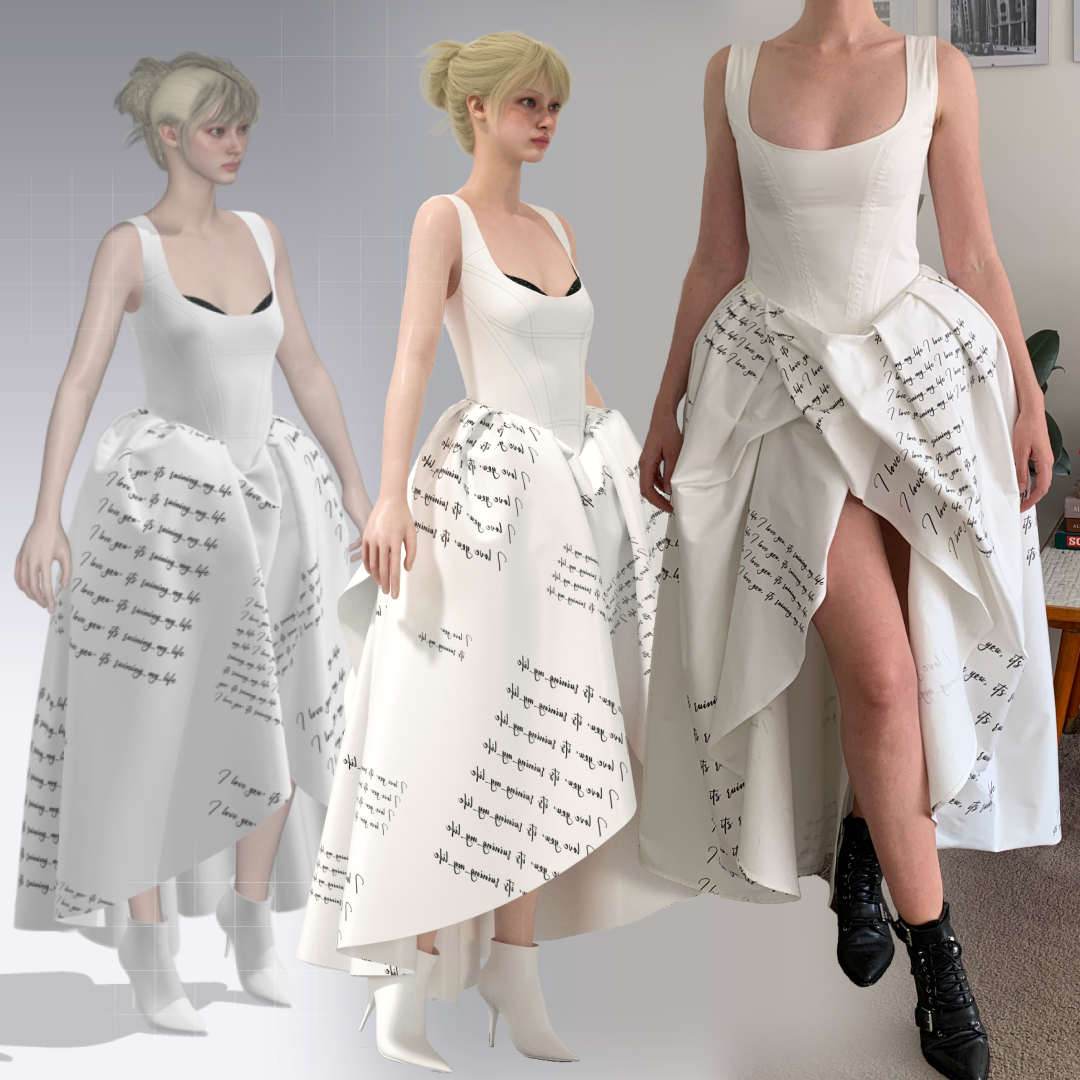
Hilary Martin, a talented patternmaker, is exploring the world of 3D design with CLO.
Using CLO, Hilary quickly transformed her design ideas, showcasing the power of digital fashion. Discover her process behind recreating this unforgettable gown.
Can you introduce yourself and share a bit about your background?
I’ve been sewing my own clothes since childhood and studied fashion design in New Zealand. I gravitated toward patternmaking at university because it blends logic and creativity. I took every patternmaking class I could during my degree. Eleven years ago, I moved to Melbourne, Australia, to pursue a career in design and have since worked across accessories, apparel, and denim.
Currently, I design bags and accessories for an Australian label. For me, great design is all about function and practicality so designing bags is a great place to flex those skills. While I don’t use CLO at work yet, I felt it was important to upskill as 3D is slowly working its way into the Australian fashion industry. I’ve been teaching myself for about a year.
Your background in patternmaking is really interesting! How has that experience shaped the way you approach 3D design?
I’m more excited about using CLO for pattern making than for creating hyper-realistic renders of finished garments. I spent the weekend experimenting with a dress design—changing the pattern again and again and seeing the results in real time. It allowed me to come up with something unique and innovative incredibly quickly. The same process with manual pattern making and physical sampling would have taken me weeks.
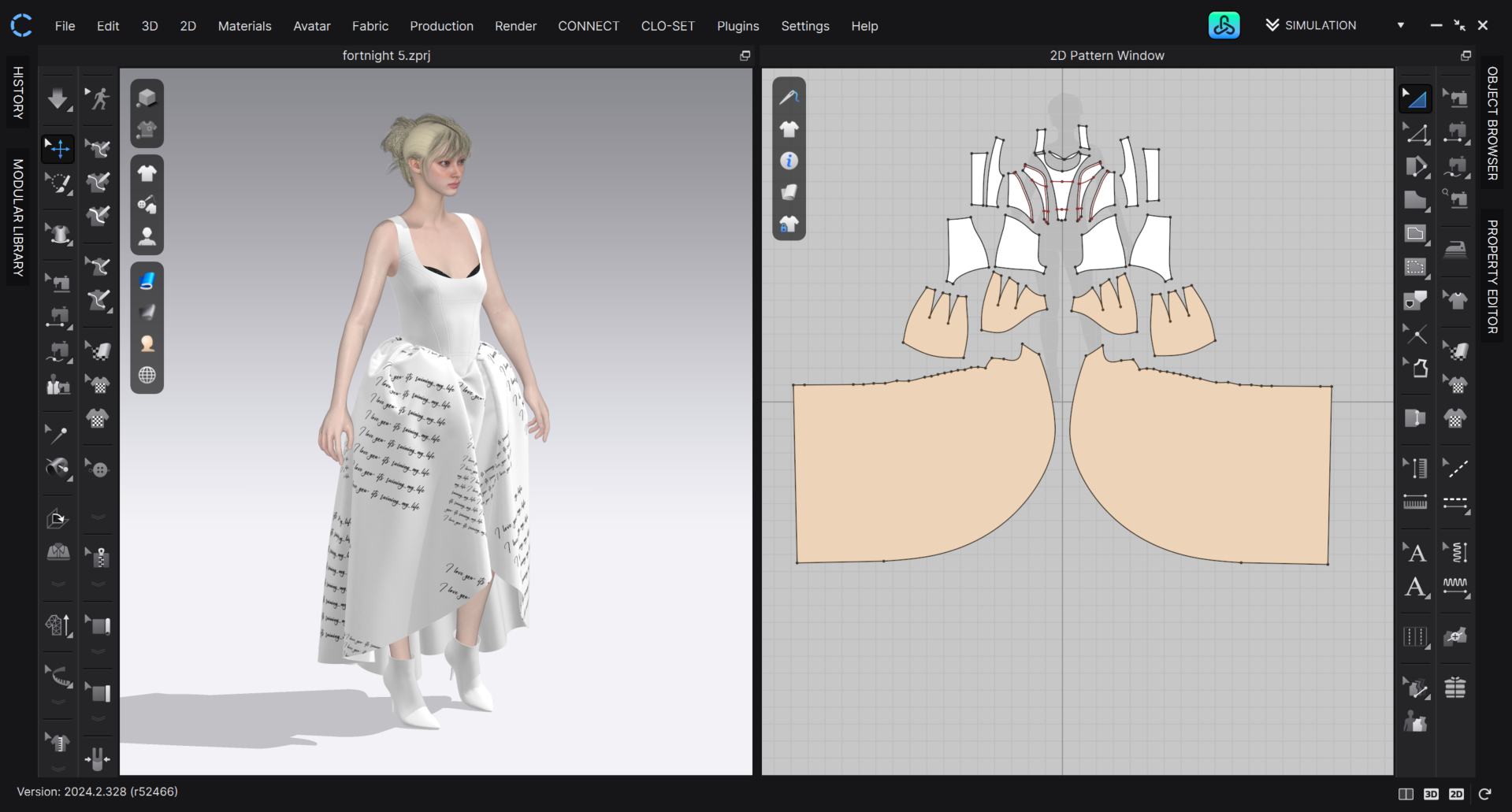
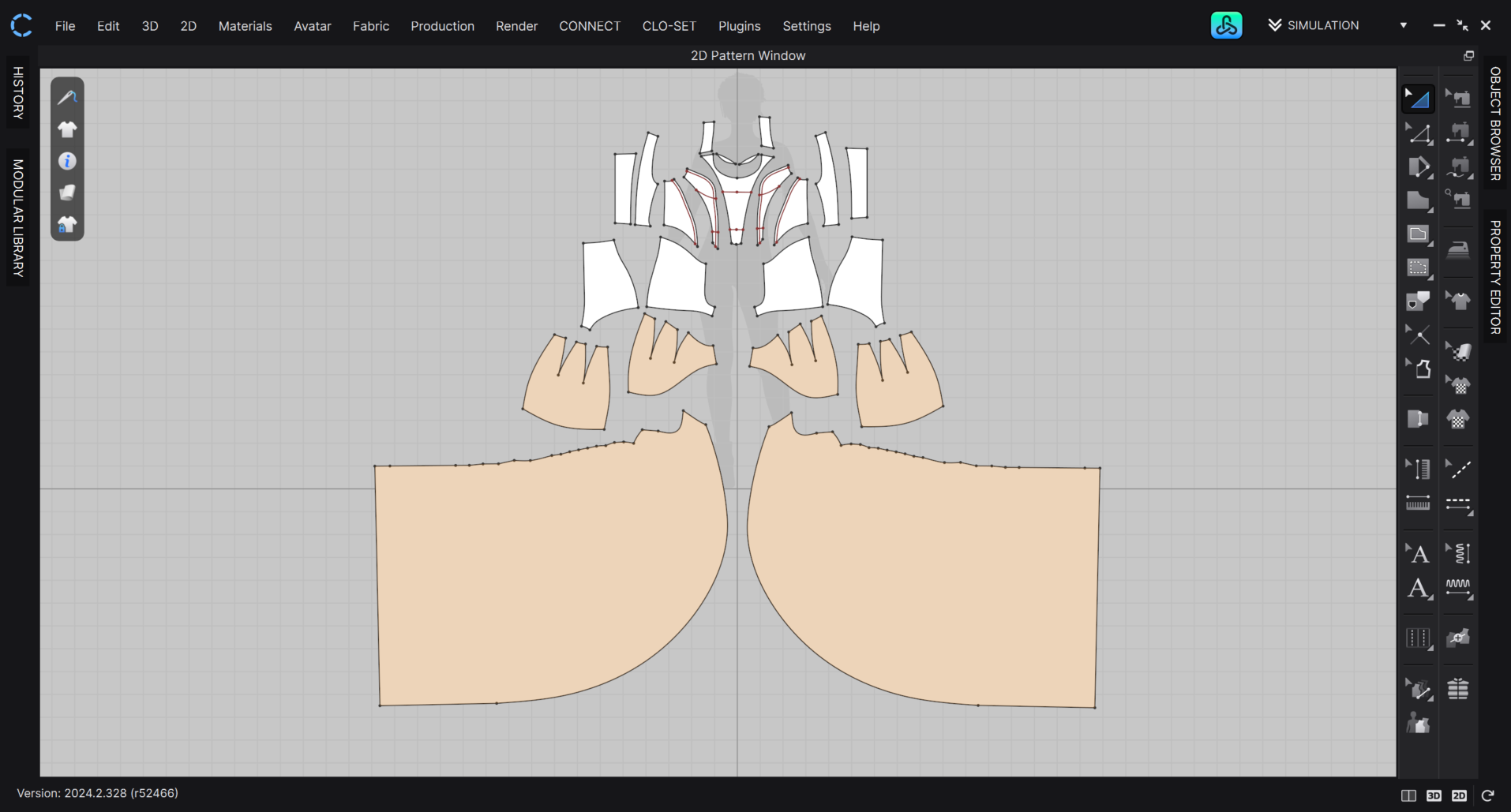
Could you share the story or inspiration behind this recreation of Taylor Swift’s gown on the Eras Tour? Have you recreated any other pieces in the past?
I learn best by doing, so I’ve been teaching myself CLO through a variety of projects. Each one has helped me master different tools and skills within the program. When I saw Taylor Swift wearing her incredible Vivienne Westwood gown on the Eras Tour, I thought it would be a fun challenge to recreate! This dress was only the third garment I had created in CLO, so it required a lot of trial and error—as well as plenty of YouTube tutorials. Now that I’m more confident, I’m focusing on my own original designs. I love tailoring, so I’m currently working on a winter coat.
Can you expand on how CLO has influenced your overall approach to design beyond just patternmaking?
CLO has definitely made me a more experimental designer. It’s completely changed the way I approach the design process because I’m no longer limited by the time, cost, or materials needed for physical sampling. I can quickly cycle through different ideas—tweaking a pattern, swapping fabrics, testing colorways—without any of the usual constraints. It’s also made me more willing to take risks. Before CLO, I might have second-guessed whether a complex design was worth the time and resources to sample. Now, I can push an idea further, knowing that I can work through construction challenges digitally first. It’s taken so much of the guesswork out of the process, and I find myself exploring ideas I wouldn’t have attempted before.
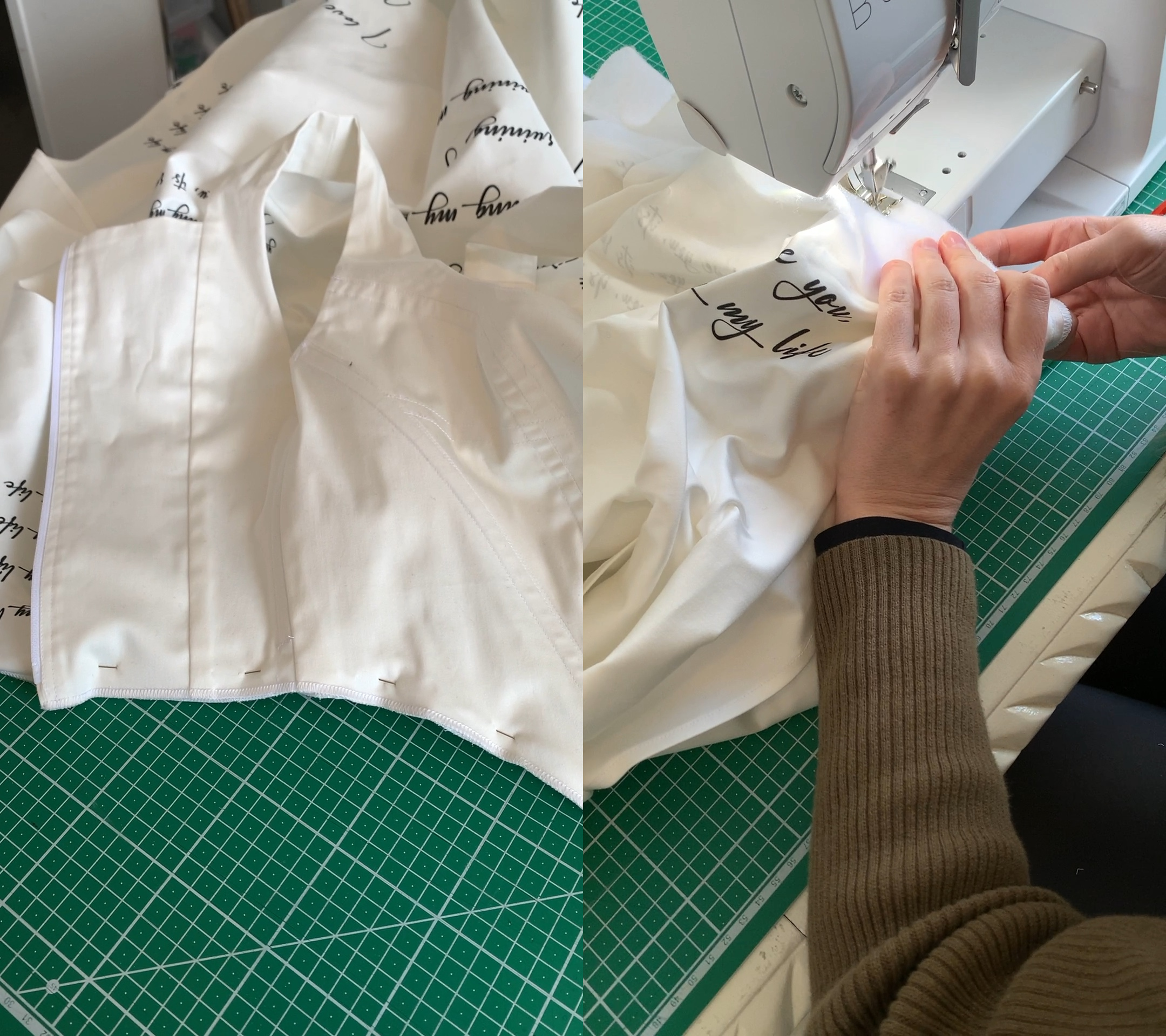
Since you have such a strong hands-on design background, what was it like transitioning to 3D with CLO? Were there any surprises along the way?
Learning CLO felt mostly intuitive, especially since some functions—like bezier curves and curve points—are similar to Illustrator, which I'm very fluent in. The biggest learning curve was navigating the 3D window (using the gizmo, etc.) and learning where all the tools were. Initially, I was skeptical about how well the software could handle complex draping, so I digitized one of my more unconventional patterns—it has large bias-cut panels, curves sewn onto curves, seams that twist around the body in unusual ways, gathers, and a button-up placket - and CLO replicated the garment in 3D form perfectly.
Is there a moment where CLO really saved the day for you—maybe solving a tricky design challenge that would’ve been much harder using traditional methods?
Another thing I’ve found really useful in CLO is the ability to visualize print placement before cutting. I recently made a bias-cut dress with a strong directional stripe print and was able to move the print around within the pattern pieces, ensuring that the stripes all converged perfectly at a central seam beneath the bust. Being able to visualize many different print placements before deciding on the final design is a big advantage over traditional methods.
When you start a new project, what’s your creative process like? Do you follow a set routine, or is it more spontaneous?
In my professional work, everything follows a structured process. The creative director sets the color palette and mood, and we work within a strict critical path. In my personal projects, however, I tend to have multiple ideas running simultaneously. Some projects come together in a day, while others take months. I find that the most interesting ideas emerge when I allow myself to get into a creative flow state and simply follow the process.
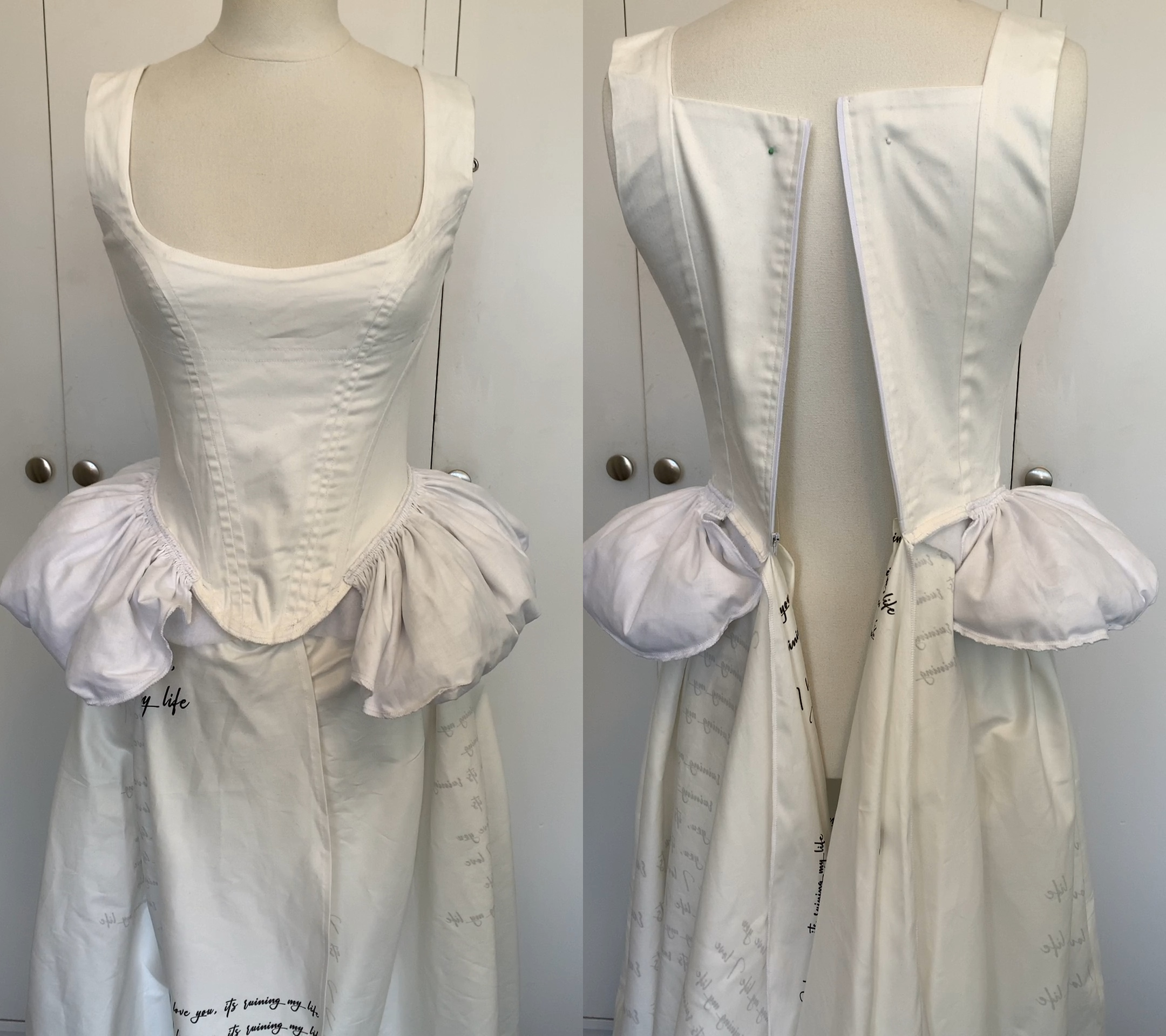
Looking back at this project, what part of the process was the most fun or rewarding for you?
Eveningwear isn’t my specialty, so this project was a real experiment for me. Before CLO, I probably wouldn’t have attempted something like this—I would have stuck to what I knew. But 3D design allows you to make mistakes and correct them quickly without wasting materials or time. That’s an incredible advantage, and I wish I had started learning it sooner!
Was there a specific CLO tool or feature that really stood out for you while working on this piece?
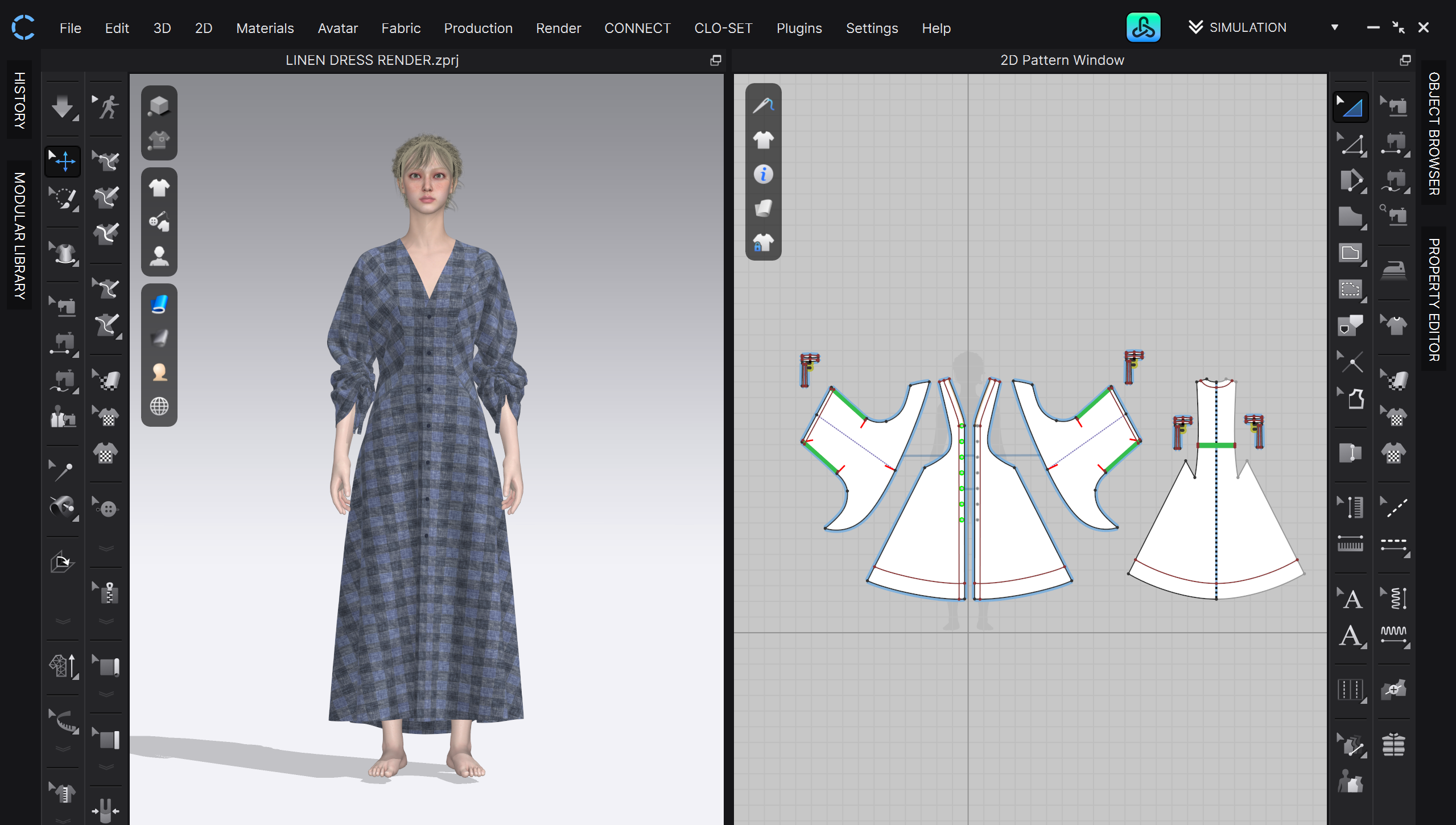
I used the 3D Pen Avatar for the bodice, and it was surprisingly easy—the fit was perfect on the first go. Since it works a lot like the pen tool in Illustrator, I got the hang of it quickly. The skirt was a whole different challenge—getting the pleats and tucks to fold and drape properly with the Fold tool took quite a few tries!
You mentioned focusing on original designs now—what’s your design philosophy when it comes to creating your own pieces? How do you decide which materials and styles to work with?
I like to make sure every piece has a point of difference. Lately, I’ve been creating a lot of one-off pieces and trying to unlearn some of the rules we’re taught when designing for mass production. For example, I had a piece of wool with text along the selvedge that I thought was really beautiful, so I incorporated the selvedge into the garment. In mass production, placing a pattern piece strictly along the selvedge wouldn’t be an economical use of fabric, so it wouldn’t typically be done. Sometimes, I fall in love with a piece of fabric first and try to create something that highlights its unique drape or texture. Other times, I’m focused on achieving a particular silhouette, so the design ends up being very pattern-led. And sometimes, I’m inspired by another garment and try to replicate it with a point of difference. My favorite fabric is wool—I love how it can be sculpted with sewing, heat, and steam.
What advice would you give to aspiring digital fashion designers who want to follow in your footsteps?
Start now, but be patient with the learning process. I’m only just reaching the point where I can design fluidly in CLO without constantly stopping to search for tools or rewatch tutorials. Once everything clicks, the creative possibilities are incredible. I haven’t felt this excited about learning something new since I was first taught how to patternmake nearly 18 years ago.