




To create an iconic Marie Antoinette gown for the Versailles Masked Ball, designer Mihaela started entirely in CLO. Testing proportions and drape digitally eliminated the fear of cutting costly silk, seamlessly uniting couture craftsmanship with 3D tech. Read how she turned a digital design into palace-ready reality.
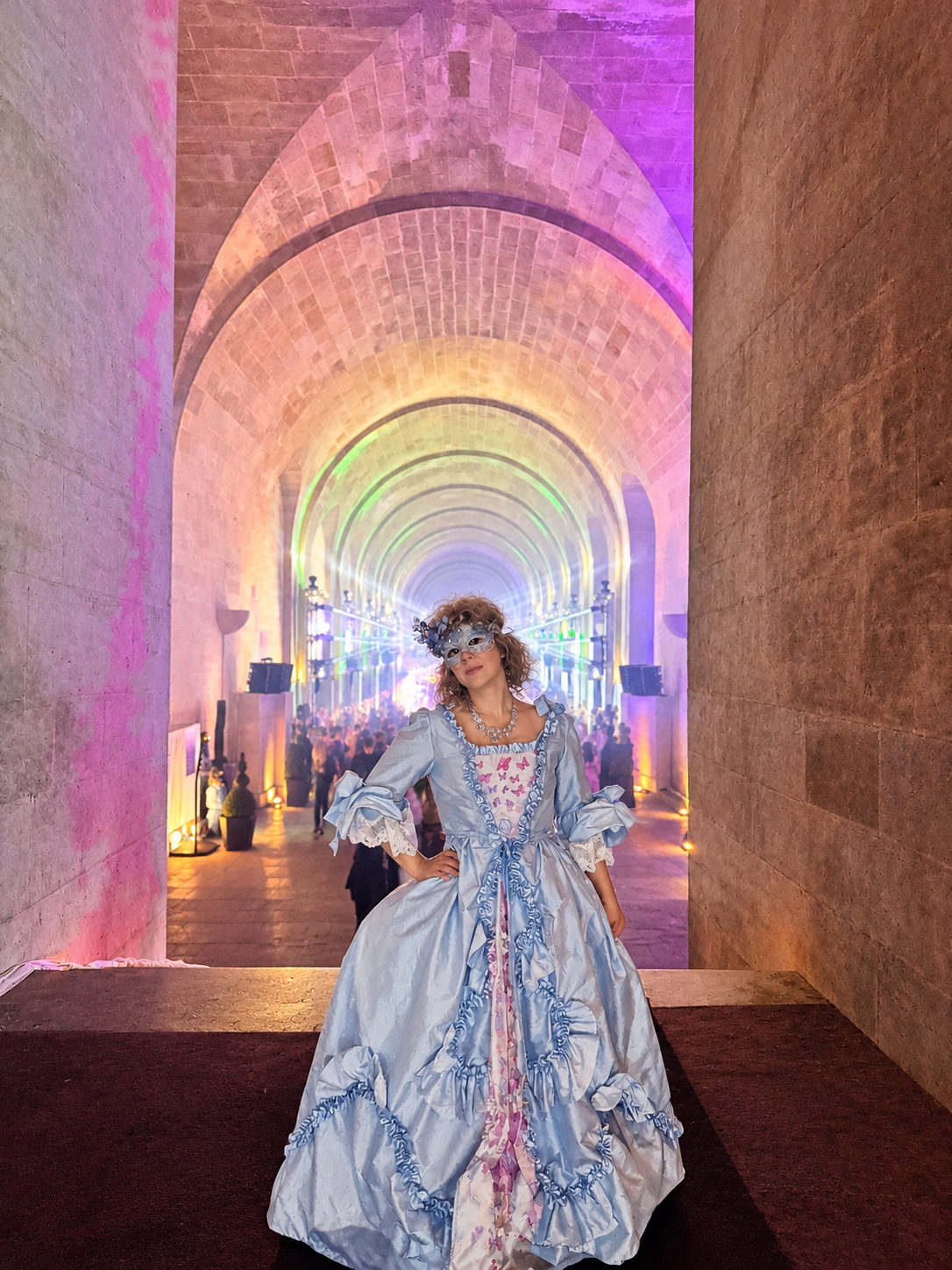
Welcome, Mihaela! We saw your reel showing how you designed and made a dress from scratch in CLO, specifically for an overnight stay at the Palace of Versailles. That’s not just a sewing project; that’s a whole story, and we’d love to hear all of it.
Before we get into the dress, let us know a bit about you. What’s your background in fashion and sewing, and how did CLO come into your world?
I moved to New York 13 years ago for a guy, but ended up discovering my passion for fashion! I studied Fashion Design and Patternmaking at FIT and went on to work for brands like Vera Wang, Calvin Klein Collection, and Ralph Lauren. At Ralph Lauren, I discovered Browzwear VStitcher, which sparked my interest in 3D fashion. Soon after, I discovered CLO and fell in love with how intuitively it connects digital experimentation with the craft of making clothes.
Part 1: The Occasion That Started It All
An overnight stay at the Palace of Versailles is not an everyday event. How did you first hear about it, and when you decided to go, was CLO the first thing you reached for to start planning the dress?
I had already planned a big family trip to Italy when friends told me about the Versailles event. Who wouldn’t want to spend a night at the Palace of Versailles? So, I squeezed in a 24-hour trip to Paris while keeping my family commitments in Italy—and made my dress in the few days before leaving the USA.
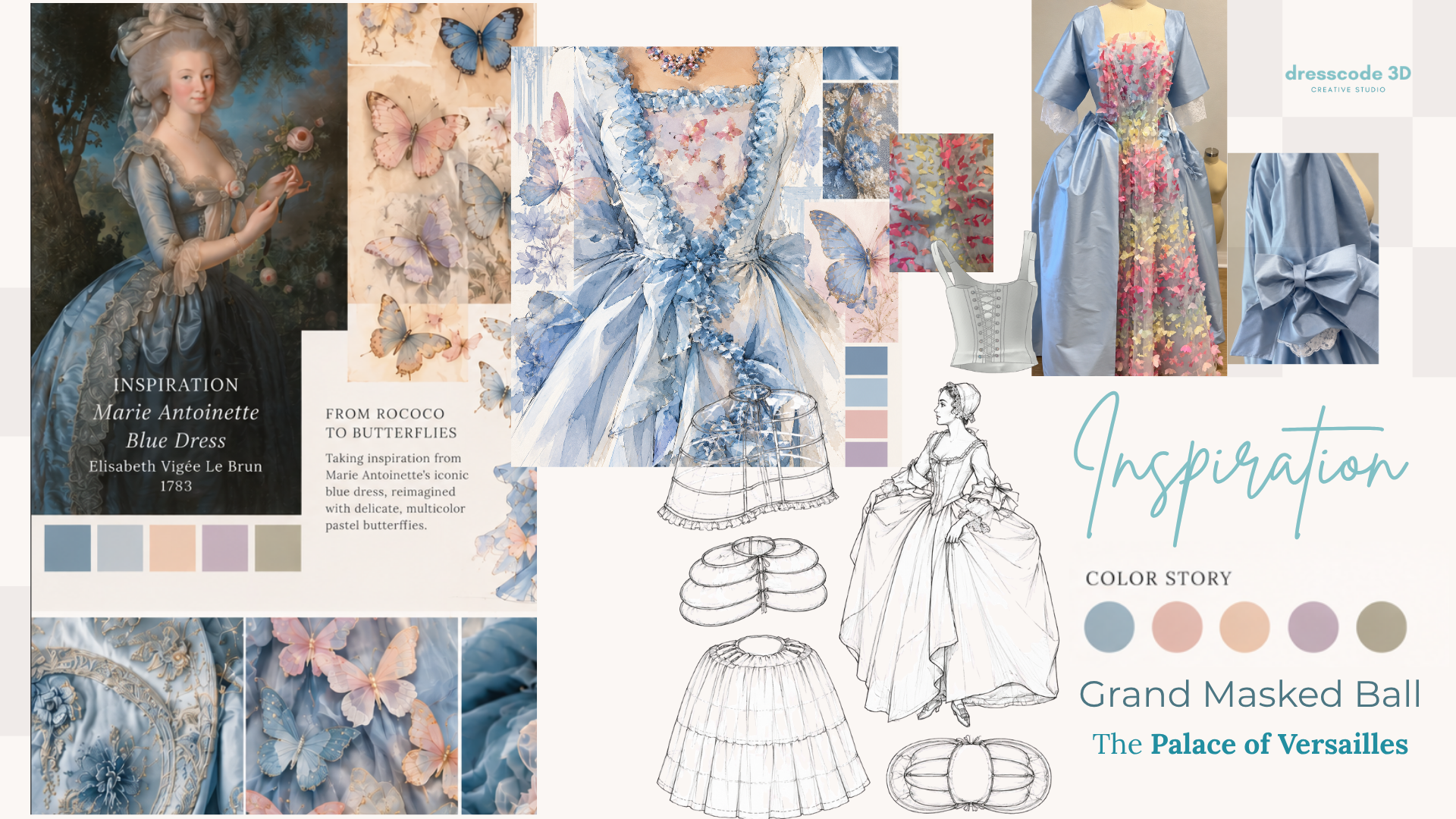
I wanted something unique, but finding a quality costume that didn’t break the bank was a challenge. Inspired by Marie Antoinette’s iconic blue dress, I turned to CLO, as I always do. I use it to bring my ideas to life in 3D before cutting a single piece of fabric. I follow the same process with my clients, so they can visualize exactly what they’re getting before committing to production. The event was on June 27th, one of the hottest days in Paris, where air conditioning was nowhere to be found. Against all odds, I made it to Versailles Masked Ball in an outfit I designed and created myself!
Did you have a clear picture in your head of what the dress needed to feel like for that setting? How did you translate that vision into CLO?
Not really! I never do. I learned to not think too much about it. Just doing the work and using the tools I have will take me there. I had never made a Marie Antoinette-inspired costume before, so I started by researching the construction and understanding the elements that define the silhouette.
Part 2: Designing in CLO
Walk us through the design process. How did you build the dress in CLO, and what did the software let you do that a sketchbook or flat pattern alone couldn’t?
I started with my inspiration: Marie Antoinette’s iconic blue dress. From there, I went fabric shopping: chose a light blue silk, multicolor butterfly tulle, blue ribbons and white lace.
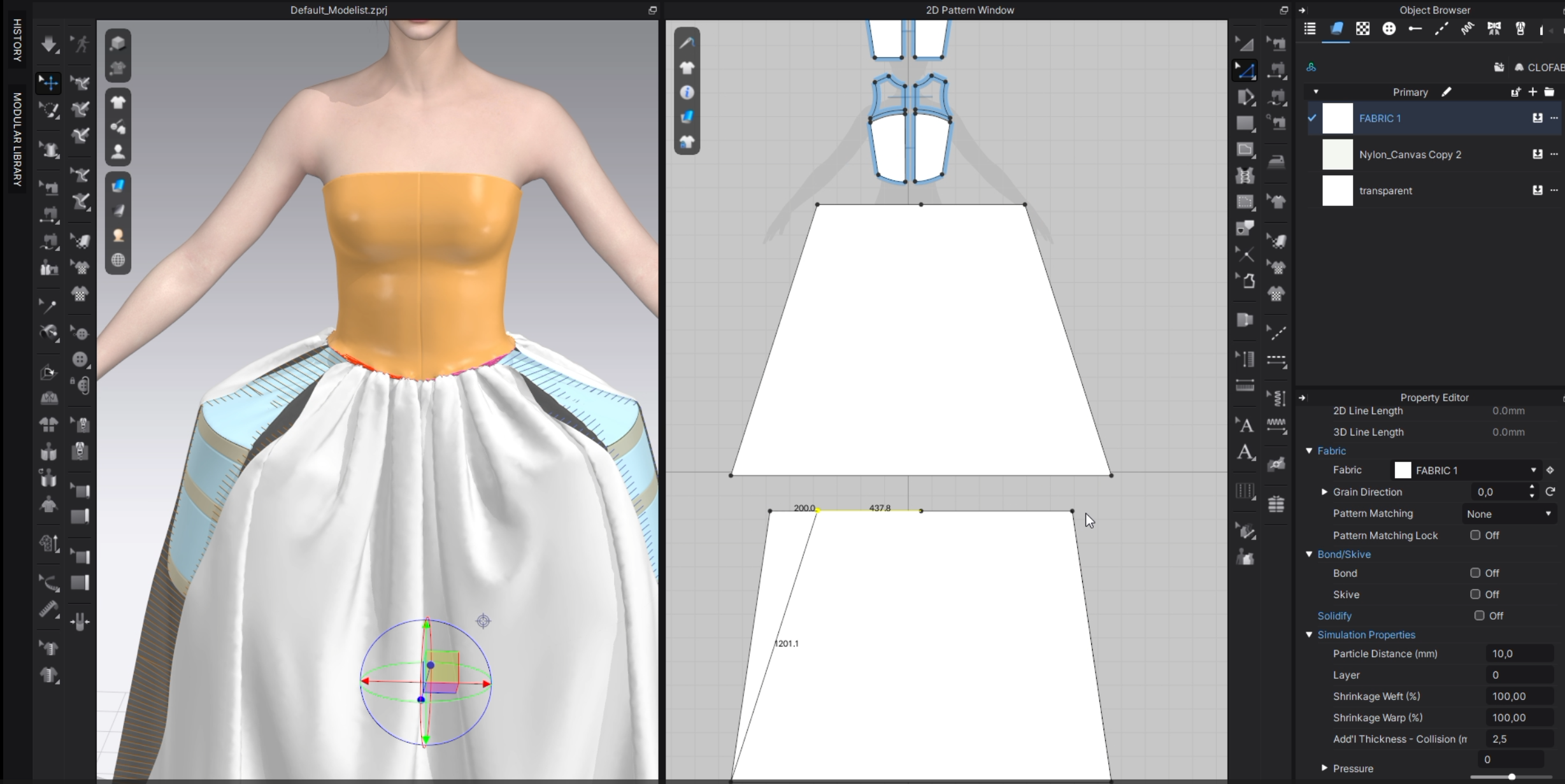
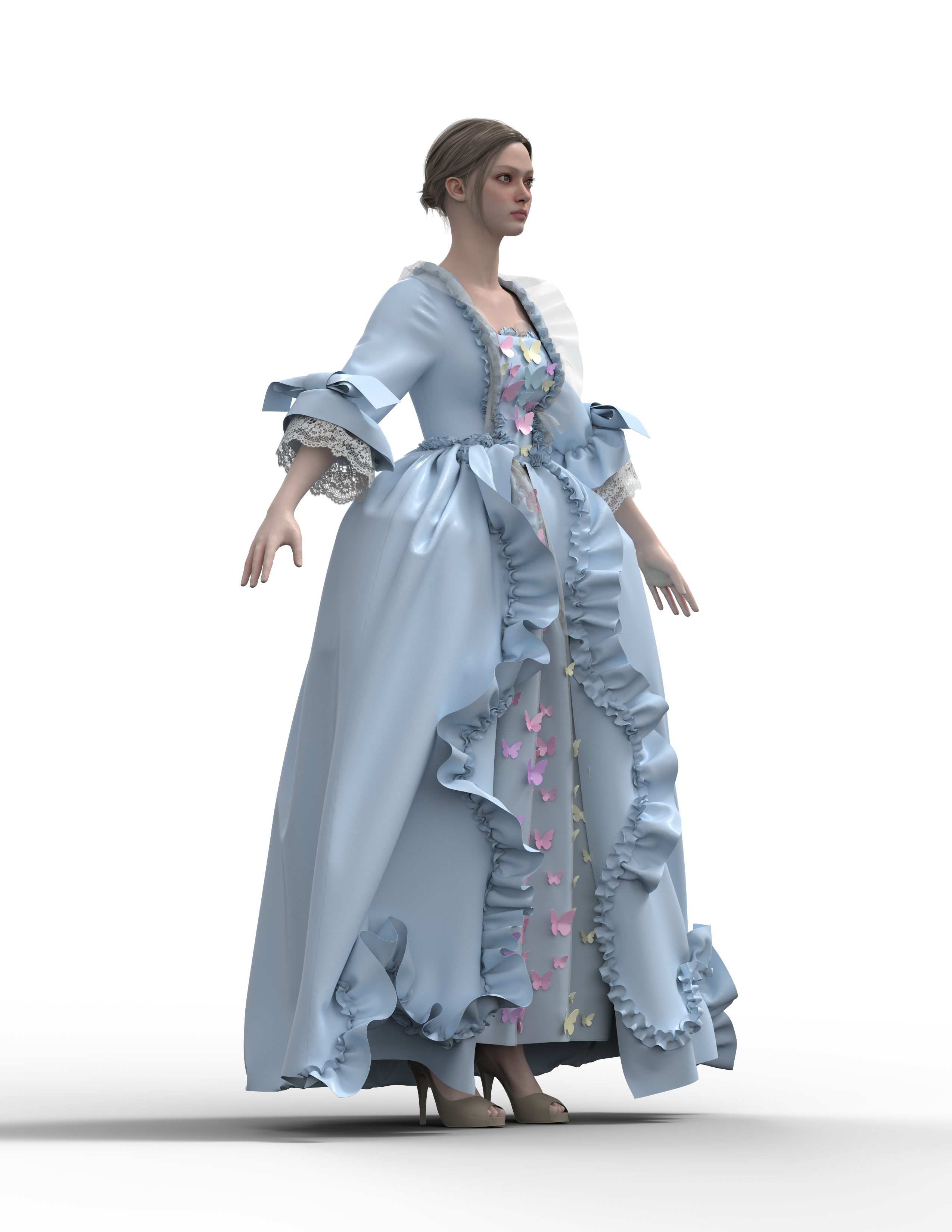
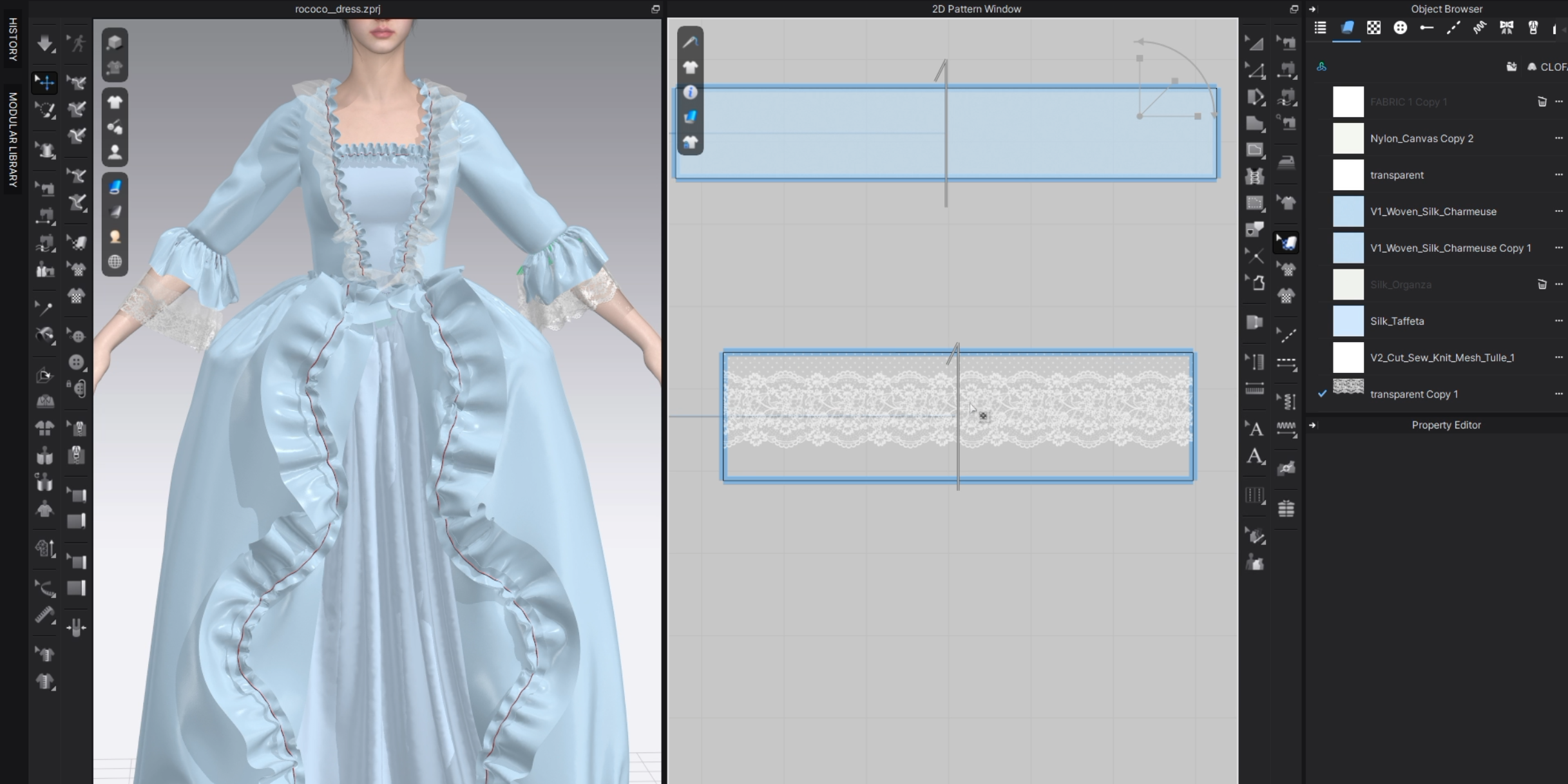
Once I had my references and fabrics, I broke the outfit down into its key elements in CLO: the corset, the voluminous skirt with panniers, the cape-like upper layer, and all the finishing details, from ruffles and lace to the placement of the butterflies.
I built the look piece by piece, experimenting with proportions, layers, and details until everything came together.
A sketchbook is great for capturing an initial idea, and patternmaking is essential for construction, but CLO connects those two worlds. It lets me visualize the design, understand its volume and proportions, and make creative decisions before committing to the actual garment. It removes a lot of the anxiety of starting and seeing something come to life the way you intend it.
Fabric choice matters a lot for a formal occasion like this. How did you work with fabric properties and drape in CLO to figure out what would actually work before buying anything?
In this case, I actually chose my fabrics first and then brought them into CLO to see how they would work with what I envision. I used raw silk, which has no stretch, so it was important to reflect those properties in the software as well as the weight of fabric.
At what point did you feel the design was ready to take into the real world?
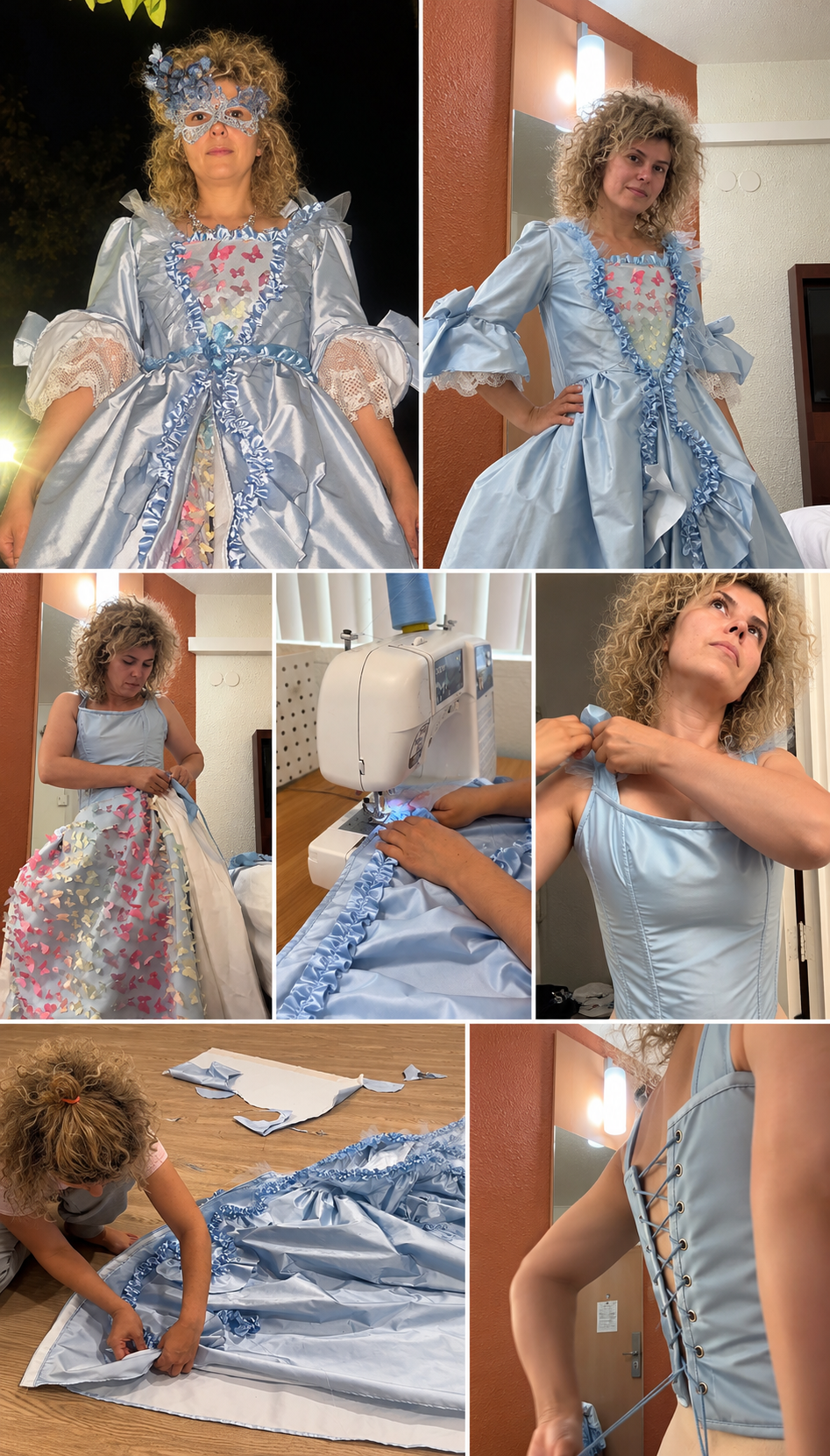
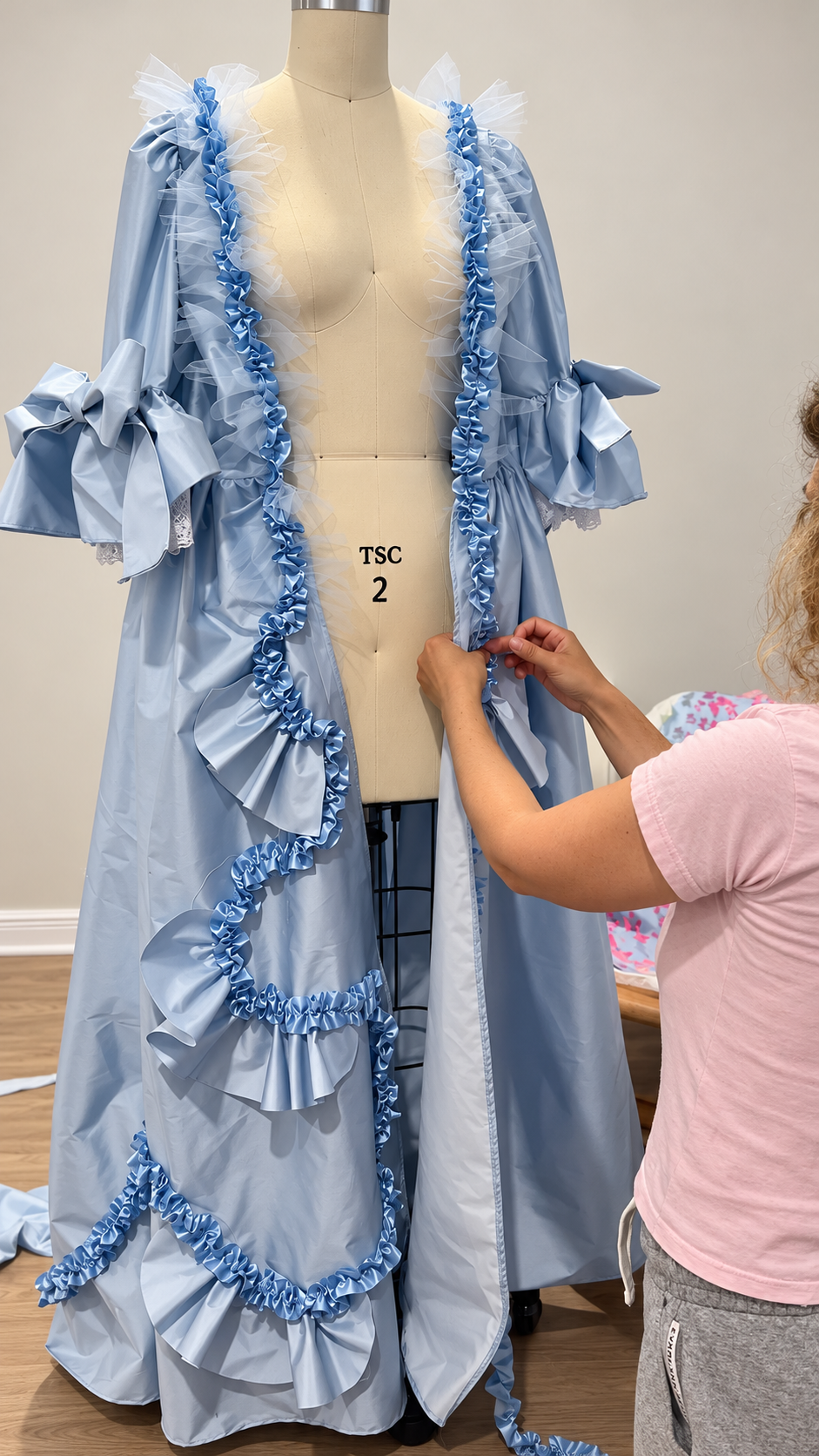
Once I adjusted the avatar in CLO to match my own measurements, I felt confident enough to move into the physical stage. I created a muslin version of the design first. Muslin is an inexpensive fabric that I always use to test patterns, drape, and silhouette before committing to my final garment.
Part 3: Making It Real
Going from a CLO file to cutting actual fabric is a commitment. What was that moment like, and how did you approach the construction process?
What I loved was how effortlessly the digital design translated into the physical garment. The silhouette and proportions were already working in CLO, so when I made the muslin, everything came together naturally. It was a great confirmation that the design was ready to take from the digital world into reality.
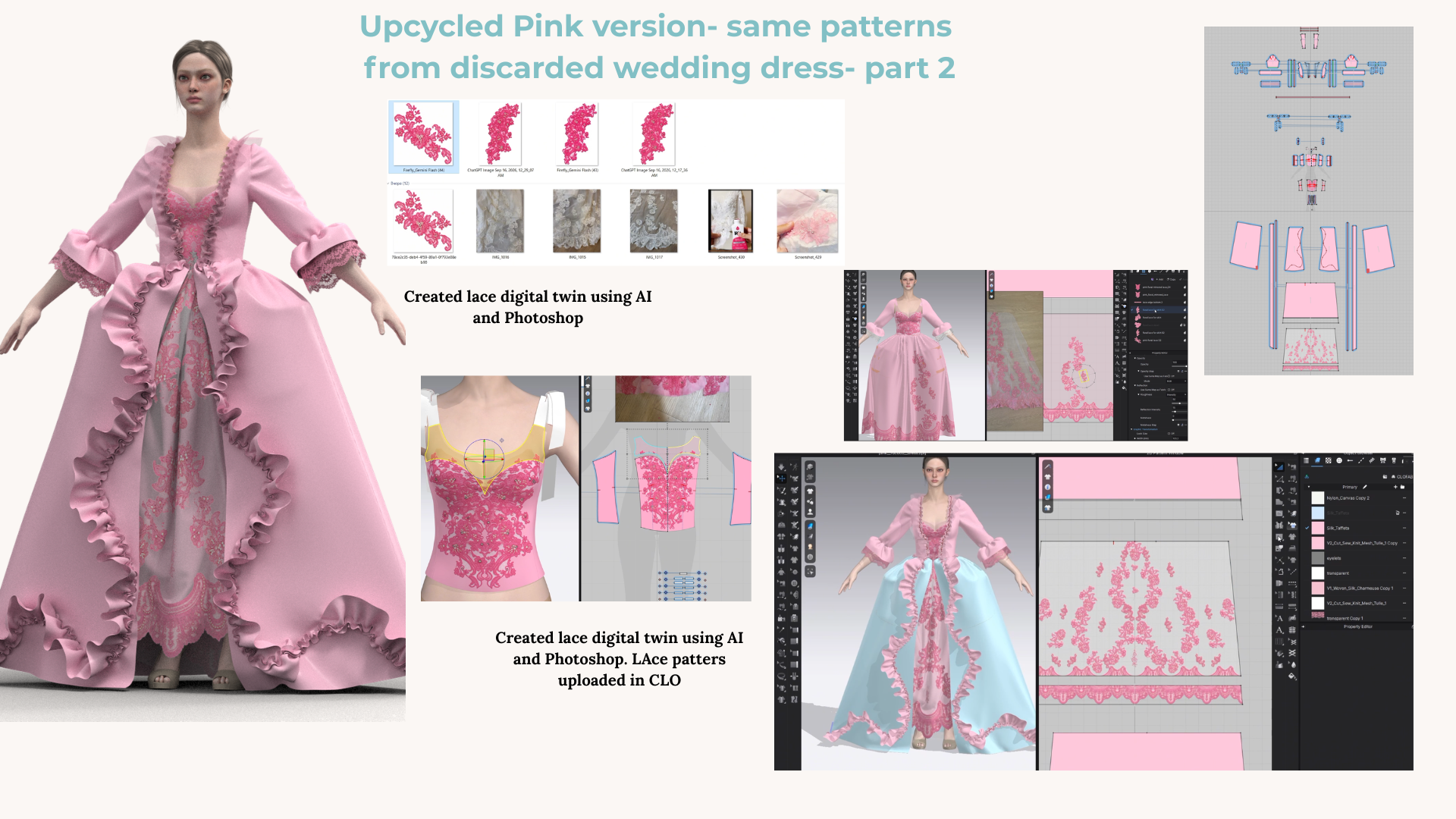
I also reused these CLO patterns to recreate the same design in pink, starting with a discarded vintage wedding dress I found at a thrift store for less than $50. I dyed the white dress pink and transformed it into a new look. The process was much faster the second time of course , yet the different lace and details gave the dress an entirely different character. I reversed the whole process and got to the point of even recreating the lace from the old fabric using AI, Photoshop and placing everything as the original in the digital world using CLO.
Were there any surprises along the way, things that behaved differently in fabric than they did in the simulation, or things that worked out better than expected?
I would say the placement of the ruffles. There’s something about working with your own hands that makes the creative process more organic. For me, digital design and physical construction complement each other.I think this is deeply personal to every designer—there’s no right or wrong way to approach it. These were the last details so there’s no stress about changing these details after everything else was set.
Part 4: Versailles
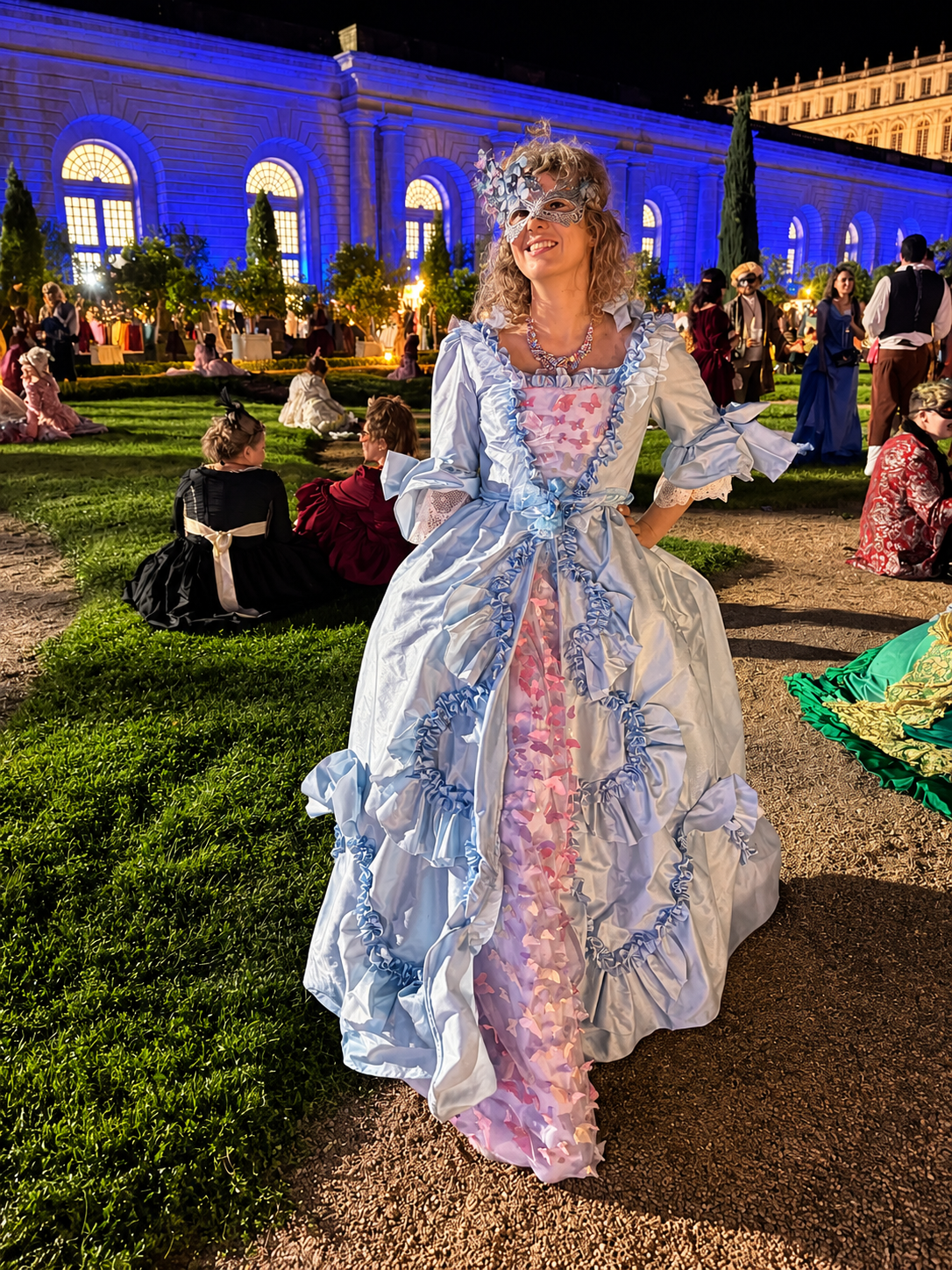
You wore the finished dress to the Palace of Versailles. What was it like to walk into that space in something you had designed and made yourself?
There’s a special sense of pride in being able to say, “I made it myself.” Especially in a place like Versailles, surrounded by so many incredible designs and elaborate costumes.
There were certainly some amazing outfits that night, but I also noticed many that looked mass-produced. For me, quality and attention to detail always stand out. And I truly believe that a well-designed garment speaks for itself, even after 11 p.m. at Versailles!
Looking back at the whole process, from the first CLO draft to that moment in the palace, what did this project teach you about how you want to work going forward?
I’m a 3D fashion designer and founder of Dresscode 3D, currently working with Adobe as an AI consultant among other brands. I love mixing together traditional sewing, 3D design, and AI to shape a better future for fashion—one with less waste and a greater understanding of what we create and why.
Due to personal projects such as the Versailles one I’m bringing the physical-to-digital process into workshops in partnership with Sew FYI Studio in Los Angeles, helping sewers and makers explore new creative possibilities. Doing this as an in-person workshop is priceless. You get to connect with creators and designers, share your knowledge, and experience those “Wow!” moments and lightbulb moments when everything clicks. CLO isn’t just for corporations, established brands or digital fashion enthusiasts—it’s a tool for anyone with a vision. Today, anyone with a vision can become a designer.
For someone who sews but hasn’t tried CLO yet, or uses CLO but hasn’t taken a design all the way to a physical garment, what would you tell them?
Funny you ask! My first in-person workshop at Sew FYI Studio in LA was called Upcycle and Reimagine- from old t-shirt to CLO. We started with an old T-shirt, deconstructed it, and reimagined it in CLO 3D to explore how far we could take the design. Then, we used AI to turn those ideas into a full campaign.
The response from sewers who had never touched CLO was fantastic. I believe people are much more open to combining their physical skills with digital tools when they first understand how the two connect.
If you already know how to sew and understand darts, fusible interfacing, and notches, you have a huge advantage when learning CLO 3D. You're not starting from scratch, you're simply extending your existing skills into a new dimension.