


Beatriz Hermosilla is a lingerie and pattern designer from Chile with a passion for craftsmanship and a strong technical foundation. She recently embraced 3D design as a natural next step in her creative process. By using CLO, she blends traditional sewing skills with digital innovation to create expressive, high-detail virtual lingerie prototypes. In this interview, Beatriz shares her 3D journey, the power of digital tools for indie designers, and how she’s helping shape the future of intimate apparel in Latin America.
Can you tell us a bit about yourself and how you got into lingerie design?
Hi, I'm Beatríz Hermosilla from Chile. I’m a fashion designer specializing in lingerie design and pattern making.
From the beginning of my career, I found intimate fashion to be a space for both technical and aesthetic exploration—something I’m deeply passionate about. Today, I work independently as a lingerie pattern designer and also teach sewing classes focused on lingerie, where I share the techniques and processes I’ve refined over the years.
In 2023, I decided to expand my skills into the digital realm, integrating 3D technology into my creative practice. This shift has allowed me to experiment with textile simulations, iterate patterns more efficiently, and develop virtual prototypes that elevate my lingerie work to a new level of creativity and precision.
Tell us about the project you created in CLO. What inspired it?
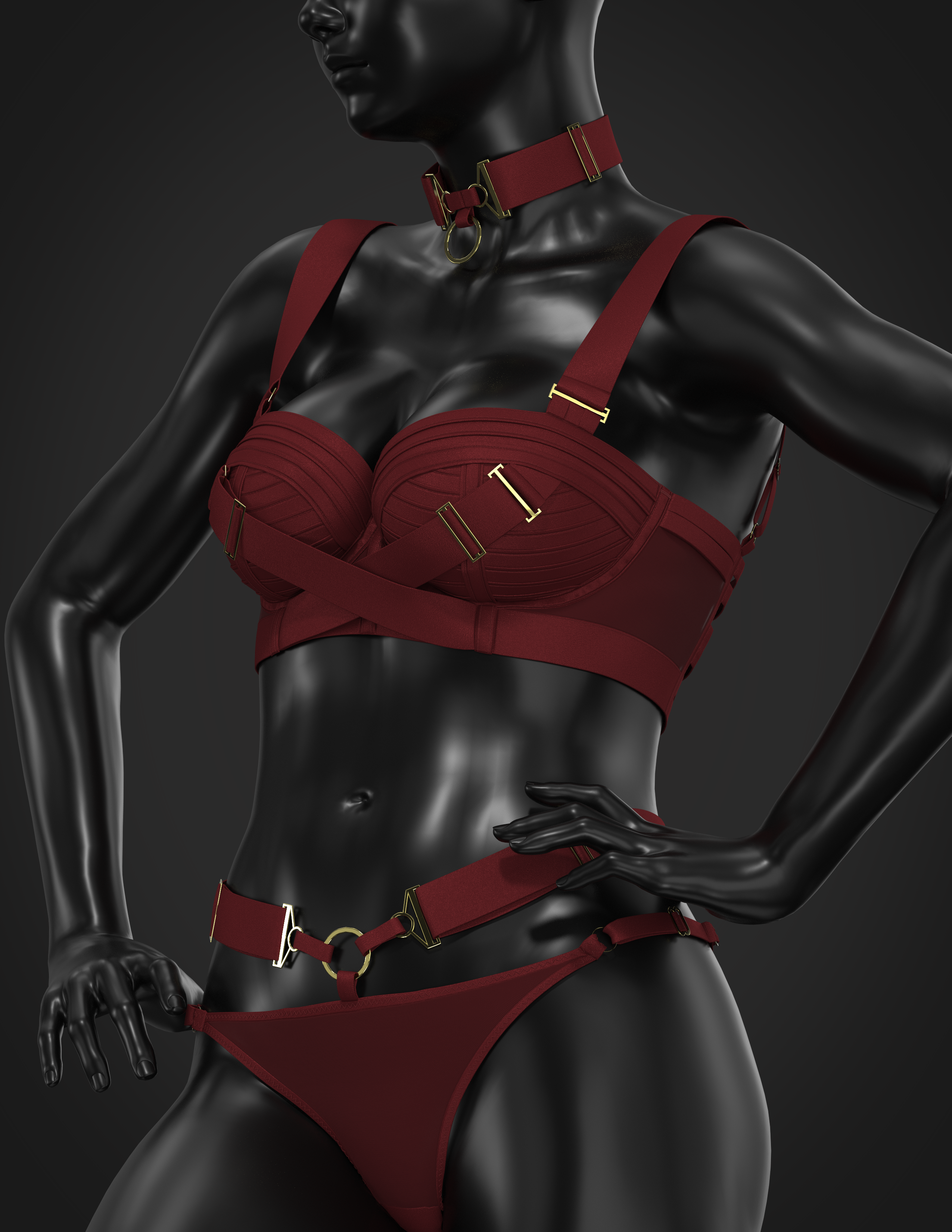
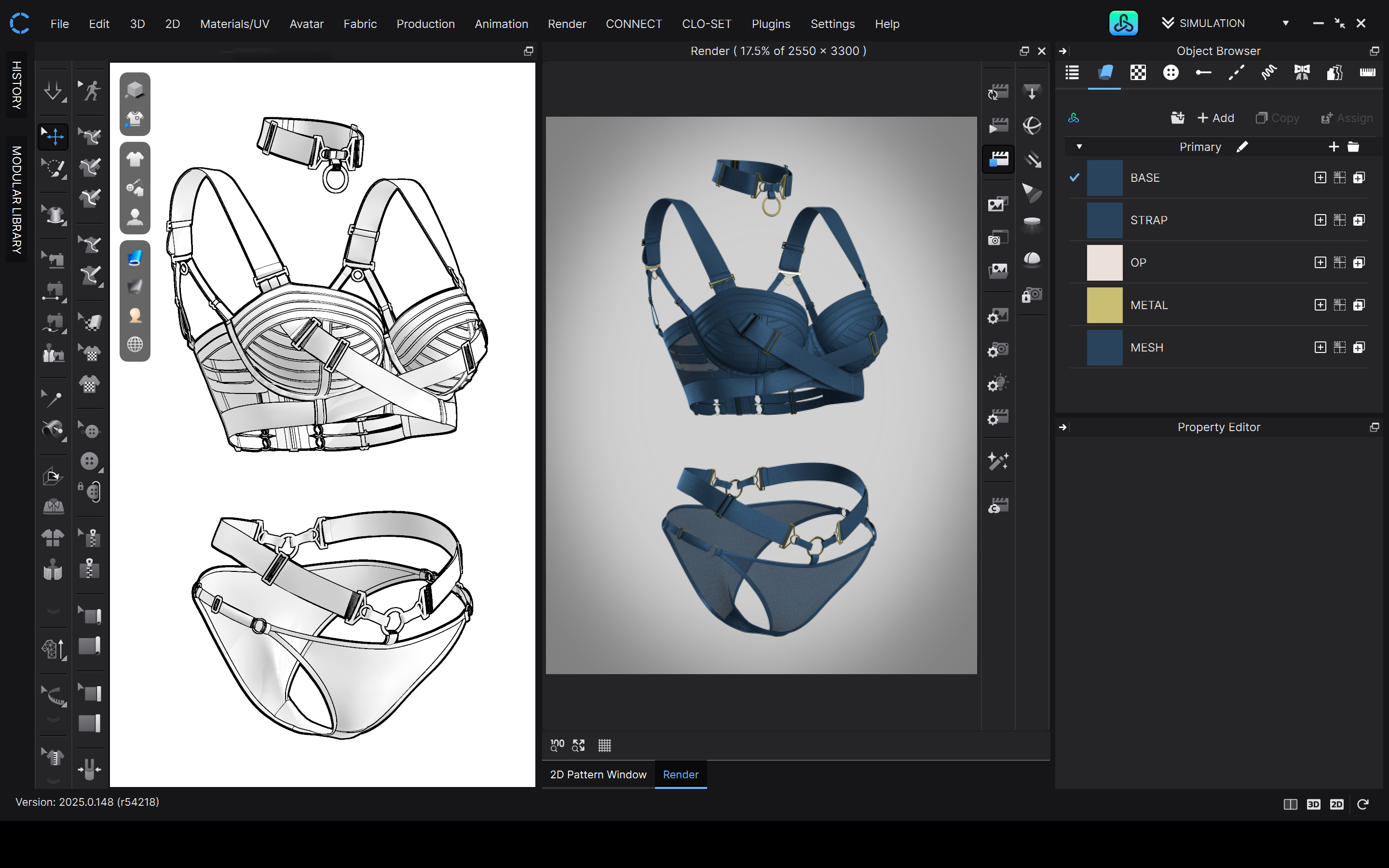
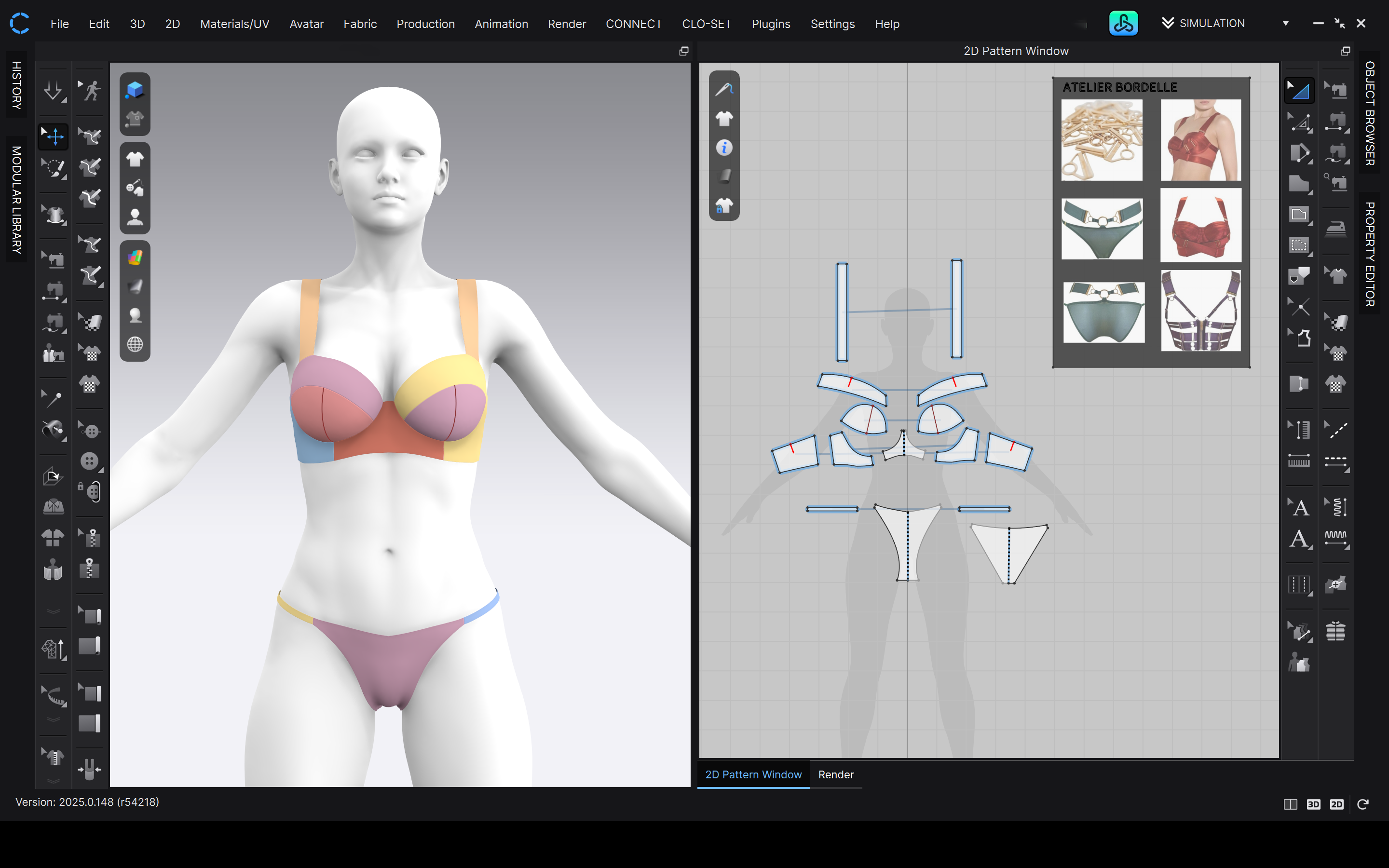
I decided to recreate a piece by Atelier Bordelle in 3D as a way to challenge and strengthen my technical skills with CLO. I chose this design specifically for its structural complexity—it presented the perfect opportunity to dive deeper into 3D modeling and achieve a highly detailed finish.
Throughout the process, I carefully analyzed every component of the original garment, translating it into precise digital patterns and testing different materials and construction techniques in CLO. The goal was to achieve a realistic and visually striking result.
This exercise not only helped me enhance my technical proficiency but also sharpened my eye as a designer. It was a valuable experience that boosted my confidence in using 3D tools and reaffirmed my passion for blending technology with intimate fashion.
How do you usually approach planning and preparing for a new project in CLO?
Every CLO project starts with a clear intention—whether it’s a function, technique, or aesthetic I want to explore. From there, I create a moodboard and technical sketch to guide the process.
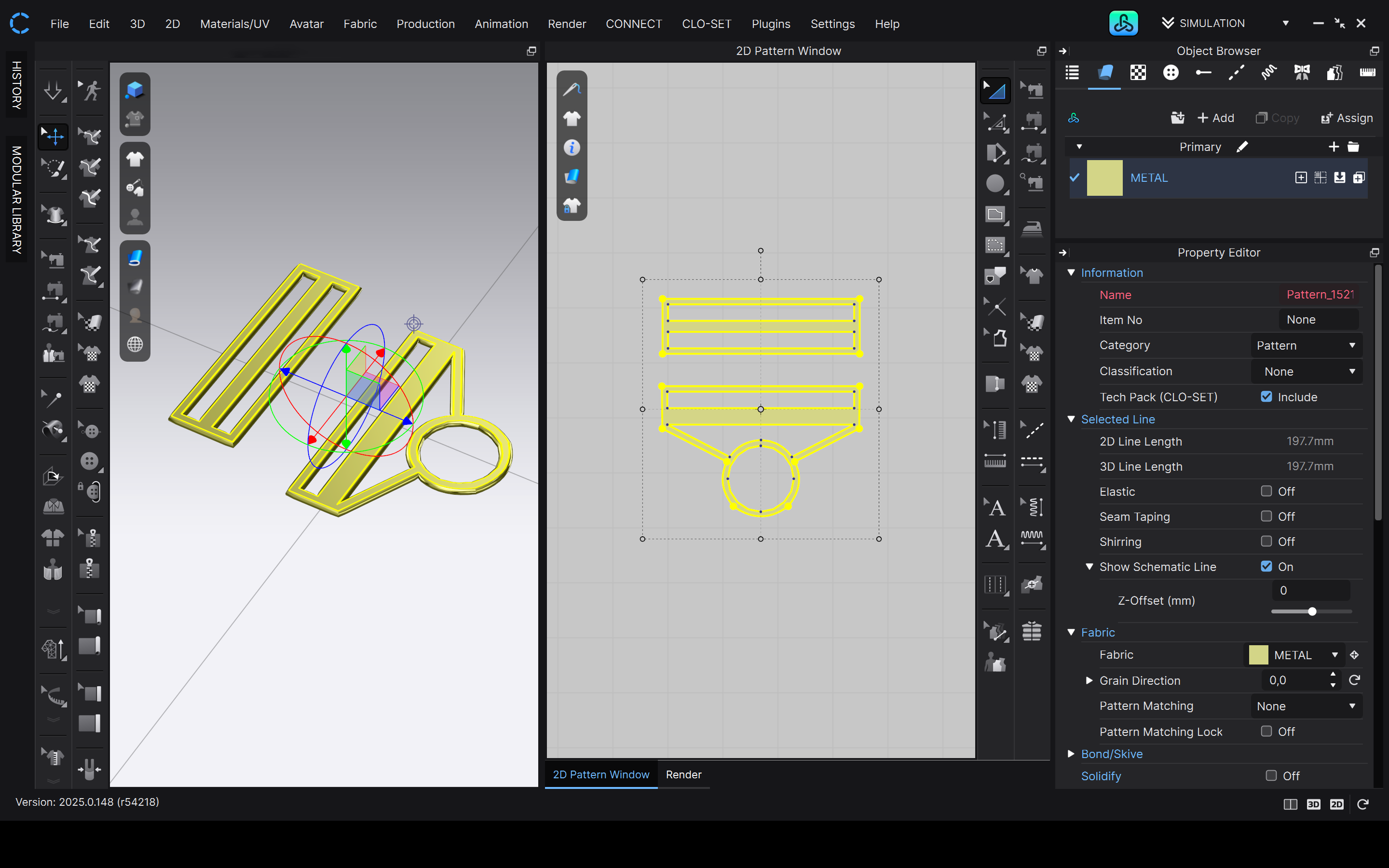
I begin by defining the avatar’s shape and the basic structure of the garment, either by adapting one of my sloper patterns or creating a new one from scratch. At this stage, I also design any trims or hardware if needed.
Once the base pattern is well-fitted and refined, I build the key design features and determine the most efficient construction order. I then add all sewing details, hardware, and trims.
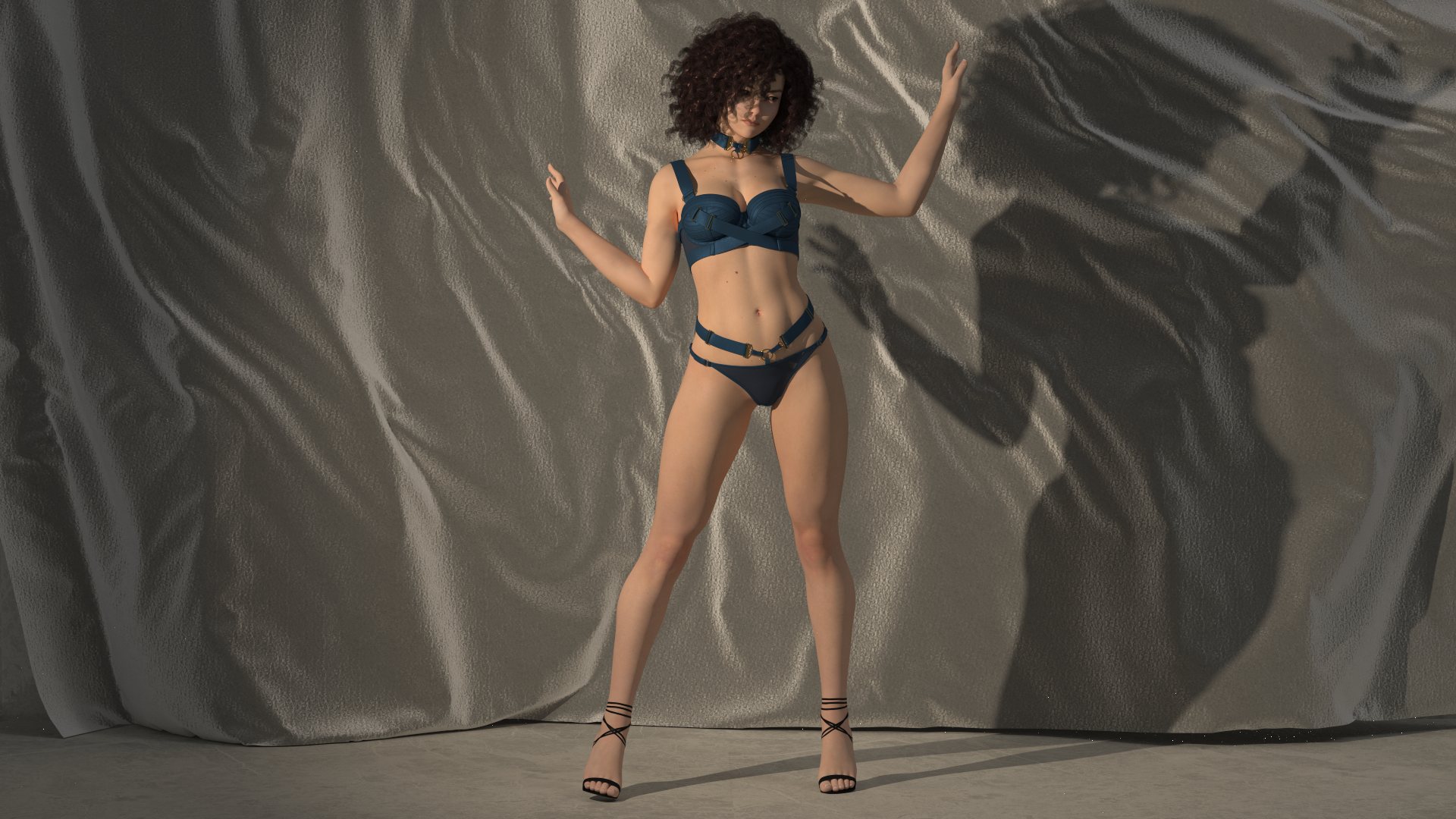
Finally, once the garment is properly simulated, I pose the avatar and create a visual atmosphere that enhances the character of the piece and highlights its construction details.
What was your favorite part of working on this project in CLO?
What I enjoy most about CLO is how naturally it extends my hands-on craft. My experience in sewing, pattern making, and fabric handling integrates seamlessly into the digital process.
I love that I can translate my manual skills into a digital space without compromising on precision or detail. Watching a garment come to life through simulation—and being able to adjust patterns in real time—is incredibly satisfying. It feels similar to traditional making, but with greater speed and no material waste.
I also enjoy the ability to iterate designs freely and visualize ideas that were once only in my head or sketchbook. As an independent designer, CLO allows me to test and validate new designs without the cost of physical sampling.
Which features in CLO were most useful for this project?
Several key tools were essential to recreating this design in CLO.
First, the Layer function was critical. It allowed me to stack closely positioned pieces without them interfering with each other during simulation. Assigning layers correctly helped maintain a clean, realistic finish.
Another important tool was Strengthen, which I used during early construction stages. It kept pieces stable while I shaped them, and once I achieved the desired form, I turned it off to observe the fabric’s natural behavior.
Lastly, I relied on Freeze to lock delicate sections in place while working on other areas. This helped me manipulate complex parts of the design without compromising the overall structure.
Together, these tools gave me precise control and made it possible to simulate a complex, delicate garment with accuracy.
How is 3D fashion making the industry more accessible for emerging designers?
3D fashion is transforming the industry, especially for emerging designers like myself.
In the past, creating a collection required significant investment in materials, equipment, and production. Now, tools like CLO let designers visualize their ideas, test fit and proportions, experiment with prints, and present their work professionally—all without producing a single physical sample.
This dramatically lowers financial barriers and opens up room for creativity and experimentation. Working digitally also allows new designers to build a professional portfolio and reach a global audience, even from a modest setup.
How do you differentiate yourself from other 3D fashion creators today?
While I agree that differentiation is important, it’s not something I actively chase. I simply create from where I stand and stay true to my journey.
I’m a craftswoman at heart. My goal in 3D is to keep the spirit of sewing alive. I use CLO as an extension of my hands, infusing technical knowledge and manual sensitivity into each simulation so that my digital garments carry soul, precision, and intention.
I don’t follow trends—I draw inspiration from personal experiences and what truly moves me. I believe that true differentiation comes from being honest with your process and consistently working from that place of authenticity.
How is 3D design helping emerging designers in Chile gain more visibility?
In Chile, 3D design is still in the early stages, but it’s already opening up new opportunities—especially in terms of accessibility.
We’re a small market with geographic limitations, and our fashion scene is largely driven by independent designers. Tools like CLO make it possible to create and test ideas without the typical barriers of cost or material availability.
In our context—where getting certain supplies can be expensive or slow—3D helps us prototype and validate ideas quickly and accurately. It’s a powerful resource for independent creators.
What exciting changes are you seeing in the adoption of 3D fashion in Chile and South America?
3D fashion in South America is still emerging, but more designers are starting to incorporate it into their process.
In larger markets like Brazil, where the industry is more established, big brands and design studios are already using tools like CLO. In Chile, we’re seeing growing interest from independent designers, which is exciting.
Despite challenges like pricing, language barriers, and access to learning resources, there’s a strong sense of curiosity and motivation to explore new technologies. Given how culturally rich and creative the region is, I believe digital design can be a powerful tool for sharing our unique perspectives with the world.